
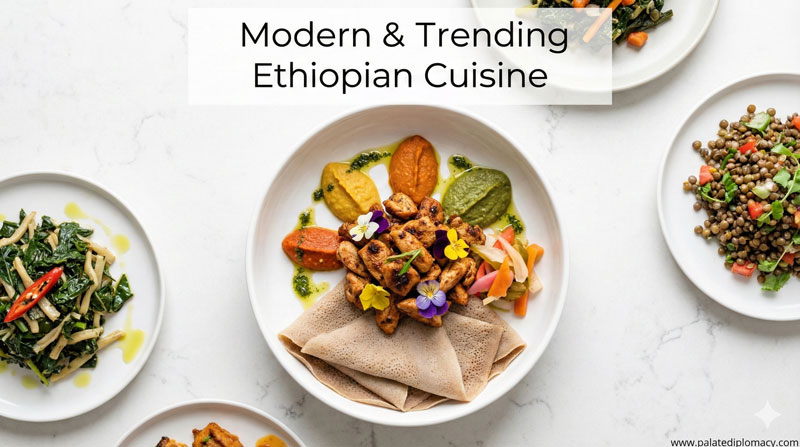
A New Flavor Map: Fusion Injera in Ethiopian Cuisine
Fusion injera dishes open a bright, inviting window into Ethiopian cuisine. Injera, the airy sour flatbread made from teff, sits at the heart of many meals. When chefs blend Ethiopian flavors with ingredients from other kitchens, the result feels Like a conversation across tables. The bread acts as a versatile vessel. It soaks up sauces, carries fillings, and breathes with aroma. In these dishes, tradition meets curiosity in a respectful, joyful way. You will notice harmony in color, texture, and spice. Most importantly, you will taste a culinary range that honors Ethiopian roots while inviting new ideas to the plate.
The Cultural Value of a Shared Plate
Sharing a meal is a warm tradition in Ethiopian dining. A large platter of injera often brings people together. The act of tearing a piece of bread, dipping, and passing bowls creates a rhythm of gathering. Fusion injera dishes strengthen this sense of belonging. They invite cooks and diners to celebrate creativity without losing family-style hospitality. The table becomes a living canvas where harmony sits beside bold flavors. Guests feel welcome, and cooks feel encouraged. In this setting, food becomes a bridge between generations and styles, always centered on generosity and respect.
Culinary Significance: Techniques and Flavor Profiles
The culinary significance of fusion injera lies in balance and technique. The sour depth of injera comes from natural fermentation, a gentle alchemy that flavors every bite. Fusion dishes respect that sour backbone while layering new notes. Cooks experiment with spice blends, herbs, and textures to create contrast. For example, a fusion plate might pair Ethiopian berbere with citrus zest, or combine smoky peppers with delicate herbs from other cuisines. The result is a dish that remains recognizably Ethiopian in spirit while offering fresh, approachable tastes. Each plate tells a story of careful craft and attentive tasting.
Ingredients and Fermentation: Teff, Grains, and Beyond
Teff flour gives injera its fine crumb and distinctive tang. Yet fusion dishes can expand beyond traditional grains. Some chefs blend barley, corn, or millet to adjust texture or nutrition. Fermentation time matters: longer fermentation can deepen sour notes, while shorter ferments brighten the loaf. The batter’s bubbles and pliability influence how it soaks sauces and supports toppings. Ingredients chosen for fusion injera dishes honor Ethiopian technique while welcoming global pantry staples. The result is a bread that remains soft, resilient, and ready to pair with a wide range of flavors.
Harmonies on the Plate: Common Fusion Pairings
Fusion injera dishes often feature harmonious pairings that feel natural and exciting. Citrus notes brighten rich sauces without washing out the base flavor. Fresh herbs like cilantro or parsley lift deeper spices. Smoky peppers meet creamy textures for balance. Savory vegetables, legumes, or fish can sit atop injera as vibrant fillings or wraps. Cheese, nuts, or seeds add texture and a gentle saltiness. These combinations show how Ethiopian culinary sensibilities can embrace new ideas while preserving the bread’s essential role as a carrier and companion.
Craft, Color, and Craftsmanship
The artistry of fusion injera is visible in color, shape, and presentation. Some chefs press dough into thin rounds for delicate edges; others craft thicker, extra-leavened layers for bite. Toppings might include roasted vegetables, sautéed greens, or bright chutneys. Garnishes such as sesame seeds, crushed chili, or fresh greens add visual appeal and aroma. The plating remains inviting and generous, encouraging guests to explore many bites. The craftsmanship honors tradition and elevates it through thoughtful, skilled experimentation.
Social Rituals and the Joy of Sharing
The social joy of injera shines in every bite. People gather around the platter, exchanging stories and smiles as they explore flavors together. Gursha, the tender gesture of feeding someone a bite, highlights care and connection. In fusion settings, this ritual continues, becoming a moment of shared discovery. Diners appreciate how a single piece of bread can lead to a conversation about texture, spice, and aroma. The experience feels inclusive, calm, and celebratory—exactly what a good meal should be.
Looking Forward: The Living Ethiopian Table
Looking forward, fusion injera dishes invite continual exploration with respect and curiosity. The kitchen remains a place of learning, where traditional flavors meet inventive ideas. Chefs balance reverence for teff, sour notes, and the bread’s soft texture with the thrill of new combinations. Diners benefit from a menu that stays rooted in Ethiopian heritage while offering approachable surprises. In this evolving landscape, the beauty of injera endures: it is the canvas, the carrier, and the heart of a meal that welcomes every palate.
If you are curious to try, seek a plate that showcases both respect for tradition and joyful experimentation. You will taste how Ethiopian culture embraces change with grace, and how fusion injera dishes celebrate the richness of shared food experiences. The plate becomes a small celebration of community, craft, and the enduring beauty of Ethiopian cuisine.