
How Smoked Salmon Became a Cornerstone of Nordic Cuisine
In Nordic kitchens, smoked salmon grew from preservation to celebration. First, the cold waters yield rich salmon. Smoke adds scent and depth while keeping the meat tender. Early cooks learned to use smoke to extend freshness. Over time, households shared this skill in markets and homes. The dish became a symbol of seasonal abundance and careful craft. Today, smoked salmon sits at the center of meals that honor the sea and the family table.
Techniques and Flavor: The Craft of Smoking Salmon
Next, there are two main methods: cold smoking and hot smoking. Cold smoking uses smoke and cool air to preserve texture. It creates a silky, delicate bite. Hot smoking cooks the fish through and yields a flaky finish with a stronger aroma. Cures matter too. A light salt and sugar cure unlocks moisture and flavor before smoking. The choice of wood matters: alder and birch are common, with beech or apple adding sweetness. The result is salmon with nuanced smoke, a touch of sweetness, and a clean finish that invites herbs and dairy.
A Nordic Table: Pairings, Platings, and Traditions
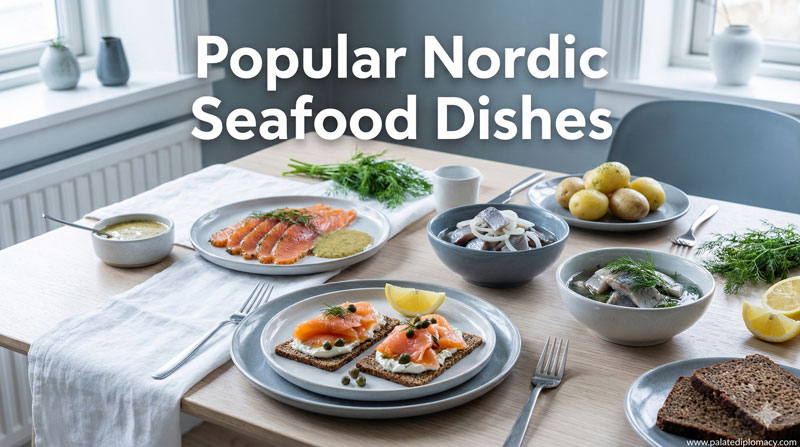
Nordic cooks pair smoked salmon with greens, dill, lemon, and crème fraîche. This balance highlights bright acidity against the fish’s fat. Rye bread and crispbread provide a sturdy base. On open-faced sandwiches, the salmon shines atop cream cheese or dill mayonnaise. In markets and homes, small bites invite sharing. Thus, the dish invites conversations about texture, aroma, and color, turning a simple slice into a moment of hospitality.
Regional Voices: Norway, Sweden, Finland, and Denmark
Coastlines shape texture and flavor. In Norway, cold winters meet a long tradition of smoked salmon from fjord waters. The fish often wears a light dill finish and a gentle salt kiss. Sweden blends gravlax-inspired cures with gentle smoking, yielding a pale pink glow and a whisper of smoke. Finland favors bright flavors with dill and chives. Denmark pairs smoked salmon with creamy spreads on rugbrød, creating elegant bites. Across the region, the craft evolves while staying rooted in sea-born flavor and local ingredients.
Everyday Meals and Festive Feasts
Smoked salmon moves easily from daily lunches to festive spreads. For everyday meals, it brightens a simple sandwich or salad. Meanwhile, for gatherings, it becomes part of a larger display: ribbons of salmon, fresh herbs, and dairy sauces. The dish adds color and aroma without overwhelming the table. It becomes a shared experience, a chance to savor time together and honor the sea’s generosity.
Modern Craft, Sustainability, and Innovation
Today, cooks honor the craft with care for sourcing and process. Local farms and coastal fisheries supply salmon with attention. Small smokehouses invite families to Try new flavors. Innovation appears in spice blends, different woods, and micro-herbs. The result is a living tradition that respects taste, texture, and season. This approach keeps smoked salmon a vibrant part of Nordic Cuisine today and tomorrow.
A Beautiful Bridge Between Sea and Table
In closing, smoked salmon embodies balance, precision, and warmth. It links simple ingredients—fish, salt, smoke, and herbs—with shared meals and moments of delight. In Nordic cuisine, its popularity rests on flavor, technique, and the joy of gathering. The dish remains inviting, respectful, and adaptable to seasons and tastes.