
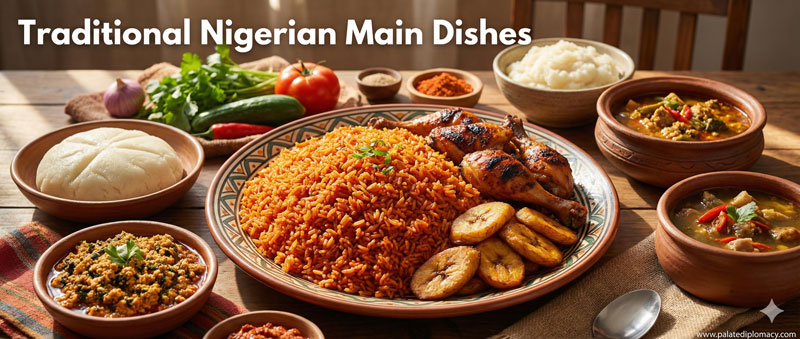
The Allure of Jollof Rice
Travelers discover the allure of Jollof Rice in a bright red pot. The dish blends tomatoes, peppers, onions, oil, and spices. Long-grain rice absorbs the rich sauce. Each bite carries warmth, a touch of heat, and a savory finish. The color and aroma invite curiosity, and people imagine gatherings, stories, and shared meals before the first spoon.
Cultural Value: Hospitality at the Table
Food is hospitality made visible. In homes, markets, and festivals, jollof rice shines as a centerpiece. Families gather around the pot. Friends pass bowls and share. The dish acts as a link between generations. Cooks add their personal touch to honor tradition while inviting new flavors. Travelers sense this welcoming spirit as soon as they breathe in the aroma.
The Culinary Signature: Technique and Flavor
The signature lies in layering and timing. Start with a tomato base and fried onions. Then add stock, peppers, and spices. The rice cooks in the sauce, soaking up depth and warmth. The result is a cohesive, bright dish. Some cooks emphasize a crisp bottom edge, known as the “burnt” layer, which adds texture and a hint of smokiness. This contrast delights the palate and shows skill.
Regional Twists: A Quilt of Flavors
Regional twists add texture and surprise. Nigerian jollof tends to be bold and peppery. Ghanaian versions often lean toward a richer, slightly sweeter profile. Senegal and other West African variants may use different spice blends, like curry or thyme, to create a distinct aroma. Travelers taste these differences as a map of flavors across a single dish. The variations celebrate local ingredients while keeping a shared spirit of joy at the table.
Sensory Journey: Color, Aroma, and Texture
The bright red-orange hue signals ripe tomatoes and careful seasoning. The fragrance lifts the mood and signals a memorable meal. The texture ranges from tender grains to a crisp edge at the bottom. A well-made jollof feels both comforting and exciting. It invites second helpings and conversations.
A Traveler’s Table: How to Experience Jollof On the Road
Look for Busy stalls with simmering pots and steady laughter. Listen for the gentle buzz of chatter and the clatter of utensils. Ask about spice level and suggested sides. Pair with fried plantains or a fresh salad to balance the richness. Taste reveals layers: tomato sweetness, pepper brightness, and a comforting finish. Share with locals to hear stories about family, seasons, and favorite ingredients.
Jollof in Global Kitchens: A Shared Tradition
In many cities, jollof rice appears at pop-up eateries, food markets, and home-style dinners. Travelers bring back memories of a pot that feeds a crowd. Each rendition adds to a living tradition that travels with people and plates. The dish becomes a bridge between places, inviting conversations about taste, technique, and time.
Conclusion: A Bright, Welcoming Classic
Jollof rice stands as a bright, generous expression of West African culinary culture. It celebrates balance—bright flavors, comforting texture, and communal joy. For travelers, it is a dish to savor, share, and remember. The pot stays warm wherever it travels, inviting new friends to take part in a simple, flavorful ritual.