
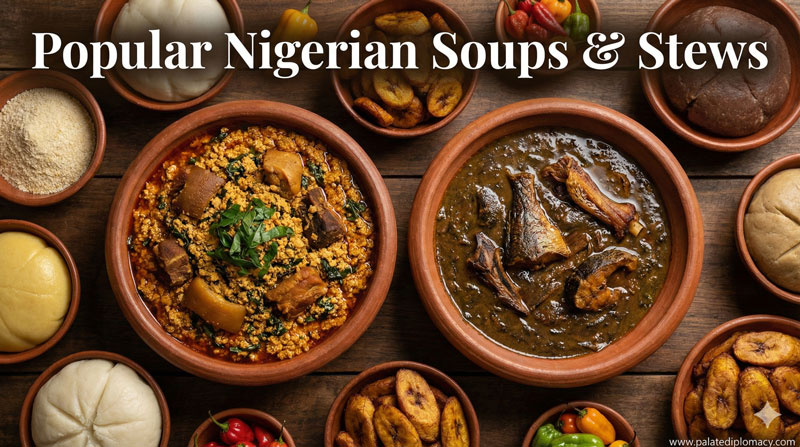
Why Egusi Soup Is One of Nigeria’s Most Loved Dishes
Egusi soup stands out on Nigerian tables for its warmth, aroma, and the sense of togetherness it brings. It is a dish that invites conversation and shared enjoyment. People describe its creamy texture and bright color as a daily celebration. In many homes, preparing egusi is a ritual that honors family and tradition.
The Heart and Soul of the Dish: Core Ingredients
The star is ground egusi seeds, which give the soup its characteristic body and richness. Palm oil provides a sunny hue and a smooth, glossy finish. Meat, fish, or stockfish add depth, while onions and spices lift the flavor. Leafy greens such as bitter leaf, ugwu (pumpkin leaves), or spinach brighten the pot and balance the fat from the oil. The result is a thick, comforting soup that coats a starchy side like pounded yam or fufu. Each ingredient plays a role, but together they create a harmony that feels both familiar and inviting.
The Craft of Making It: Technique that Travels
The technique is approachable yet nuanced. First, egusi seeds are prepared and ground to a paste. Then the paste is mixed with water to form a thick suspension. Next, palm oil is heated to brighten the flavors, and the egusi mixture is stirred in slowly. Meat or fish is added to build depth, followed by stock or water to reach the desired consistency. Finally, greens are folded in for brightness and a fresh contrast. The constant motion of stirring and tasting turns a simple pot into a confident, joyful act of cooking.
A Dish That Bridges Generations and Gatherings
Egusi soup shines most in company. It appears on family meals, weekend gatherings, and festive occasions. The act of sharing a pot fosters connection, care, and conversation. Elders are often served first, a gesture of respect and community. Guests enjoy the warmth of the meal, and stories flow as freely as the steam. In this way, egusi becomes more than food; it is a bridge between generations and a symbol of hospitality.
Regional Variations: A Tapestry of Flavors
Across Nigeria, cooks tailor egusi to local tastes. Some add extra heat with peppers, others tint the soup with different greens. The choice of greens, the type of meat or fish, and the balance of oil all reflect local favorites. This diversity enriches the dish without breaking its essence. Whether served with pounded yam, garri, or amala, egusi adapts while preserving its comforting core.
The Sensory Experience: Color, Texture, and Aroma
The dish captivates the senses. The bright orange-gold of the palm oil palette contrasts with the deep green of the leaves. The texture ranges from creamy and smooth to slightly grainy, depending on the grind and simmer time. The aroma blends nutty egusi with the warmth of spices and the savor of meat or fish. Each bite offers both richness and brightness, a balance that makes egusi memorable.
A Versatile Favorite in Modern Kitchens
Today, egusi soup sits comfortably in both traditional and contemporary kitchens. Home cooks savor its forgiving nature and bold flavor. It pairs well with a variety of starchy bases, making it adaptable for different tastes and occasions. Yet its cultural resonance remains intact: a dish that honors family, craft, and shared meals.
Celebrating the Beauty of Nigerian Food Culture
In essence, egusi soup is a celebration of Nigerian culinary culture. It honors the skill of cooks, the generosity of gatherings, and the joy of taking time to prepare something beloved. The dish invites care in each step and gratitude at the table. By looking at egusi soup, we glimpse a Food Culture that values nourishment, hospitality, and community—delightfully expressed in a single, soulful pot.