
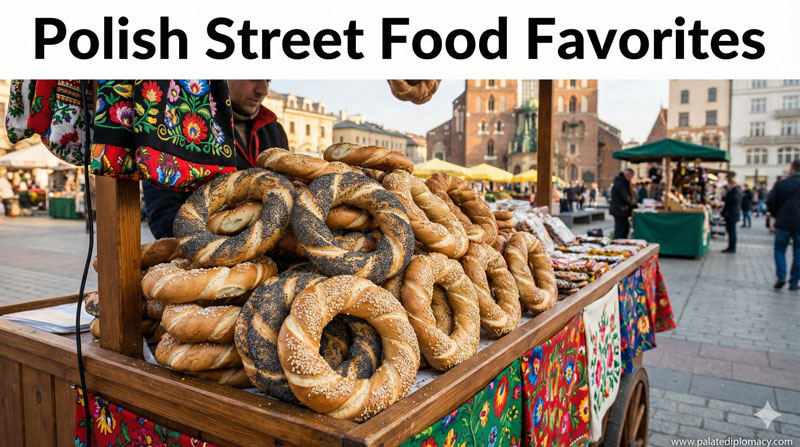
The Jewel of Kraków: Obwarzanek Krakowski
Obwarzanek Krakowski is a beloved ring-shaped bread that hails from Kraków, Poland. Its glossy crust catches the eye, while the soft, chewy interior invites a gentle bite. The dough is formed into a circular ring and briefly boiled before baking, then finished with seeds such as sesame or poppy, or with a touch of onion. This simple loaf carries a sense of place, craft, and everyday joy that resonates with both locals and visitors. The dish shines in its accessibility and its ability to be shared; it is easy to pick up on the go, yet special enough to appear at a family table or a city market.
A Ring of Tradition: History in Every Bite
The Obwarzanek Krakowski sits at the heart of Kraków’s culinary heritage. For centuries, bakers crafted these rings in workshops near busy town squares. They were sold from hand to hand, carried on the way to work, or enjoyed with a hot drink as a quick, satisfying snack. The ring shape is both practical and symbolic: a welcoming loop that invites sharing and conversation. Over time, the recipe grew into a regional treasure, valued for its consistent quality, its bright aroma, and the way it captures the rhythm of the city’s daily life. Today, the obwarzanek stands as a friendly ambassador of Kraków’s bakery craft and enduring food culture.
Craft and Technique: The Dough, The Boil, The Bake
The making of an obwarzanek blends simple ingredients with precise technique. A balanced dough of flour, water, yeast, salt, and a touch of sugar creates a versatile base. The dough rests and develops its character, then is rolled into strands and shaped into a ring. The next step is distinctive: the rings are briefly boiled in water with a pinch of baking soda. This bath helps set the surface and gives the crust its characteristic sheen and gentle gloss. After boiling, the rings are showered with seeds or toppings—sesame, poppy, or salt with dried onion are popular choices—and then baked to a golden finish. The result is a crust that crackles softly, a center that stays tender, and a flavor that lingers pleasantly.
Flavor, Texture, and Culinary Significance
The Obwarzanek Krakowski offers more than taste; it delivers a sense of texture and tradition. The outside crackles with a toasty snap, while the inside remains light and springy. Sesame and poppy seeds contribute a nutty aroma, while onion adds a warm, savory note. The surface glaze from the boil brings a subtle sweetness and a pleasing sheen. Nutritionally modest, the obwarzanek celebrates the idea that a few humble ingredients can become a memorable, everyday treasure. Its culinary significance lies in its balance: it satisfies hunger with simplicity, pairs well with a range of accompaniments, and remains consistently satisfying in a world of ever-changing snacks.
A Treat for All Seasons: Where It Fits in Polish Food Culture
Obwarzanek Krakowski is a staple in markets, bakeries, and homes throughout the year. It fits naturally into morning rituals, mid-afternoon breaks, and festive gatherings. In Kraków, it accompanies coffee on a busy day, or serves as a light, shareable bite during a stroll through the Old Town. Its place in daily life is steady yet celebratory: a symbol of hospitality, a reminder that great flavor can come from modest preparations, and a courteous nod to local craft. The bread’s versatility makes it a constant presence in Polish culinary life, where small, well-made foods can carry big cultural warmth.
How It Is Enjoyed: Pairings, Occasions, and Moments
Enjoying an obwarzanek Krakowski is about slowing down just enough to savor texture and aroma. It pairs beautifully with coffee, tea, or a glass of cold milk. Breaks during a market visit become cozy moments when a warm ring is shared among friends or family. Its mild flavor makes it a friendly companion to cheese, butter, or jam, yet it also shines on its own. In social settings, the ring’s round shape invites conversation and connection, echoing the idea that food can bring people together in a simple, unpretentious way. Whether savored hot from the oven or cooled to room temperature, the obwarzanek remains a comforting, universal snack.
The Market Craft: bakers, Stands, and the Human Touch
The enduring charm of Obwarzanek Krakowski comes from the hands that shape and bake it. Bakers twist dough into a ring with practiced ease, then monitor the boil and bake with care. Many stalls feature a quick scent of warm sesame or onion, drawing people closer. The tradition rewards patience and consistency: a well-made obwarzanek has a uniform ring, a crisp surface, and a tender interior. This craft fosters a sense of community in market spaces, where vendors greet regulars by name and passing shoppers discover a favorite every visit. The result is more than a snack; it is a living example of local skill, memory, and shared enjoyment.
Selecting, Storing, and Reheating: Tips for the Home Cook
- Look for a glossy, even crust and a fragrant aroma. The surface should be crisp, not dull.
- Seeds or toppings should be evenly distributed and fresh; avoid rings with uneven browning.
- Store at room temperature in a cloth bag or wrapped in a clean towels for up to a day or two. Avoid plastic, which can soften the crust.
- To refresh, warm in a 350°F (175°C) oven for 5–7 minutes. A gentle reheat revives aroma and snap.
- Pair with simple spreads or keep it plain to let the bread’s own character shine.
A Living Polish Favorite: Celebrating a Food’s Place in Culture
The Obwarzanek Krakowski stands as a quiet, gracious ambassador of Kraków’s food culture. It reveals how a simple dough, treated with care, can become a memorable ritual—one that travels easily from market stalls to neighborhood tables. Its story is not about novelty, but about the joy of everyday tradition, the beauty of artisan skill, and the warmth found in shared bites. By savoring it, you participate in a centuries-old practice that celebrates craftsmanship, community, and the beauty of a well-made, timeless snack. The obwarzanek invites you to slow down, notice the craft, and enjoy a piece of Kraków’s heart with every bite.