
The Story Behind Obwarzanek Krakowski, a Polish Food Favorite
Obwarzanek Krakowski is more than a bread. It is a gentle, cheerful symbol of Kraków’s daily life. You can smell it long before you taste it. The ring shape invites a smile. Bakers carry on a careful craft, passing it from one generation to the next. This is a story of warmth, skill, and shared moments around a simple snack that has become a beloved Polish favorite.
A Window into Kraków’s Market Culture
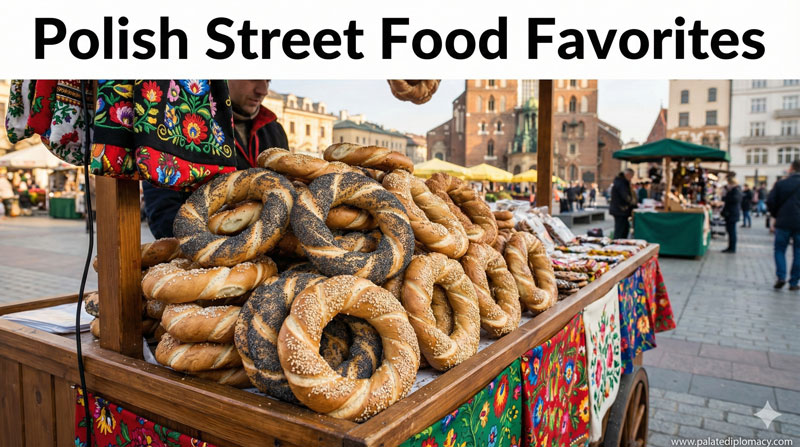
In Kraków, the market square buzzes with activity. Here, warmth comes not only from the sun but also from the scent of fresh bread. Obwarzanek Krakowski is a common sight, sold by friendly bakers who greet customers by name. People gather for a quick bite, a chat, or a small morning ritual before the day begins. The bread is a daily companion for students, workers, and neighbors. It sits on a tray beside other bright breads, each with its own story. The ritual of buying an Obwarzanek is a small, joyful moment that connects people to place and to tradition.
The Craft in the Kitchen: How It Is Made
The making of Obwarzanek Krakowski blends technique with care. The dough is shaped into a ring, a loop that is easy to hold and enjoy. The rings may be given a gentle boil before baking. This step helps create a glossy crust and a tender bite. After boiling, the rings are baked until they blush with a rich color. Bakers often finish Obwarzanek with toppings that add texture and flavor. Sesame seeds, poppy seeds, or flaky salt are common choices. Some bakers offer charming variations, but the classic version remains a comforting standard. The result is a bread that feels both sturdy and delicate, a small piece of craft you can hold in your hand.
Texture, Flavor, and Variation
A good Obwarzanek Krakowski offers a satisfying chew with a soft inner crumb. The outer crust is slightly crisp, giving way to a supple center. The flavors are simple and honest: a touch of malt-sweetness from the dough, a hint of salt, and the aroma of sesame or poppy seeds in the nose. The ring shape creates an inviting bite, and the warm scent makes the moment feel friendly. While sesame and poppy seed toppings are traditional, bakers sometimes add a light dusting of salt or explore gentle spice notes. Each variation keeps the essence of the bread while inviting new admirers to discover its charm.
A Symbol in Daily Life and Celebration
Obwarzanek Krakowski belongs to the everyday life of Kraków in a meaningful way. It accompanies conversations over coffee and tea. It travels well for a quick snack at the table or on the go. Families share the bread as a small token of hospitality, a friendly gesture that welcomes guests and neighbors. In markets and fairs, it becomes a familiar, comforting presence. The bread’s simple beauty helps people pause for a moment of comfort and connection. Its steady presence adds a touch of joy to ordinary days and small gatherings alike.
Pairings, Serving, and Modern Finds
This bread pairs well with a range of simple accompaniments. A dab of butter can soften the crumb, a thin layer of honey adds sweetness, and a cup of tea or coffee heightens the moment. The beauty of Obwarzanek Krakowski lies in its versatility: it is delicious plain, but it also serves as a perfect partner to light spreads or cheeses. in Modern bakeries, you may find evolved toppings or seasonal twists, yet the core experience remains grounded in the same inviting texture and aroma. The bread invites you to slow down, savor, and share.
Keeping the Craft Alive
The Story of Obwarzanek Krakowski continues through the work of dedicated bakers and their communities. Young apprentices learn the dough, the shaping, and the careful boil-and-bake method. Family-run bakeries keep the tradition bright while welcoming fresh ideas. This living craft honors time-honored methods while embracing thoughtful updates. The result is a bread that feels both familiar and refreshing—rooted in place, yet open to new tastes.
If you seek a warm introduction to Polish food culture, Obwarzanek Krakowski offers a gentle and delicious entry. Its ring is a small circle of shared moments, a reminder that great food often comes from patient hands, careful technique, and a welcoming spirit. Each bite invites you to enjoy the beauty of traditional craft and the everyday joy that flour and water can bring to a community.