
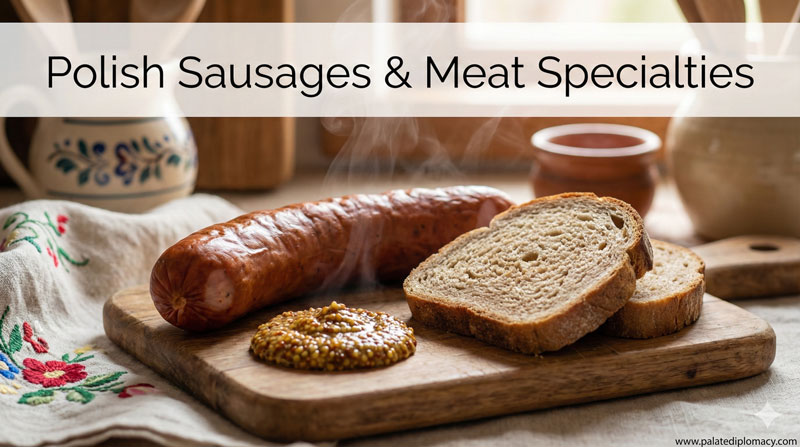
The Heart of Kiełbasa Krakowska
Kiełbasa Krakowska is more than a sausage. It is a doorway into Polish dining rooms, where scent and memory mingle. When a plate arrives at the table, the deep aroma of cured pork and smoky warmth invites conversation and calm. The dish speaks softly of family rituals, regional pride, and a long tradition of careful craft. in Polish kitchens, this sausage is celebrated for its balance of richness and brightness, a reminder that food can carry heritage in every bite.
The Craft that Defines It
The beauty of Kiełbasa Krakowska lies in its careful balance of ingredients and technique. It is traditionally made from pork, often from shoulder, with a mindful blend of garlic, black pepper, and marjoram. Salt seals in moisture and flavor, while the smoking step adds a subtle sweetness and a golden sheen. The beech or oak smoke leaves a gentle, approachable aroma rather than a heavy smoke. The result is a sausage that stays tender when sliced thin and holds its shape on the plate.
This is not a hurried process. The meat rests with its seasonings, then descends into a curing and aging rhythm that Polish kitchens honor with patience. Each step—grinding, mixing, stuffing, curing, and smoking—warrants attention. The craft invites hands to be steady, minds to be present, and hearts to be mindful of time-honored methods. In this way, Kiełbasa Krakowska becomes a living link between skilled hands of makers and the shared table of families.
A Table Tradition: How It Is Enjoyed
Across Polish homes, the sausage joins meals in a variety of heartfelt ways. On a simple weekday, slices of Kiełbasa Krakowska may appear beside dark rye bread, a dab of mustard, and a quick pickle. On festive occasions, it shines on a larger board with other cured meats, cheeses, and seasonal vegetables. The practice of slicing the sausage thinly ensures every bite is balanced with bread, condiment, and the crisp bite of a fresh pickle. This careful serving honors the sausage and invites everyone at the table to take their time and savor.
The versatility of Kiełbasa Krakowska is part of its charm. It is enjoyed cold on a platter, warmed softly to release its aroma, or used in light dishes that let its flavor shine. In many homes, a wedge of the sausage becomes a reliable anchor for a morning breakfast or a platter at midday gatherings. The simple act of presenting it well highlights a cultural reverence for food as a shared, respectful experience.
Shared Meals, Shared Memory
In Polish food culture, meals are moments of connection. Kiełbasa Krakowska often appears during family gatherings when stories are told, siblings exchange smiles, and grandparents supervise the meal with quiet pride. The sausage becomes a thread that ties generations together, a tasty reminder of continuity and care. It’s not just sustenance; it’s a cultural gesture that signals hospitality, generosity, and a welcoming table.
Clear transitions—moving from one course to the next, from appetizer to main pairing, from casual to ceremonial—reflect a larger rhythm of Polish dining. The sausage sits comfortably at every turn, inviting conversation about the day and appreciation for traditional methods. In this way, Kiełbasa Krakowska frames social moments with warmth and respect.
Regional Voice: Krakowska and the Małopolska Spirit
Kiełbasa Krakowska carries a regional voice. Kraków and the surrounding Małopolska region are known for a dense tapestry of culinary practice, and the sausage embodies that heritage. Its flavors hint at local farms, nearby forests, and traditional smokehouses where recipes are passed from elder to apprentice. The dish becomes a quiet ambassador for place—softly named after a city, yet beloved wherever the table welcomes it. This regional flavor strengthens a sense of belonging and helps people feel connected to a place through food.
Seasonal Celebrations and Everyday Joy
The dish finds its home in both daily dinners and seasonal celebrations. On winter evenings, it warms the room as a bowl of soup or an open-faced sandwich gains depth with a few slices. In spring and summer, it appears on picnics or lighter boards, pairing well with fresh herbs and seasonal vegetables. The flexibility of Kiełbasa Krakowska makes it a dependable presence, a constant that families turn to for comfort and familiarity. Through it, the seasonal cycle is tasted and celebrated.
The Beauty of Simplicity
What makes Kiełbasa Krakowska so enduring is its simple beauty. The meat, the smoke, and the seasonings come together with restraint. There is no need for flashy additions to elevate the flavor; the sausage carries its own quiet dignity. This simplicity invites cooks to trust traditional methods and invites eaters to appreciate a straightforward, honest product. The result is a dish that teaches reverence for craft, respect for resources, and gratitude for shared meals.
A Gentle Guide to Honor at Home
For readers who wish to honor this dish at Home, start with a good-quality kielbasa Krakowska. Slice it thin and arrange it alongside soft rye bread, a touch of mustard, and a selection of crisp pickles. Allow the aroma to fill the room as you set the board, then share the moment with family and friends. Store the sausage in a cool place, and slice only what you will use to preserve its texture and flavor. By approaching it with care, you keep alive the cultural spirit that makes this dish meaningful.
Closing Thought: A Timeless Table Companion
Kiełbasa Krakowska stands as a testament to Polish culinary culture. It embodies craft, family, and regional pride. It invites us to slow down, observe the process, and honor the people who bring this sausage from smokehouse to table. In its quiet, flavorful way, it celebrates hospitality and a deep respect for food as a shared, nourishing art. May it continue to grace tables with warmth, reminding us how a single dish can carry a landscape of culture in every slice.