
Why Injera Is One of Ethiopia’s Most Loved Dishes
Injera holds a special place in Ethiopian food culture. This tender, pancake-like bread is both meal and method. It carries flavor, and it also brings people together around the table. The dish invites conversation, shared bites, and a sense of celebration in daily life.
The Craft: Fermentation and Teff
Injera begins with teff, a tiny grain that yields a rich, nutritious batter. The process is simple in idea, yet precise in practice. Ground teff mixes with water and slowly ferments. The fermentation develops a mild tang that defines injera’s character. Then a thin layer of batter lands on a hot clay griddle. Steam rises, bubbles form, and the surface dries into a spongy, lace-like crust. The result is a soft, elastic bread with a brief, bright sour note that lingers pleasantly. Versatility comes from the batter’s depth: white teff makes a lighter injera, while brown or mixed grains deepen the flavor. The craft combines patience with technique, and the payoff shows in every bite.
A Shared Plate and Social Rituals
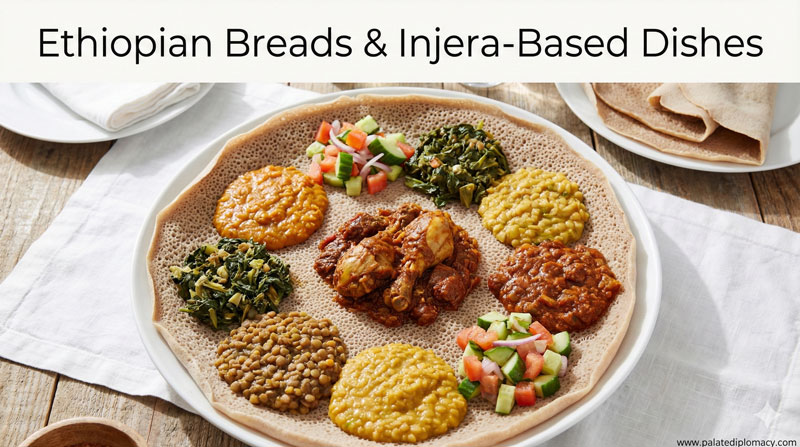
Injera functions as a central plate for meals. Food arrives as stews and vegetables rest on or beside it, not inside a separate dish. Diners tear pieces of injera to scoop up sauces, a simple, satisfying motion. This act turns eating into a communal ritual. Guests are welcomed to the shared platter, and neighbors might join in, creating a circle of scents and sounds. Etiquette centers on warmth and consideration: offering a fresh piece to others, serving elders first, and passing dishes with care. In these moments, the bread is more than sustenance; it is a bridge that connects people through touch, share, and conversation.
Texture, Taste, and Culinary Significance
Injera’s texture is a defining feature. It remains soft yet resilient, capable of holding generous spoonfuls of sauce without tearing. The holes on its surface catch sauces, helping flavors cling in every mouthful. The flavor profile blends mild sweetness with a gentle sourness. This balance enhances the losing and winning notes of stews and vegetables. The bread’s aroma—grainy, toasty, and inviting—prepares the palate for the next course. Because injera carries flavor as it travels from plate to mouth, it anchors the meal’s rhythm and heightens the overall culinary experience.
Serving Traditions: Wats, Vegetables, and More
A typical Ethiopian meal showcases injera with a variety of wats (thick stews) and vegetable dishes. Lentil wat, chickpea wat, and beef or chicken stews often share the table with lentil, spinach, and zucchini preparations. The pairing showcases balance: protein and vegetables mingle with the bread’s tangy backbone. These combinations reveal a culinary philosophy that values harmony and contrast. The injera also functions as a natural scoop, a practical tool that supports smooth, enjoyable dining. When diners taste, the fishers of flavor are the layers of spices, the richness of legumes, and the crisp, comforting bite of the bread itself.
The Role of Teff and Regional Variations
Teff’s distinct character shapes injera’s identity. The grain is small, nutrient-dense, and naturally gluten-free, which makes injera accessible to many. Regions vary in teff purity and grain blends, producing subtle differences in texture and flavor. Some kitchens mix teff with other grains for a deeper crust or a lighter bite. While teff remains the star, regional tweaks celebrate local harvests and traditions. This adaptability shows how a single dish can reflect the land and hands that craft it.
A Symbol of Hospitality and Everyday Life
Injera embodies hospitality. The simple act of sharing bread communicates welcome, generosity, and community. Families reflect pride in their recipe, and many households protect a treasured process—grinding, fermenting, and cooking—passed down through generations. In daily life, injera helps meals flow smoothly, letting cooks present a mosaic of sauces without a cluttered table. The bread’s presence signals care, quiet elegance, and a daily celebration of food as a communal experience.
Modern Takes While Keeping Tradition
Today, creative cooks explore injera with new textures and flavors while honoring the traditional base. Some kitchens celebrate different teff varieties, while others experiment with regional ingredients to complement classic wats. Yet the core remains the same: injera as a shared plate, a conduit for conversation, and a warm invitation to dine together. These modern touches extend the dish’s reach without losing its cultural heart.
Conclusion: A Timeless Welcome on Every Table
Injera is more than a meal component. It is a cultural practice that mirrors Ethiopian hospitality, culinary ingenuity, and communal life. The bread’s fermentation-driven tang, its porous, comforting texture, and its role as a unifying plate make it one of Ethiopia’s most loved dishes. By sharing injera, families and friends celebrate flavor, relationship, and the simple joy of eating together. If you approach a table with injera, you approach a story—in every bite, a legacy of care, craft, and community.