
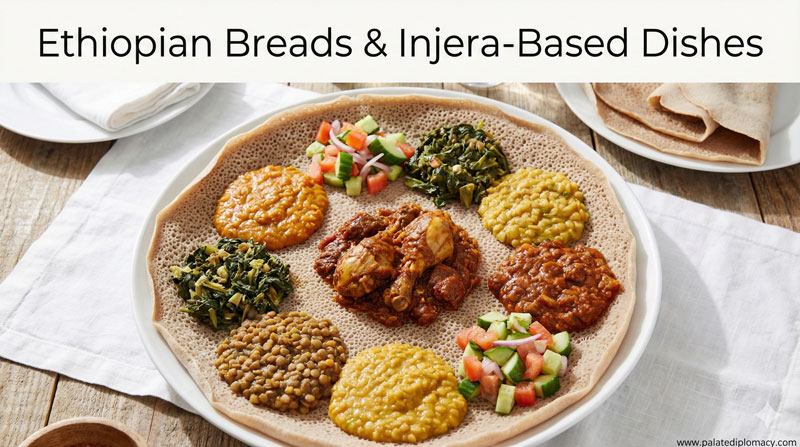
What makes Injera central to Ethiopian meals
Injera is much more than bread. It is the heart of an Ethiopian meal. Made from teff flour, water, and time, it carries a gentle tang from natural fermentation. The batter forms bubbles, giving injera its characteristic spongy surface. When cooked, it becomes a soft, elastic circle that soaks up sauces with ease. Diners tear pieces from the edge and use them to scoop each bite. This simple act creates a rhythm of sharing and nourishment. The bread’s presence invites conversation, patience, and connection at the table. Injera’s texture and flavor set a comforting tone for the entire feast.
A dish of sharing: The social ritual
Meals with injera are built for togetherness. A large platter holds several stews, vegetables, and sauces, all arranged on top of the bread. Guests gather around, smiling and talking as they eat. Everyone tears off pieces of injera to form a natural utensil. Then they scoop, dip, and mix flavors with care. This shared style reduces distance between people and invites participation. The practice honors generosity and hospitality. It is common for guests to be invited to try a little of everything. In this way, injera becomes a bridge between tastes, families, and friends.
Teff and tradition
Teff is a tiny grain with a big story. Traditional injera is often made from teff flour, ground from ancient varieties grown in highland soils. Teff brings a mild sweetness and a distinctive depth to the batter. The culture around teff emphasizes careful farming, grinding, and blending. Many cooks still rely on time-honored methods that mark the season and the region. Injera made from pure teff is celebrated for its mineral content and unique flavor. The grain’s versatility also supports a wide range of textures, from soft and pliable to slightly crisp along the edges. This grain connects daily meals to seasonal harvests and local farms.
Texture and fermentation: The signature bite
Fermentation transforms injera into something special. The batter rests, inviting tiny yeasts to do their work. The result is a tangy aroma and a light acidity that brightens stews. The surface becomes full of tiny holes, Like a soft sponge. These holes catch the sauces and keep them from pooling on the plate. The bite is tender and resilient, easy to pull apart with your fingers. A well-made injera holds together under a generous scoop yet yields softly when pressed. This balance makes every bite feel gentle and satisfying. The sensory experience—aroma, tang, texture—is part of the meal’s memory.
The pairing dance: Wots and other dishes
Injera pairs with a wide array of wots (stews), vegetables, and fresh salads. The bread acts as both plate and utensil, soaking up sauces without overwhelming them. A spoon is rarely needed; a simple tear and scoop does the job. The most beloved combinations feature mildly spiced stews that mingle their flavors with the tang of teff. Each bite blends grains, legumes, and herbs into a comforting harmony. As the plate empties, the injera underneath grows more flavorful, having absorbed a chorus of spices and textures. This pairing is a daily celebration of balance and craft.
Etiquette and hospitality: Serving with care
The table is a space of welcome. Injera is laid out with care on a large flat platter. People serve others first, then themselves, as a sign of respect and generosity. Diners typically eat with the right hand, tearing off a portion of injera to begin. The bread’s natural grip helps lift morsels for a smooth transition from plate to mouth. Wash basins or water cups may be nearby, inviting cleanliness and mindful eating. Etiquette reinforces a warm mood: listening, sharing, and making room for everyone at the table. The practice highlights how food can foster kindness and belonging.
Everyday life and celebrations
Injera sits at the center of daily meals and special occasions alike. On ordinary days, a family might share a modest set of wots and vegetables on a single injera, keeping the meal simple and satisfying. In festive moments, the spread grows with more dishes and larger gatherings. Seasons and family events shape the menu, and injera remains the common thread that binds them all. The bread’s presence invites storytelling, laughter, and mutual care. Across homes, injera helps cultivate a sense of ritual around food, time, and togetherness.
A world of flavor rooted in Ethiopian culture
Today, many cooks around the world seek out injera for Its Unique texture and bright tang. Home kitchens and professional eateries alike explore teff-based recipes, sometimes adapting with local grains while preserving the core idea: a sour, porous bread that serves as plate and utensil. This accessibility invites curious eaters to experience Ethiopian flavors with respect and curiosity. The result is a growing appreciation for a dish that embodies hospitality, craft, and shared nourishment. Injera’s appeal lies not only in taste but in its ability to draw people closer through a common meal.
Conclusion: The enduring beauty of injera
Injera is a study in balance. It blends heritage grain, patient fermentation, and social ritual into one remarkable dish. It invites people to gather, tear, dip, and savor together. The bread’s soft texture and tangy note awaken the flavors of stews and vegetables. Most of all, injera illuminates the warmth of Ethiopian food culture: a culture of sharing, respect, and joy at the table. By welcoming others to join, injera remains a timeless symbol of hospitality and culinary artistry.