
Introduction: The Heart of Ethiopian Dining
Injera with wat is more than a meal. It is a living tradition that brings people together. The dish invites conversation, smiles, and a sense of hospitality. Each bite feels Like a celebration of craft and community.
Injera: A Plate That Feels Like a Table
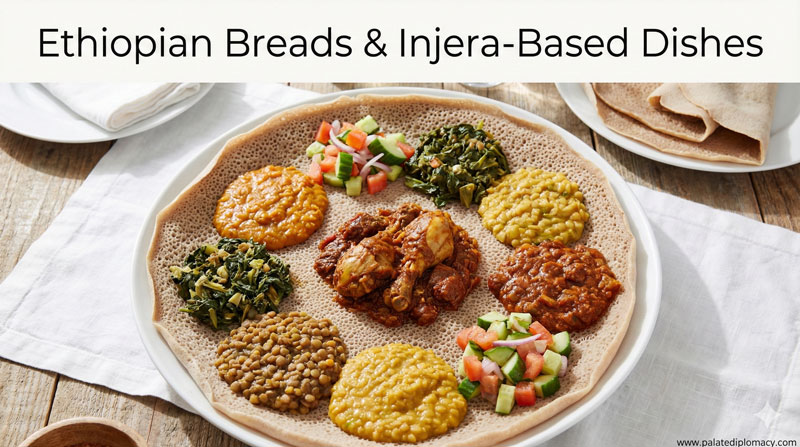
Injera is the centerpiece. It is a soft, sour flatbread that acts as both plate and utensil. The spongy, porous surface soaks up the flavors of wat. Diners break off pieces of injera and use them to scoop, dip, and share. This shared method shapes the rhythm of the meal.
The Craft of Injera
Injera starts with teff flour mixed with water and left to ferment. Fermentation adds a bright, tangy note. The batter is poured onto a hot clay griddle called a mitad and cooked into large rounds. The result is a delicate lace of bubbles and a slightly sour aroma. The skill lies in timing and heat, producing injera that is soft yet sturdy enough to hold sauces. When done well, injera feels like a gentle canvas for every wat served with it.
Wat: A Symphony of Flavor
Wat is the heart of the dish’s personality. It is a slow-simmered stew rich with spices, vegetables, and sometimes meat. Berbere, the spice blend, provides warmth and depth. Butter, often clarified and spiced (niter kibbeh), carries aroma and rounds the heat. Common varieties include misir wat (red lentil), shiro (chickpea or flour-based), and Doro Wat (chicken). Each variation highlights a different texture and aroma, yet all share a comforting, homey essence. The pairing with injera creates a balance of tang, spice, and softness that stays with you.
Sharing at the Table: Hospitality in Action
Eating injera with wat is a social event. The meal centers on a single platter, inviting everyone to gather close. Gursha, the gesture of offering a bite to another person, is a warm sign of care. The table becomes a circle of conversation, laughter, and mutual respect. This arrangement honors guests and hosts alike, reinforcing a sense of belonging.
Seasons, Ingredients, and Local Rhythm
Injera and wat reflect the land and season. Teff grown nearby yields injera with subtle regional character. Lentils, chickpeas, leafy greens, and seasonal vegetables shape wat choices. The dish adapts to family kitchens and community kitchens alike, always with the same spirit: nourishment shared with neighbors and friends. The result is a comforting diversity that stays true to tradition.
A Living Tradition on Your Plate
Injera with wat embodies patience, craft, and care. The dish teaches balance—between sour and warm, between soft bread and hearty stew, between individual bites and shared moments. It remains inviting, respectful, and deeply rooted in food culture. Every bite is an invitation to slow down, listen, and savor.
Conclusion: A Timeless Favorite
Injera with wat stands out because it welcomes all. It honors the harvest, the cook, and the guests in a single, flavorful ceremony. The dish shines as a testament to Ethiopian culinary artistry and communal dining. Enjoying it is a gentle doorway into a rich food culture.