
Why Travelers Are Falling in Love with Injera with Wat
Travelers are drawn to Injera with Wat for its warmth, texture, and depth. This dish is more than food; it is a doorway to a living table of culture. Each bite invites curiosity and respect. The meal blends craft, hospitality, and rhythm in a single experience. It leaves a memory of flavor and community that travelers carry home.
A Plate of Hospitality
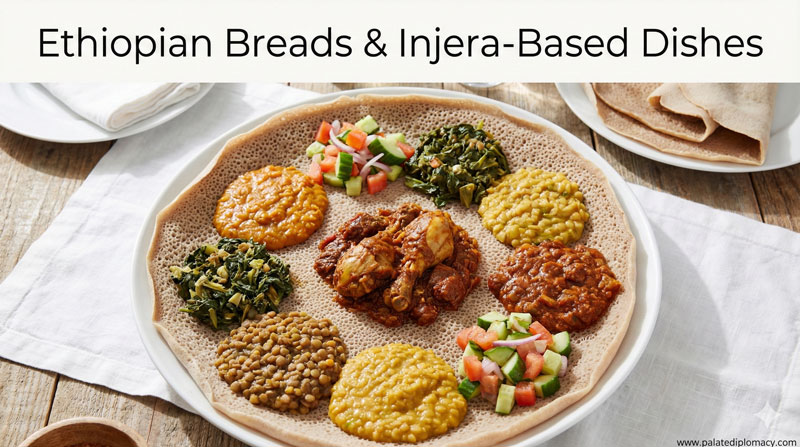
Injera with Wat centers on sharing. The flat, spongy injera forms both plate and utensil. Diners tear pieces to scoop the wat and lift bites. The action feels ceremonial yet welcoming. Hosts guide the pace, offering stews that balance heat, sweetness, and savoriness. The act of gathering around a single platter communicates care and connection. That sense of welcome resonates with travelers seeking genuine hospitality.
Fermentation, Texture, and Flavor
Injera is made from teff flour, a tiny grain with a bright, earthy note. The batter ferments, creating a gentle tang and bubbly surface. When poured on a hot surface, it forms a soft, elastic sheet with pale pockets. The texture is key: spongy and light, it soaks up flavors without washing them away. This balance makes Injera with Wat feel bright and comforting at once. Travelers notice how the sourness enhances the spices and herbs in the stews.
Wat: A Crown of Flavor
Wat, or wot, is the heart of the dish’s flavor. Chefs simmer meat or legumes with onions, garlic, and a chorus of spices. Berbere adds warmth and a subtle blaze; spices mingle with aromatics for a layered finish. Wat can be meaty, smoky, earthy, or bright with pepper and herbs. The result is a harmony that plays off the tang of injera. For travelers, the range of wat varieties offers a journey in a single meal.
The Experience at the Table
Eating Injera with Wat Is an immersive experience. Diners taste the stew, then lift a portion with injera and gently press it to the palate. The tang of the bread meets the spice of the wat in a pleasant contrast. The meal invites conversation, pace, and shared discovery. Travelers often find that the act of trying multiple wat options broadens their understanding of the cuisine. The experience stays with them long after the meal ends.
Craft, Teff, and Culinary Craftsmanship
Teff flour is naturally gluten-free, and its tiny grains reveal a long culinary history. The wide, round injera griddle, or mitad, requires skill and practice. Chefs strike a balance between thin, delicate edges and a soft center. The result is a bread that crisply seals in aroma while remaining tender. This craftsmanship makes Injera with Wat feel timeless and precise at the same time. The process honors tradition while inviting new tasters to explore.
A Gentle Invitation to Cultural Taste
Injera with Wat gives travelers more than a meal; it offers a respectful encounter with a rich food culture. The dish celebrates communal eating, thoughtful spice blends, and careful fermentation. It invites curiosity about ingredients and methods, and it respects both heritage and the joy of shared meals. For those on the road, the experience becomes a cherished memory of flavor and hospitality.