
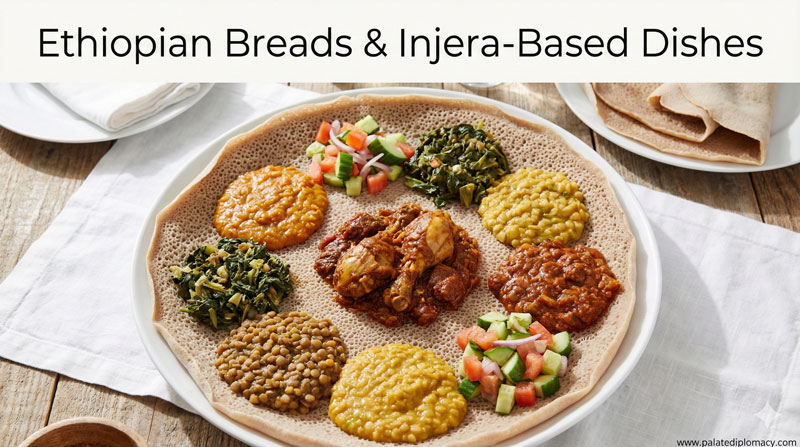
What Makes Injera with Wat So Special in Ethiopia
In Ethiopia, injera with wat stands as more than a meal. It is a living expression of care, craft, and community. This dish invites people to gather, share, and connect. It blends technique with warmth, and every bite carries a sense of place. The beauty lies in its balance of texture, aroma, and cultural meaning.
A Shared Table, A Shared Language
Mealtime begins with preparation and ends in conversation. Families prepare the batter, grind teff, and heat the mitad, the clay griddle. Injera rises and forms a soft, spongy canvas. Then comes wat, a flavorful stew that speaks of patience and intention. Diners tear injera into pieces and use them to scoop the wat. The act of tearing, not cutting, signals hospitality. On the table, a single platter becomes a map of relationships, guiding laughter, stories, and comfort.
Injera: The Seed and the Fabric
Injera is the star, yet it is more than bread. Made from teff flour, it often ferments overnight. That fermentation gives a bright, tangy notes and a delicate sourness. The texture is porous and airy, perfect for catching sauces. A good injera feels like fabric you can eat, soft enough to fold around a bite and strong enough to hold a generous scoop of wat. Its aroma invites you to begin, and its beauty invites you to linger.
Wat: The Heart of the Plate
Wat Is the soulful companion to injera. It can be lentil, chickpea, beef, or vegetable-based. Spice blends like berbere add warmth, while garlic, onions, and herbs bring depth. Wat draws flavor from slow simmering, blending sweetness, savory notes, and a gentle heat. Each variation reflects Family Traditions and regional tastes, yet all celebrate nourishment and care. When you eat wat with injera, you experience balance, comfort, and generosity in every mouthful.
Fermentation: The Quiet Craft Behind the Bread
Fermentation is a quiet craftsman in this dish. It develops tang, softness, and complexity. The starter or mother batter carries memory from one kitchen to another. Time and patience matter. With each batch, families teach the same essential lessons: attention, consistency, and respect for nature. Fermentation makes injera resilient, tender, and uniquely Ethiopian.
Hospitality on a Platter
Serving injera with wat is a gesture of welcome. The host ensures everyone receives a portion and that the table remains generous. The large platter invites sharing and conversation. Passing dishes around the circle reinforces connection. Hospitality here is not a moment; it is a living practice at every gathering, ritualizing generosity and grace.
Regional Voices on One Table
Regional variations enrich the dish without breaking its core essence. Teff remains central, but some homes blend grains or adjust thickness. Spices and wat ingredients shift with local gardens and family recipes. Yet the experience stays constant: a communal moment that honors the cook, the guests, and the meal itself. This continuity through diversity makes injera with wat a unifying thread in Ethiopian food culture.
Etiquette That Nurtures the Meal
Etiquette supports the warmth of the occasion. Eat with the right hand; wash hands before and after meals; place injera pieces gently rather than with force. Elders often guide serving order, and the sharing of food reinforces respect and togetherness. The rhythm of eating—tear, scoop, and pass—becomes a comforting pattern that reinforces kinship and belonging.
Timeless and Modern: Caring for a Living Tradition
Today, injera with wat appears in homes, cafés, and gatherings alike. Chefs honor tradition while exploring gentle, respectful twists. The dish adapts to seasons, occasions, and personal tastes, yet its soul remains intact: a plate that invites connection. It celebrates ingredients, technique, and the simple joy of sharing a meal with others.
Injera with wat is more than sustenance. It is a portrait of Ethiopian hospitality, a testament to craft and patience, and a joyful ritual that turns a table into a cherished space. If you seek to feel the warmth of Ethiopian food culture, this dish offers a welcoming, flavorful doorway.