
Why Travelers Are Falling in Love with Injera with Wat
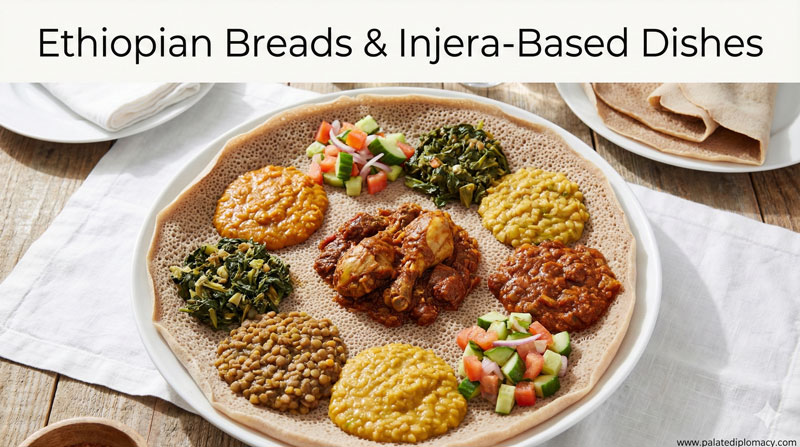
Travelers visiting Ethiopia often fall in love with Injera with Wat. This dish invites discovery through texture and aroma. Injera is a sour, spongy flatbread made from teff. It serves as both plate and utensil, turning a meal into a shared ritual. The wat, a slow-simmered stew, blends spice, warmth, and comfort in every bite.
The Craft Behind Injera
The craft begins with teff flour, water, and patient fermentation. Fermentation gives the batter brightness and the familiar tang. Chefs pour the batter on a hot clay griddle called a mitad, spreading it into a thin, even circle. As it cooks, holes form on the surface, creating a lacy texture. The result is injera that is soft, elastic, and ready to carry sauce.
The Wat: A Symphony of Flavors
Wat refers to a family of stews built around onions, spices, and slow simmering. Berbere, garlic, ginger, and sometimes niter kibbeh add warmth and depth. The dish can feature lentils, chickpeas, beef, or vegetables, always savory and comforting. Each bite carries a balance of sweetness from onions and heat from spices. Travelers savor how the sauce clings to every piece of injera, inviting another bite.
Texture, Aroma, and Experience
The aroma fills the room as steam rises from the pot. The tang of teff and the spice blend mingle with roasted notes. Injera soaks up the wat, softening slightly while keeping a gentle bite. The combination creates a comforting, multilayered experience. This harmony makes the meal feel rooted in tradition and daily life.
Sharing, Hospitality, and Etiquette
Sharing injera is a social gesture. A large platter invites everyone to tear a piece and scoop with the right hand. Guests watch the flow of flavors as the bread passes around. Clean hands and careful eating show respect for the cook and the moment. The meal becomes a conversation through food, not a race to finish.
Regional Variations and Local Craft
Regional kitchens add their own touch. In some places, teff blends with millet or corn for a lighter loaf. The wat varies with ingredients and spice levels, reflecting local harvests and preferences. Yet the spirit remains the same: generosity, balance, and a table where everyone shares. Travelers notice how food expresses place without hurry.
Practical Tips for Travelers
Practical tips for travelers: start with a plain wat and a generous portion of injera. Look for a busy, family-run eatery to taste authentic, handmade injera. Allow time for a gentle, unhurried meal; the best flavors emerge slowly. Pair the dish with a cup of Ethiopian coffee to finish the meal on a calm note. Bring a respectful curiosity to each bite.
A Closing Note for Curious Food Lovers
Ultimately, Injera with Wat Is more than a meal. It is a doorway to hospitality, careful technique, and a shared sense of nourishment. The dish invites travelers to pause, listen to the kitchen, and celebrate simple, honest flavors. By the end, many travelers carry a memory of warmth and belonging.