
Introduction
Discover the Rich Flavors of Doro Wat invites you to explore a dish that blends tradition, craft, and warmth. This chicken stew sits at the heart of Ethiopian dining. It brings people together around a shared table and invites conversation. The recipe celebrates layers of flavor, patience, and care. The aroma fills the kitchen as the dish slowly braises. The result is a meal that feels Like a story told through taste.
Core Ingredients and Techniques
At its heart is chicken simmered in a deep onion base. Onions are caramelized until they glow, giving the sauce sweetness and depth. Berbere adds heat, color, and a signature depth. Niter kibbeh, a spiced clarified butter, brings richness. Garlic and ginger weave bright notes through the sauce. The mixture thickens as it braises, becoming velvety and alive. Eggs are often added toward the end, resting in the sauce for flavor and texture. The technique rewards patience; slow cooking yields tender meat and a sauce that clings to every piece. This is a dish built on careful grasp of heat, timing, and aroma.
Injera and the Table
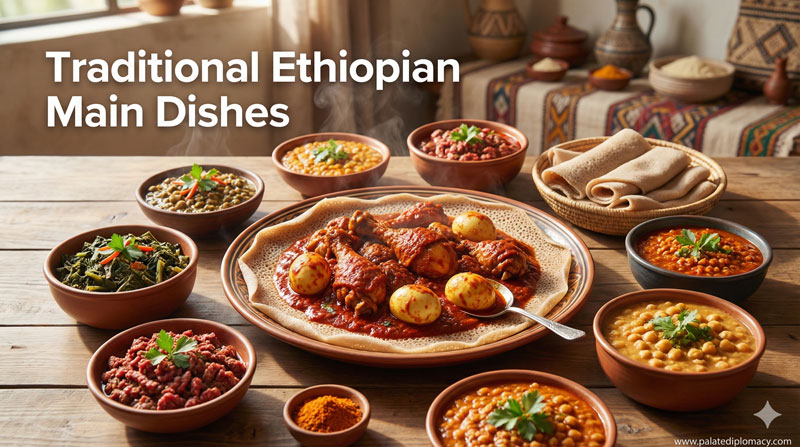
Doro Wat arrives on a large flatbread called injera. Diners tear pieces of injera and use them to scoop the stew. The bread soaks up the flavorful sauce, creating a pleasing balance of textures. This shared action fosters warmth at the table. The interplay of injera’s tang and the stew’s spice showcases harmony between bread and sauce. The table becomes a circle of hospitality, with the dish guiding the pace of conversation and flow of meals.
Cultural Significance in Ethiopian Dining
Doro Wat holds a special place in Ethiopian food culture. It marks gatherings, celebrations, and everyday meals alike. Home cooks and chefs refine the spice blend to honor Family Traditions. The dish teaches rhythm: prepare the onions, spice, and butter; then simmer with care. Cooking Doro Wat passes knowledge from generation to generation. The result is nourishment plus memory, pride, and a sense of continuity. Through its preparation, people express care, hospitality, and community without words.
The Sensory Journey
Look for a rich amber color and a glossy, inviting sauce. Smell the deep onion sweetness mingled with warm spices. Taste the sweet heat, the butter’s smoothness, and the chicken’s tenderness. The eggs, when used, add a creamy counterpoint that elevates the overall texture. Each bite invites conversation about technique, aroma, and tradition. The dish shines when shared with injera, creating a memorable sensory partnership.
Serving with Purpose
Serve Doro Wat hot at the center of the table. Pair it with injera and a light salad to balance flavors. Offer fresh herbs or mild yogurt to provide gentle contrast if desired. The presentation reflects care and hospitality. Each bite connects guests to a long line of culinary practice and community.
A Celebration of Flavor and Culture
Doro Wat offers more than nourishment. It reveals a cultural approach to food built on patience, generosity, and shared joy. It invites cooks to honor tradition while embracing home cooking. When you savor Doro Wat, you taste a piece of Ethiopian culinary heritage. The dish invites curiosity, respect, and appreciation for the beauty of a well-made meal.