
A Complete Guide to Enjoying Banga Soup Like a Local
Banga soup invites you into the kitchens and markets of the Niger Delta. The broth glows with palm fruit oil. The aroma signals harvest, care, and craft. This dish feels welcoming and alive in every bite.
The Cultural Value of Banga Soup
Banga soup is more than food. It is a social thread. People cook it for family meals, neighborhood gatherings, and celebrations. Sharing a pot shows hospitality and warmth. In many homes, the recipe travels from elder to younger cook, preserving technique and memory. The dish also marks daily life: a hearty lunch on market days, a comforting supper after work, or a special dish for visitors. Its presence at tables helps people pause, savor, and connect.
The Culinary Signature: Core Ingredients and Techniques
The Heart of Banga soup is palm fruit extract, simmered until the broth is rich and amber. Common additions include fish, dried meat, or catfish for depth. Peppers and onions provide brightness and heat. Crayfish or ground dried fish add a savory backbone. Scent leaves or basil add fresh, herbal notes. Optional spices like calabash nutmeg (ehuru) lend warmth and complexity. Salt adjusts the balance. The technique centers on patience: extract the palm fruit, strain the broth, then fold in the proteins and aromatics. The result is a smooth, bold soup with a comforting finish.
How It Is Served: Pairings and Eating Etiquette
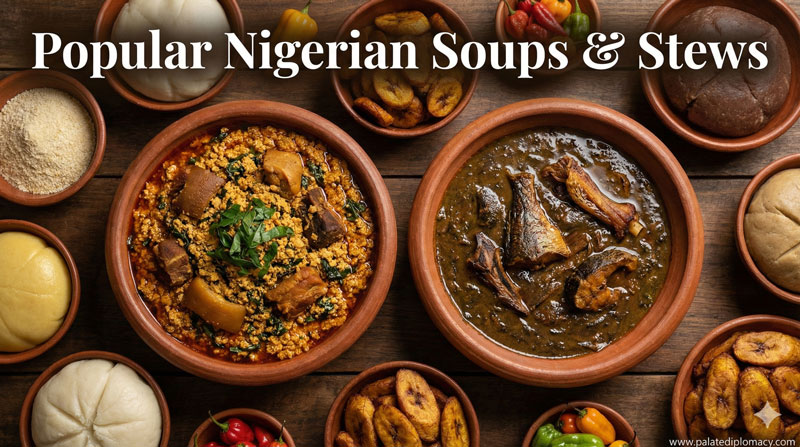
Most often, Banga soup is enjoyed with a starch side. Pounded yam, garri, or a firm tapioca-based starch are popular choices. Some kitchens serve it with fufu or dumplings. Eat with the hands to feel the texture and warmth of the dish. Dip a piece of starch into the soup, gather a little meat, and savor the balanced flavors. Serve hot for The Best aroma and texture. This ritual of dipping, lifting, and tasting highlights the communal spirit of the meal.
Tasting Steps: From Aroma to Finish
First, inhale the scent. Next, notice the oil’s sheen and the broth’s color. Then, take a small bite with starch to test texture. Adjust with herbs if needed, but keep the core balance intact. Finally, share with others at the table. A good Banga soup invites conversation as much as it invites taste.
Where to Experience It Like a Local
Visit local markets and family kitchens to taste authentic Banga soup. Ask for the palm fruit broth, the fish or meat choice, and the pleasing aroma of scent leaves. If you cook at home, source fresh palm fruit extract, fresh fish, and a handful of herbs. Small, everyday meals often reveal the most heartfelt flavors.
A Warm Note on Appreciation
Banga soup celebrates craft, seasonality, and generosity. It invites you to slow down, observe the color and aroma, and enjoy a dish that nourishes the body and spirit. By exploring its textures and tones, you honor the cooks and the community that keep this recipe alive.