
Why Injera Is One of Ethiopia’s Most Loved Dishes
Injera sits at the center of Ethiopian meals. It is more than bread. It is a plate, a scoop, and a shared moment. The tangy flavor, soft bubbles, and warm aroma invite conversation. It binds family, friends, and guests at a single table. The dish gains meaning from patience, practice, and a deep respect for tradition. In short, injera is a celebration of everyday life and food together.
Craft and Craftsmanship: The Making of Injera
Injera begins with simple, humble ingredients. Teff flour provides a nutty, earthy note. Water and a natural fermentation starter join the mix. First, cooks blend these elements into a smooth batter. Then they let it rest and bubble. The fermentation process can take a day or two. This waiting time adds a bright, sour depth to the final bread. Next, the batter pours onto a large, round cooking surface called a mitad. The surface heats quickly. The batter spreads in a circular, thin layer. Steam rises as the top dries. Holes form across the surface, creating a porous, sponge-like texture. Finally, the injera cools slightly. The result is tender, airy, and sturdy enough to carry sauces. Each bite tastes Like a story of time, place, and care.
A Table Mosaic: Sharing and Eating
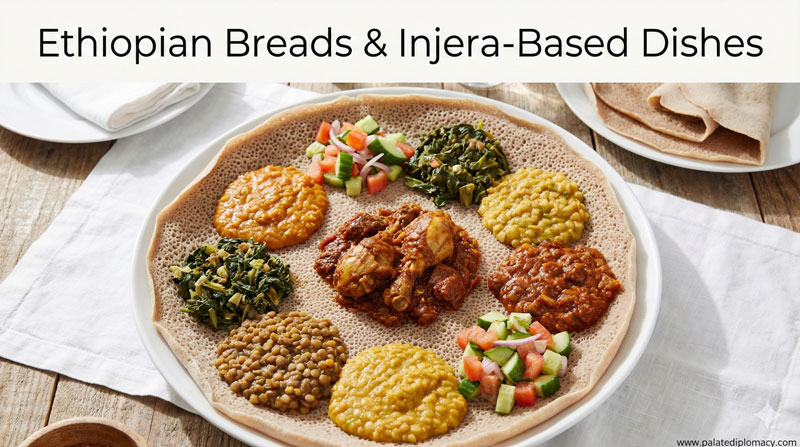
At the table, injera becomes a companion to many flavors. A single round sits as the base for the entire meal. Stews such as wot and shiro rest on top or beside it. People tear small pieces of injera to pick up bites of meat, legumes, or vegetables. The bread acts as both utensil and plate. This practice keeps the meal communal and inviting. Moreover, diners often engage in gentle rituals of hospitality. A guest may be served first, or a friend may offer a special bite to a neighbor. The act of sharing reinforces warmth and respect. In this way, eating injera feels like a conversation that travels from lips to hands to plates.
Flavor, Texture, and Pairings
The flavor of injera is defined by fermentation. The tangy note balances spicy and rich sauces. The teff-based base adds earthy depth. The bread’s spongy texture soaks up flavorful stews without becoming soggy. This balance makes every pairing feel thoughtful. Berbere-spiced stews, lentil shiro, and vegetable alicha all shine when served with injera. The bread also helps moderate heat, letting diners enjoy complex spices with ease. In addition, the circular shape and generous size invite a range of combinations. The result is a harmonious dining experience where textures, temperatures, and tastes mingle calmly.
The Cultural Pulse of Everyday Meals
Injera threads itself through daily life. It appears in family dinners, market gatherings, and intimate celebrations. The dish marks milestones with warmth and simplicity. Guests are greeted with a large platter of injera and a selection of stews. The shared bread invites conversation more than any single dish could. People learn from one another as they fold, tear, and taste together. The practice teaches patience and generosity. It also honors the skill of cooks who work with flour, water, and time to bring texture and aroma to life. In this sense, injera is not just food; it is a social ritual.
Regional Variations and Adaptations
Across regions, injera wears subtle differences. Teff remains common, and its flavor shifts with climate and soil. Some communities blend teff with other grains to create a softer or lighter bread. The color may range from pale tan to deeper brown, reflecting grain choices and fermentation length. Thickness differs as well; some injera is thin as a sheet, while others are a bit thicker and more bread-like. Fermentation times can vary, influencing sourness and aroma. These variations celebrate local crops, climates, and cooks while preserving the familiar shape and purpose of the dish. The result is a family of breads that share a common heart.
The Beauty of Teff and Fermentation
Teff is tiny but mighty. It brings a gentle, nutty flavor and a compact, nutritious profile. Fermentation unlocks aroma, softness, and a light, porous crumb. This process also helps injera stay fresh longer when stored properly. The combination of teff and fermentation creates a bread that feels both ancient and alive. It connects generations of cooks who refined techniques over time. In this way, injera embodies a quiet science and a patient art. The result is a bread that tastes like home, no matter where you Eat It.
Embracing Injera at Home and in Restaurants
For home cooks, injera can be a joyful project. Start with a simple batter, give it time to ferment, and heat a large flat pan to a steady simmer. The aroma fills the kitchen as the batter cooks. In restaurants, injera is often made fresh daily. The round, generous portions invite guests to share. Diners leave with a sense of belonging and satisfaction. Whether enjoyed at a family meal or a cooking demonstration, injera invites curiosity and appreciation. It is a dish that teaches hospitality with every bite.
A Gentle Note on Everyday Hospitality
Injera invites gentle, generous sharing. It invites people to slow down and savor. It invites us to notice texture, aroma, and balance. It invites cooks to refine technique and to honor the grain. Most of all, it invites us to enjoy a meal that brings people together. This is the quiet power of injera. It remains a cherished symbol of Ethiopian food culture and a testament to the beauty of plain ingredients transformed by care.
Conclusion: A Dish That Celebrates Connection
Injera is more than sustenance. It is a living link between cook, table, and guest. It shows how simple grains, water, time, and warmth can create something deeply comforting. Each bite carries tradition and welcome. It reminds us that food can express generosity, patience, and joy. When you taste injera, you taste a culture that values sharing, craft, and community. That is why injera remains one of Ethiopia’s most loved dishes.