
Why Injera Is One of Ethiopia’s Most Loved Dishes
Injera sits at the heart of Ethiopian dining. It is more than bread; it is a shared ritual that welcomes everyone to the table. The large, pale circle invites hands to work and conversation to begin. Its presence signals hospitality, care, and a pace that honors family and friends.
Injera blends history with daily life. The texture, aroma, and tang come together in a single bite that feels both comforting and exciting. People savor how the bread carries flavors, yet also stands on its own with quiet confidence. This dish models how food can be both nourishing and artful.
The Fermentation Arts Behind Injera
The magic starts with teff flour and water. A natural fermentation process gradually raises the batter’s character. Bubbles appear, the scent grows bright and tangy, and the batter develops a lively personality. Chefs then pour it onto a hot surface and let it cook until the surface is dotted with holes.
The cooking surface, often a round clay pan, gives injera its signature look. The result is a soft, elastic sheet with a honeycomb of tiny pockets. When set, it rises just enough to be pliable, ready to be lifted from the pan. The fermentation, patience, and heat work together to create a delicate balance of sour and light.
The Texture and Taste That Unite a Table
Injera delivers a gentle tang that brightens sauces. Its spongy texture absorbs the flavors of stews without tearing. Diners tear a piece, grip it between fingers, and scoop up a bite of wat, shiro, or vegetables. The bread acts as both plate and utensil, guiding each mouthful with grace.
The taste and mouthfeel invite a slow, social pace. People pause to savor a single bite, then share more. This rhythm fosters a sense of togetherness that many meals aspire to. The bread’s character remains consistent, giving comfort even as flavors vary across dishes.
A Shared Table, A Warm Welcome
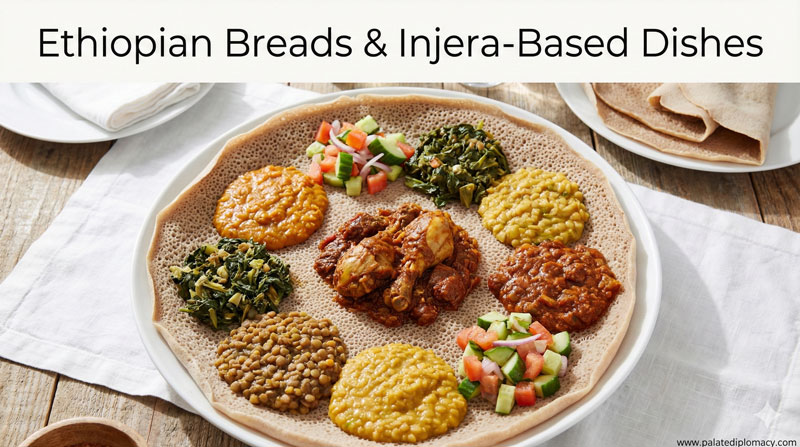
A meal with injera centers around generosity. A large platter of injera sits at the middle of the table, inviting everyone to take a piece. Guests are offered a portion without hesitation, and the tearing of injera becomes a small ceremony of inclusion. Dishes of wat, vegetables, and sides radiate outward, each inviting a new combination.
The act of sharing turns food into memory. Conversations flow as people sample different flavors. The bread quietly ties each dish together, a edible thread that binds courses into a cohesive whole. This communal spirit is a hallmark of Ethiopian hospitality and culinary culture.
Regional Varieties and Household Traditions
Across Ethiopia, injera reflects local harvests and tastes. Some kitchens favor a slightly thicker round with a pronounced tang, while others produce a thinner, lighter version. The choice of grain blends or pure teff shapes the texture and aroma. In some regions, households add small touches that make their injera distinct, yet universally recognizable.
Home cooks pass techniques from one generation to the next. They teach the feel of the batter, the patience of the resting period, and the moment of pouring onto heat. The result is a line of tradition that travels from kitchen to kitchen, carrying shared pride in a simple loaf. Each family’s injera tells a tiny story of place and preference.
Pairings and Everyday Enjoyment
Common accompaniments include chicken, lentil, and vegetable stews. Doro Wat, with its rich depth, pairs beautifully with a gentle tang from injera. Shiro adds a comforting, nutty note that mingles with the bread’s acidity. No matter the combination, injera anchors the plate and invites enjoyment.
Injera also shines in vegetarian or vegan meals. The bread’s texture supports a wide range of flavors, from light herbs to bold, spiced sauces. This versatility makes injera a staple for everyday meals and special gatherings alike. It welcomes guests with warmth and never competes with other dishes.
Bringing Injera Home: Tips for Appreciation
When choosing injera, look for a fresh, springy feel and a clean tangy aroma. A slightly glossy surface with even bubbles signals careful preparation. Store injera wrapped in a clean cloth or in the refrigerator to maintain pliability. For longer keeping, freeze portions and reheat gently to preserve texture.
To enjoy it fully, tear a piece of injera and use it to scoop a bite of stew. Notice how the bread softens yet remains sturdy enough to hold sauces. Appreciate the balance of sour, soft, and savory in each mouthful. This is the essence of injera: a simple flatbread that elevates daily meals into a shared experience.
A Lasting Celebration of Flavor and Craft
Injera embodies the beauty of Ethiopian food culture. It honors craft, generosity, and togetherness. The bread’s sour brightness, tender texture, and natural artistry invite curiosity and affection. By bringing injera to the table, people celebrate a beloved dish that feeds more than the body—it feeds connection, memory, and joy.