
What Makes Injera with Wat So Special in Ethiopia
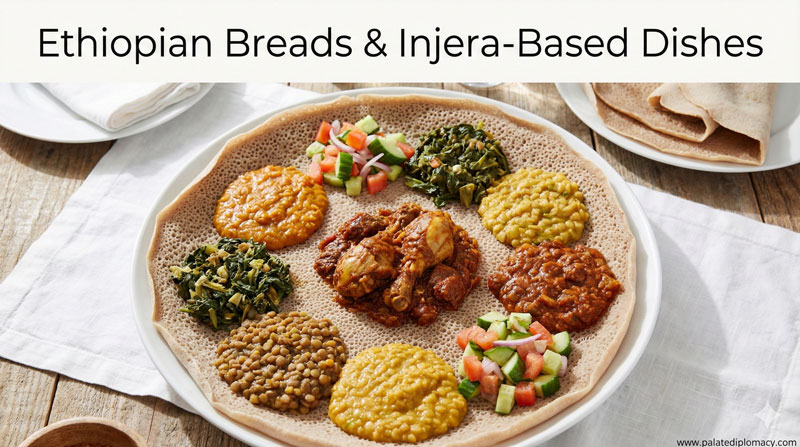
Injera with Wat Is a beloved centerpiece in Ethiopian kitchens and at gatherings. This dish blends texture, aroma, and shared ritual into one inviting experience. It speaks softly about hospitality, family, and daily life. When people gather around a large platter, the meal becomes a warm conversation and a celebration of community.
Injera: The Base and the Craft
Injera is a large, round flatbread made from teff flour. The batter ferments slowly, often overnight, giving a tangy note that is unmistakably Ethiopian. When poured on a hot surface, it rises with tiny bubbles and forms a delicate, spongy canvas. The bread soaks up flavors from the accompanying wat, yet it also stands on its own as a gentle, sour backdrop. Each bite carries the quiet artistry of patient fermentation and careful heat. This bread is not just food; it is the stage on which flavors perform.
Wat: A Family of Warming Stews
Wat refers to a family of rich stews. Each version builds depth with spices, aromatics, and slow cooking. Berbere, a bold spice blend, adds warmth and character. Niter kibbeh, a clarified herb-butter, brings a mellow, fragrant sweetness. Wat can be hearty beef, tender lentils, or chicken simmered with onions, garlic, and tomatoes. The result is layered, comforting, and deeply satisfying. The stew seems to “test” the injera, while the injera supports and carries a portion to the palate. Together, they form a harmonious balance of zing, savor, and softness.
Shared Meals as Ethiopian Hospitality
A meal of injera and wat is inherently communal. People gather with a single platter, tearing off chunks of injera to scoop up bites of wat. This act of sharing creates a rhythm of conversation and togetherness. The food becomes a bridge between generations, neighbors, and friends. Etiquette and warmth accompany the table, reinforcing a culture of respect and generosity. The platter invites everyone to participate, making the eating experience inclusive and memorable.
The Senses: Color, Aroma, and Texture
The scent of spices rises as the plate comes to the table. The teff injera brings a mild sourness that tingles the tongue. The wat adds color, depth, and a comforting heat. The contrast between the soft, porous bread and the hearty stew offers a satisfying bite every time. Visually, the golden-brown injera and the rich hues of the wat create a vibrant, inviting plate. The experience is as much about feeling and memory as it is about flavor.
Tradition, Craft, and the Teff Grain
Teff, the tiny grain behind injera, carries deep tradition. It is valued for its nutrition and unique texture. For generations, farmers have cultivated teff in Ethiopian fields, shaping the flavor and character of the bread. The grain connects daily meals to seasonal cycles and the land. Through teff, injera becomes a symbol of continuity, craft, and care in the kitchen.
Enjoying Injera with Wat Today
Today, you can explore injera with wat at Home by trying vegetarian or meat-based wat alongside teff injera. Start with a simple lentil wat and pair it with fresh herbs and onions. Tear the injera, scoop, and savor the mingling of textures and flavors. The dish remains deeply rooted in tradition while inviting modern cooks to appreciate its beauty and balance. It is an experience that welcomes guests, honors craft, and celebrates Ethiopian culinary artistry.