
A Dish That Feels Like Home
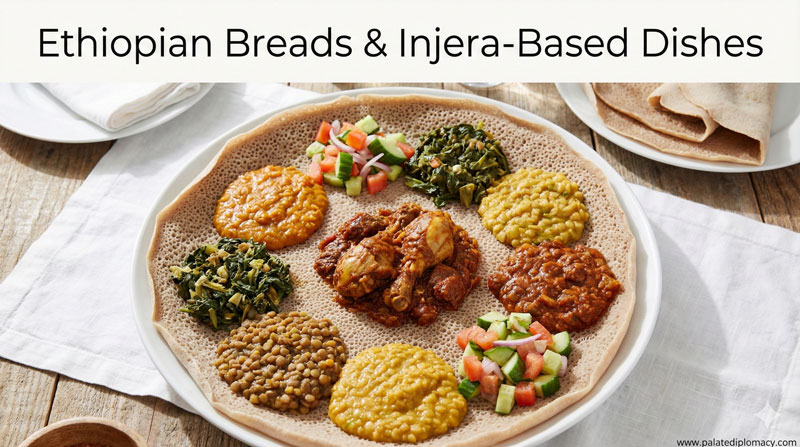
In Ethiopia, injera with wat is more than a meal. It is a gentle invitation to gather, share, and celebrate daily life. Injera, a soft, sour flatbread, becomes a welcoming canvas for wat, a collection of richly spiced stews. Together, they reveal a culinary culture that prizes generosity, balance, and the quiet art of hospitality. This dish speaks to the warmth of community and the beauty found in everyday meals.
What Injera and Wat Are
Injera is made from teff flour, water, and time. The batter ferments, then cooks on a round griddle called a mitad. The result is a spongy, slightly tangy bread with tiny holes that drink up sauces. Wat refers to the family of stews that accompany injera. These stews can be meaty, legume-based, or vegetable, and they simmer with spices like berbere and aromatics such as onions, garlic, and sometimes clarified butter. When served together, injera becomes both plate and utensil, guiding each bite with balance and grace.
A Table That Welcomes Everyone
The way injera with wat sits on the table embodies Ethiopian hospitality. A large portion of injera is laid out, with multiple wots arranged in bowls or on the same platter. Family members and guests tear off pieces of injera and use them to scoop up the stews. This simple act—sharing a single bread and dipping into shared bowls—creates a sense of togetherness. It is a warm reminder that meals are moments to connect, listen, and delight in one another’s company.
Teff and Fermentation: The Soul of Flavor
The star grain in injera is teff, a tiny seed packed with minerals and nutrients. Teff’s natural fermentation gives injera its characteristic tang. Fermentation also brings a soft, airy texture that catches sauces beautifully. The result is a bread that tastes bright and lively, yet grounded in time-honored farming and milling practices. This combination—teff, patience, and a careful bake—makes injera a distinctive element of Ethiopian cooking.
The Craft of Making Injera: Skill Passed Down
Crafting injera is a skill that often travels through generations. The batter’s fermentation must be just right, and the cooking technique on the mitad requires patience and control. The batter spreads into a thin, even circle, and the holes form a natural lace that soaks up flavorful sauces. The finished injera carries a gentle sour note, a soft crumb, and a warm aroma, inviting you to tear, share, and savor. The process celebrates craft, steadiness, and respect for ingredients.
The Rich Family of Wot: Wat Varieties
Wat brings depth and personality to the meal. Beef wat (ketfo) and chicken wat (Doro Wat) showcase slow-simmered meat, onions, garlic, and berbere spice, balancing heat with savory richness. Lentil or chickpea wot emphasizes plant-based flavor, allowing the spices to shine. There are many regional and seasonal variations, each with its own character, yet all harmonize with injera’s tang and texture. Together, they illustrate how a single dish can offer a spectrum of tastes without losing unity on the plate.
Etiquette and Sharing: How Ethiopians Eat Together
Eating injera with wat is as much about manners as flavor. People wash their hands, tear a piece of injera, and use it to scoop the stew. The bread acts as a utensil, a gentle extension of the hand. It is common to start with smaller portions and gradually enjoy the array of stews. The social rhythm—sharing, serving others, and savoring together—turns a meal into a moment of unity and joy. The practice highlights a culture that values consideration, warmth, and the simple beauty of communal eating.
Regional Voices: How Varieties Shine
Across Ethiopia, injera and wat reflect local ingredients and traditions. Some regions favor lighter, finer teff breads, while others embrace a heartier, more robust texture. The spice blends, cooking times, and accompanying dishes vary, but the guiding spirit remains consistent: nourish the family, honor ingredients, and celebrate the moment together. This regional diversity enriches the overall experience, offering a tapestry of flavors that remains cohesive when enjoyed with a shared plate.
Savoring the Experience: Pairings and Traditions
The meal is often part of a larger festive rhythm of daily life. After the main plates, a cup of strong, aromatic coffee or a glass of tej, a honey wine, can accompany conversations and lingering at the table. Teas and fresh drinks also complement the tang of injera and the warmth of wat. The enjoyment lies not only in taste, but in the rituals—the careful preparation, the friendly exchanges, the sense of presence around a common platter. This human-centered dining highlights how food can fuse flavor with memory and culture.
A Living Tradition in Modern Times
Today, injera with wat continues to anchor Ethiopian dining with grace and resilience. It adapts to modern kitchens while preserving traditional methods of fermentation, bread-making, and stews. The dish remains a touchstone for hospitality, gathering, and sensory delight. By honoring texture, aroma, and the shared experience, this meal invites everyone to pause, notice, and celebrate the beauty of everyday cooking.
If you ever have the pleasure to taste injera with wat, you’ll feel how the tang of the bread and the warmth of the stews echo the spirit of Ethiopian dining. It is a celebration of ingredients, technique, and the people who bring them together. The dish reminds us that nourishment can be a communal act, and there is quiet power in sharing a single plate with care and curiosity.