
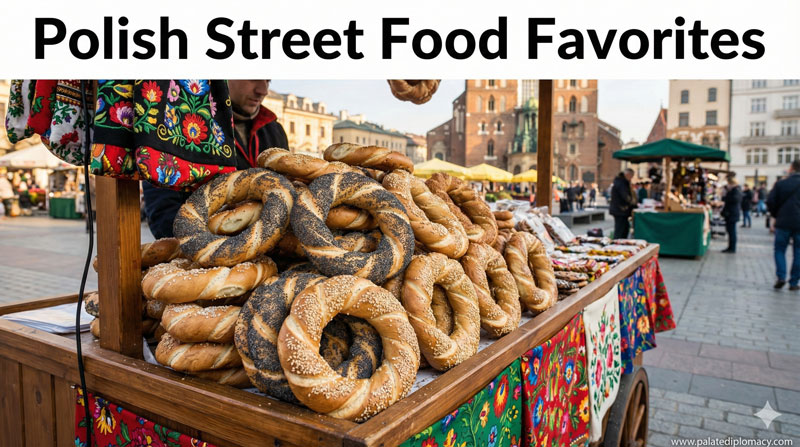
The Story Behind Obwarzanek Krakowski, a Polish Food Favorite
This article introduces the dish and its cultural heartbeat. The Obwarzanek Krakowski is a beloved bread ring from Kraków. It blends simple ingredients with a timeless craft. The result is a treat that both local families and visitors treasure. This piece highlights its cultural value and culinary significance, kept inviting and respectful.
Craft and Craftsmanship
Obwarzanek Krakowski starts with a basic, versatile dough. Bakers work it with care, shaping a long rope of dough into a ring. The dough rests, then is rolled to the right thickness. Next, the rings are briefly boiled in water with a pinch of baking soda. This step gives the crust its gentle chew. After boiling, the rings receive a glaze and a topping. Sesame seeds, poppy seeds, or coarse salt are common. Finally, the rings bake to a warm, amber crust that crackles softly when you bite. The whole process celebrates precision and patience. Each step matters, and skilled hands carry tradition forward.
A Taste of Kraków’s Streets
The Obwarzanek Krakowski is more than a snack. It is a daily companion on Kraków’s streets. In the morning, you may see bakers selling warm rings near market squares. The aroma fills the air and invites conversation. Local buyers choose their toppings with a quick nod, a shared habit that binds daily life. The treat is a familiar friend at a busy cafe table or on a quiet walk by the river. Its presence in public spaces makes it feel like a small festival of local taste every day.
Cultural Value and Social Smiles
Culturally, the obwarzanek embodies hospitality and shared pleasure. It travels easily from market to kitchen, from baker to family. The ring’s shape suggests wholeness and continuity, a simple symbol of togetherness. Its production supports a network of bakers and apprentices who learn by watching, kneading, and shaping. The tradition values skill, rhythm, and attention to detail. People remember generations of bakers who carried the recipe forward. In this way, the dish becomes a living thread in the fabric of Polish food culture.
Regional Variations Within Kraków
Within Kraków, you may notice small differences. Some neighborhoods favor sesame seeds for a nutty fragrance. Others enjoy poppy seeds for a subtle, earthy note. Salt crystals offer a bright finish that enhances the dough’s mild sweetness. Some bakers experiment with minor twists, adding a touch of honey glaze or using a mix of seeds. Yet the core of the dish—boiled, baked, ring-shaped bread—remains constant. This balance between tradition and personal touch keeps the dish fresh while honoring its roots.
How to Enjoy Obwarzanek Krakowski
Eat It warm for the best experience. The crust should feel crisp, while the interior stays soft and airy. Pair it with a mug of tea or a cup of coffee to complement its gentle flavors. On its own, it shines with a toasty aroma and a comforting chew. With toppings, it gains a lively texture. The ring is easy to share, making it a friendly addition to gatherings and a thoughtful snack on a stroll.
Modern Takes and Preservation
Modern bakeries celebrate the obwarzanek while preserving its essence. Some bakers offer whole-grain or rye versions for variety. Others experiment with seeds, spices, or subtle sweet finishes. Yet even with adaptations, the essential craft remains visible: careful kneading, mindful shaping, and a brief boil before baking. This blend of tradition and small innovations keeps the dish relevant for new generations while honoring ancient practice.
Conclusion: A Timeless Polish Favorite
The Obwarzanek Krakowski stands as a bright thread in Polish culinary culture. It invites people to pause, enjoy, and share. Its simple ingredients and deliberate technique reveal a philosophy of care and community. This is a dish that travels from kitchen to street, from vendor to table, and into the hearts of many. In Kraków, as in many Polish towns, it remains a cherished symbol of everyday joy and timeless taste.