
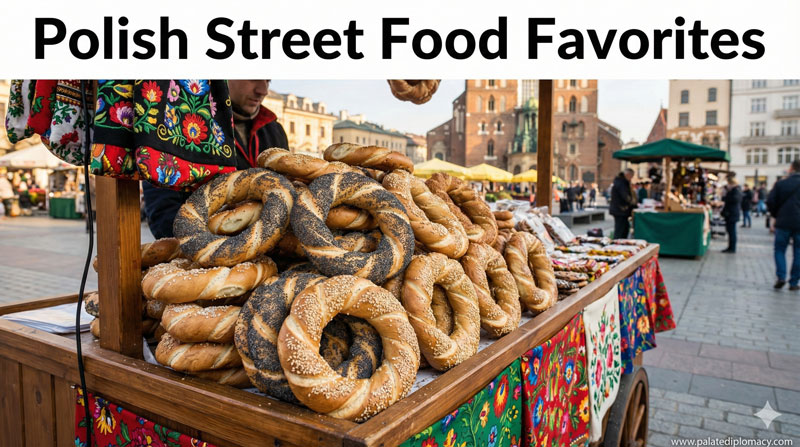
What is Obwarzanek Krakowski?
Obwarzanek Krakowski is a soft, ring-shaped bread from Krakow, Poland. It welcomes you with a warm aroma and a glossy crust. The dough yields a tender crumb with a gentle chew. Bakers shape the dough into a circle, briefly boil the rings to set the crust, and then bake them to a pale-gold finish. This simple preparation creates a memorable texture: chewy inside, crisp at the edge. The tradition blends skill, care, and daily ritual, making Obwarzanek Krakowski a taste that invites conversation and sharing.
A Tradition of Craft and Community
In Krakow, making obwarzanek is more than baking; it is a social craft. Families pass down techniques from one generation to the next, and local bakers refine those skills day by day. Street stalls and small bakeries along the old lanes become gathering spots where neighbors trade tips, stories, and warm rings. The aroma travels through the air, signaling hospitality and welcome. This snack is not only food; it is a small ceremony that marks everyday life in the city. Visitors quickly sense the sense of place that a well-made obwarzanek gives to the streets and to the people who call Krakow home.
The Making: Dough, Boil, Bake
The process is precise and accessible. A basic dough of flour, water, yeast, and salt forms the foundation. The dough rests, rises, and is then shaped into a ring. The rings take a quick dip in boiling water, which helps to set the surface and create a gentle chew. After boiling, bakers brush them with a light glaze and add toppings before the final bake. The bake yields a light crust with a glossy sheen and a soft interior. The care shown in each step reflects the pride of Krakow’s baking tradition and the joy of presenting something wholesome to diners.
Flavor, Texture, and Topping Traditions
Obwarzanek Krakowski offers a varied palate in a single bite:
- Texture: a chewy interior complemented by a crisp edge.
- Flavor: mildly to softly sweet with a pleasant, toasty finish.
- Toppings: sesame seeds, poppy seeds, and coarse salt are the most common. Some bakeries offer subtle variations or seasonal twists.
Common variations celebrate the same core technique, while allowing a touch of individual character from each bakery. The result is a versatile snack that pairs well with coffee or tea, and it can be enjoyed hot or at room temperature.
Krakow’s Streets and Festivals
The streets of Krakow provide the perfect stage for this snack. At bustling markets near the Old Town, stalls display gleaming rings arranged in neat rows. Locals and visitors alike pick up a warm obwarzanek to accompany a stroll through medieval lanes. The snack also features in small, cheerful gatherings and seasonal markets, enriching the sensory landscape of the city. When you bite into one, you join a long line of people who have celebrated simple pleasures together on this historic ground. The familiar scent and the familiar shape evoke a sense of continuity that many cultures treasure in their food traditions.
Preserving a Craft Through Time
Preservation of the technique matters as much as preserving the taste. Apprenticeship and family-run bakeries keep the methods accessible to new bakers while maintaining a high standard of quality. The delicate balance between tradition and daily life keeps the craft vibrant. Modern bakeries honor the past by using time-honored steps, paying attention to dough handling, the boil, and the final bake. Citizens and visitors alike benefit from this steady care, tasting a product that remains true to its roots while staying relevant in contemporary kitchens.
Embracing the Taste of Krakow
Obwarzanek Krakowski offers more than nourishment; it provides a doorway to culture. Each bite speaks of city life, artisanal skill, and a shared sense of hospitality. Enjoying this ring invites reflection on the way food can connect people—neighbors, friends, and travelers—through a simple, well-made snack. For anyone curious about Polish culinary heritage, this ring demonstrates how tradition can be both gentle and enduring. Let the aroma guide you to a nearby bakery, then take a seat with a friend or a moment of quiet. In doing so, you participate in a living tradition that enriches the palate and the heart.