
Introduction
The Story Behind Obwarzanek Krakowski, a Polish Food Favorite invites you to a gentle corner of Kraków’s daily life. This ring-shaped bread greets locals and visitors with a warm aroma and a familiar texture. It stands as a quiet testament to craft, patience, and shared gatherings. The tale blends flavor with memory, showing why this treat remains a beloved part of Polish food culture.
What is Obwarzanek Krakowski?
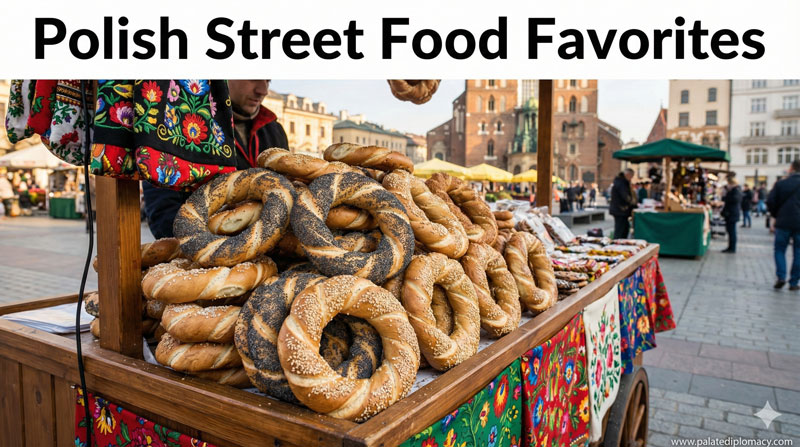
Obwarzanek Krakowski is a round, hand-formed bread that carries a subtle sweetness and a chewy bite. The dough comes together with simple ingredients: flour, water, yeast, a touch of salt, and time. Bakers shape the dough into a ring, then briefly boil it before baking. A final coating of seeds—popularly poppy or sesame—and a dash of salt gives the crust its characteristic sparkle and aroma. The result is a balanced bite: tender inside, crisp around the edge, with seeds delivering a gentle nutty note.
A Moment in Kraków’s Markets
First, the scent of warm dough fills the morning air at market stalls and street corners. Next, vendors move with practiced ease, pulling rings from large trays to cool on wooden boards. Passersby pause to trade a few friendly words for a taste test. Friends, families, and colleagues share a moment over a freshly baked obwarzanek, often grabbing two for the road. The scene invites you to slow down and notice the simple beauty of a well-made bread and the craft behind it.
The Craft: From Dough to Golden Ring
Finally, a skilled baker passes dough through careful kneading and shaping. The ring is formed with a steady hand, a small sign of the baker’s confidence. The moment it hits the boiling water, the surface tightens and gains a glossy sheen. After boiling, the rings receive a coating of seeds or salt, then bake until they show a warm, golden crust. The process rewards patience and attention to temperature, timing, and texture, yielding a bread that sings with vitality when broken apart.
Flavors and Variations
Obwarzanek Krakowski shines in its seed varieties. Popcorn-like seeds, sesame, and poppy seeds create a dotted, fragrant crust that enhances every bite. Some bakers offer a salt-crystal finish that crackles softly as you bite. The interior remains soft and chewy, providing a pleasing contrast to the crisp exterior. While the classic version is simple and bright, the variations let the bread carry a touch of personality from one bakery to another.
Cultural Significance in Polish Food Culture
This pastry holds a steady place in everyday life, celebrations, and local rituals. It accompanies morning coffee and afternoon chats, making it a familiar companion for many households. The obwarzanek’s presence in markets and bakeries reinforces a sense of continuity and neighborhood pride. Its steady presence teaches appreciation for skilled craftsmanship and the slow joy of a well-made snack. In this way, the bread becomes more than food; it is a small, shared tradition that sustains a city’s character.
Pairings and Everyday Traditions
A freshly baked obwarzanek pairs beautifully with a cup of tea or a glass of milk. It also complements soft cheeses and mild spreads, turning a simple snack into a light meal. The bread’s warmth invites lingering moments, making it a common feature of family gatherings and casual get-togethers. People often enjoy it on the go, as a quick treat that fits neatly into a busy day. The practice of sharing this bread strengthens everyday bonds and invites conversation.
Preserving a Timeless Craft
Bakers who keep this tradition thrive on repetition, care, and steady learning. Younger apprentices learn the shaping, boiling, and baking steps from seasoned mentors. Community bakeries host events that celebrate technique, aroma, and texture, helping the craft pass to new hands. This continuity preserves a tactile link to the city’s history, while inviting new flavors and ideas to enrich the standard methods. By honoring this craft, communities maintain a living bridge between past and present.
Conclusion
Obwarzanek Krakowski offers more than a snack; it embodies care, skill, and communal joy. Its simple ingredients, careful process, and familiar flavors invite you to pause and appreciate the artistry in daily food. As you bite into its warm crust, you taste a piece of Kraków’s heart: inviting, respectful, and beautifully enduring. Explore this Polish favorite, and you enter a sweet story of culture, craft, and shared happiness.