
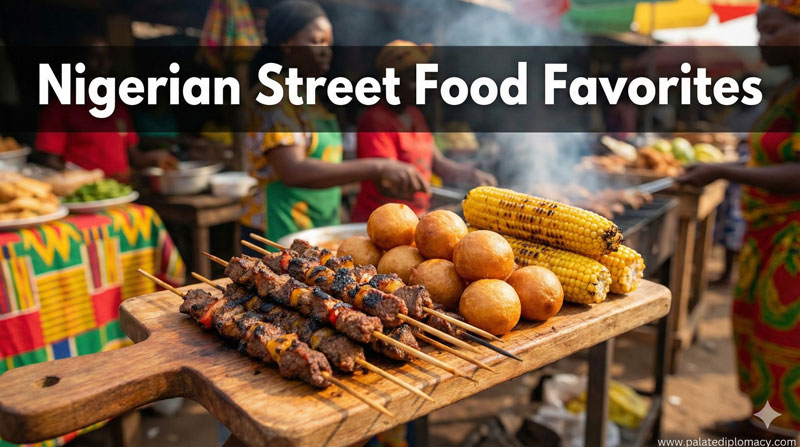
How Roasted Corn Reflects Nigerian Food Culture
Roasted corn is more than a snack. It is a doorway to Nigerian Food Culture. The dish celebrates harvest, warmth, and everyday joy. The scent of corn roasting over charcoal invites people to linger, smile, and share a moment. In many towns, the simple cob becomes a common language that people use to connect.
What Makes Roasted Corn a Staple
Maize is widely available in Nigeria. It feeds families with simplicity and reliability. Roasting transforms the humble kernels into something irresistible. The approach uses few ingredients: fresh corn, a touch of oil or fat, salt, and optional spices. This simplicity makes it accessible to all ages and budgets. The result is satisfying nourishment that honors the land and the hands that harvest it.
Techniques and Flavors
Cooks roast the corn on open flames, rotating the cob so each side heat browns evenly. The outside becomes lightly crisp while the inside stays juicy and tender. Natural sugars caramelize, releasing a subtle sweetness and smoky aroma. Salt enhances the corn’s flavor, and a squeeze of lime brightens the finish. Some prefer a hint of chili pepper sauce for a gentle kick. A light brush of oil helps prevent sticking and adds a bit of gloss to the kernels. The technique highlights skill, patience, and respect for the ingredient.
Social Settings and Shared Moments
Roasted corn often appears where people gather: busy markets, street corners, and roadside stalls. It is a companion to conversations, music, and playful banter. Children hold a warm cob with small hands, adults share tips on timing and flame height, and neighbors exchange stories as easily as bites. The act of sharing a cob makes the experience communal and welcoming. This social dimension is a quiet thread in Nigerian life, weaving food with friendship.
Regional Touches Across Nigeria
Across regions, you can notice small variations that reflect local tastes. Some vendors offer tang with lime or a peppery finish, while others rely on a light touch of salt and oil. In different communities, roasted corn may pair with a side of groundnuts or be enjoyed with a simple squeeze of citrus. These nuances celebrate diversity while keeping the core experience—the warm, fragrant cob—central to the moment.
Everyday Elegance: Simplicity and Sustainability
Roasted corn embodies elegance through simplicity. It uses a few ingredients, supports local farmers, and travels well from stall to street to home. It is easy to share, easy to prepare, and easy to enjoy with minimal waste. The dish honors a practical, celebratory approach to food that Nigerians bring to daily life. Its beauty lies in how a single, well-roasted cob can spark conversation and brighten a moment.
Conclusion: The Beauty of Nigerian Food Culture
In its warmth, aroma, and accessible preparation, roasted corn mirrors The Heart of Nigerian cuisine. It showcases how humble ingredients can carry tradition, comfort, and togetherness. This dish invites everyone to savor flavor, celebrate community, and appreciate the quiet artistry in everyday cooking. When you bite into a roasted cob, you taste a piece of Nigerian food culture: welcoming, vibrant, and wonderfully simple.