
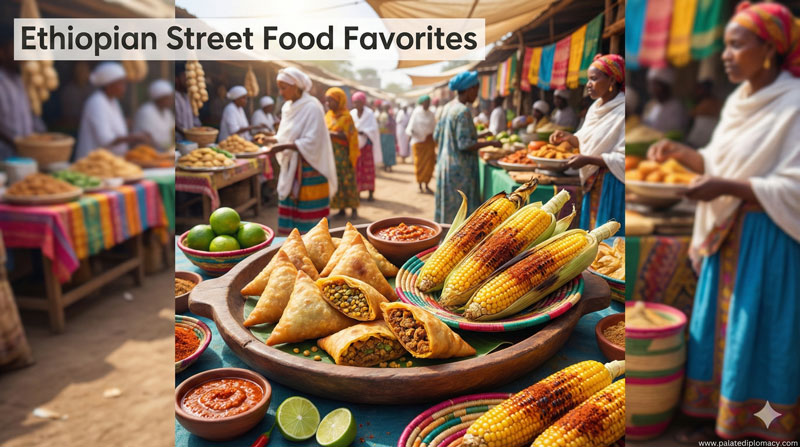
Introduction: Sambusa, a beloved feature of Ethiopian dining
Sambusa holds a special place in Ethiopia’s culinary landscape. The pastry welcomes guests with a crisp crust and a warm, comforting filling. Its presence signals welcome, sharing, and festivity. This dish blends simple ingredients with careful technique to create something both everyday and meaningful. Readers will sense how sambusa connects hands, hearts, and tables.
What is Sambusa? A quick, tasty picture
Sambusa is a small, triangular or half-moon pastry. It is filled with flavorful mixtures, then fried to a golden hue. In Ethiopia, you often find fillings of lentils, minced meat, onions, and aromatic spices such as berbere and cumin. Each bite balances savory filling with a delicate shell. The result is a snack that feels hearty yet refined, suitable for busy street corners and quiet family meals alike.
The craft of dough and filling: a careful balance
The dough is thin and resilient, rolled with patience. A soft seam seals the filling, keeping it secure during a hot fry. The technique rewards heat control and timing. Frying yields a crisp shell that crackles softly when bitten. The filling must be bright with onion and spice, yet not overpowering the pastry. When done well, the contrast between shell and center sings in every mouthful.
Regional twists that color the dish
Across Ethiopia, cooks adapt sambusa to local tastes. Some fillings lean toward lentils and vegetables for a lighter bite. Others showcase minced meat, herbs, and peppers for a richer flavor. Spices vary with tradition: a pinch of berbere for warmth, coriander for perfume, and garlic for bite. The dough may be a simple wheat crust in one area and a richer, slightly thicker shell in another. These small differences create a shared dish that still feels unique from town to town.
Sambusa and hospitality: a social ritual
Hospitality shines in the way sambusa is shared. Families offer it as a welcome treat when guests arrive. Vendors prepare hot sambusa for markets, drawing people with aroma and texture. Friends pass plates around during gatherings, savoring each piece together. The act of sharing makes sambusa more than food; it becomes a moment of connection and generosity.
Sambusa in daily life and festive moments
In everyday life, sambusa accompanies tea and coffee moments, serving as a graceful snack between tasks. During festivals and special occasions, it appears on platters with other dishes, tying meals to celebration. Its presence at these moments conveys care and tradition. The dish blends ritual with nourishment, symbolizing a warm, communal spirit.
How to enjoy sambusa at home: tips for a thoughtful preparation
To recreate the moment at Home, start with a crisp, well-sealed shell. Use a hot skillet or a shallow fryer for the best crunch. Pair sambusa with a bright dipping sauce or a small cup of tea. Serve warm so the filling stays vibrant. If you experiment, try different fillings—spiced lentil, minced beef, or vegetable mixtures—to discover your family’s favorite version. The key is balance: keep the pastry light and the filling flavorful.
Closing thought: a beautiful expression of Ethiopian flavor
Sambusa embodies the beauty of Ethiopian food culture. It is simple in ingredients, precise in technique, and generous in spirit. The dish invites sharing, honors craft, and adds warmth to conversations around the table. By savoring sambusa, one tastes a tradition built on hospitality, regional artistry, and everyday delight.