
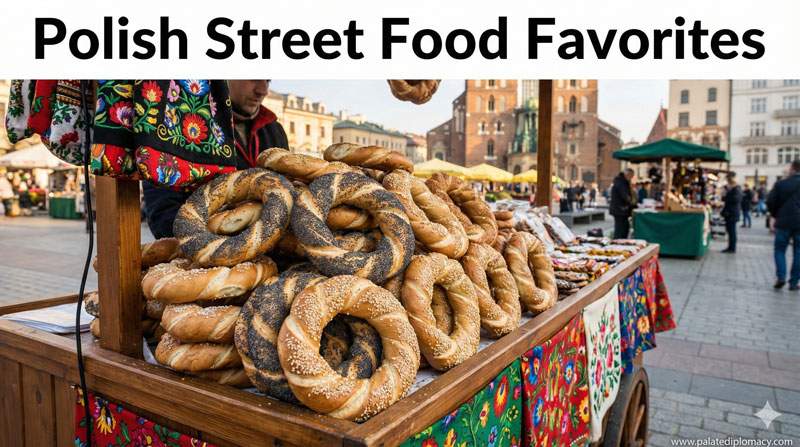
The Story Behind Obwarzanek Krakowski, a Polish Food Favorite
Obwarzanek Krakowski is a ring-shaped bread that many in Kraków treat as a daily treasure. Its warm aroma, crisp crust, and soft interior invite a smile. The dough is shaped into a small circle, briefly boiled, then baked to a golden finish. It often wears sesame or poppy seeds, or a pinch of coarse salt, which adds texture and a gentle nutty note. This simple loaf holds a quiet elegance, a testament to careful technique and patient bakers. In Kraków, the obwarzanek is more than food; it is a small ritual that welcomes good conversations, bright mornings, and shared moments over a cup of coffee or tea.
What makes it unique
What sets Obwarzanek Krakowski apart is the combination of craft and process. First, bakers prepare a supple dough that develops flavor through kneading and resting. Next, they shape the dough into a ring with steady hands, producing a uniform size and gentle balance. Then, the ring takes a short bath in hot water, which helps form a tender crumb inside and a crisp, lightly chewy crust outside. Finally, the ring is rolled in seeds—sesame, poppy, or a simple sprinkle of salt—and baked until just golden. The result is a bite that begins with the crack of the crust and ends with a soft, comforting crumb. Its texture pairs beautifully with warmth and conversation, making it a natural companion to moments of daily life.
A window into Kraków’s market life
In Kraków, the obwarzanek has long been part of the city’s rhythm. It is a familiar sight at market squares and in bakery windows, where bakers greet customers with a handshake and a steady smile. The aroma drifts through narrow streets and bright mornings, drawing people toward the glow of the ovens. Vendors offer fresh batches that steam in the cool air, and passersby often choose one for the road or to share with a friend. This tradition of accessibility and friendly exchange highlights the dish’s role as a beloved everyday snack. It is a small lens on the city’s hospitality, inviting both locals and visitors to slow down, notice the craft, and savor the moment.
Traditions and seasonal variations
The heart of the obwarzanek lies in its simplicity, yet bakers bring small touches that celebrate variety. Most commonly, you will find it topped with sesame, poppy seeds, or coarse salt. Some bakers offer seeds in blends or switch between toppings by season, keeping the process lively while preserving the core technique. A few shops experiment with subtle twists, maintaining the same ring shape and boiling step while exploring complementary flavors. These variations honor the craft and allow a sense of discovery each time you encounter a fresh batch. The result is a dish that remains familiar yet inviting, with room for gentle innovation that respects tradition.
How to enjoy it
Enjoying an obwarzanek Krakowski is a small ceremony of taste. Eat It warm to experience the soft crumb and the kiss of steam. Pair it with a cup of tea or coffee to enhance its gentle sweetness and savor the seeds’ toasty notes. Some people like to spread a light layer of butter or a mild cheese to enrich the texture, while others simply savor the bread’s own flavors. It travels well and makes a welcoming companion to a stroll, a conversation, or a quiet moment of reflection. The dish’s balance of crust and crumb offers a comforting, versatile bite for any time of day.
A gentle celebration of craft and culture
Obwarzanek Krakowski embodies a respectful appreciation for traditional baking. It highlights patience, precision, and the joy of sharing good food. The ring shape, the steam, the aroma, and the seeds together tell a story of daily life in Kraków: a city that values handiwork, generosity, and quiet beauty in everyday moments. By focusing on the dish’s culinary significance and cultural value, we can see how this humble bread becomes a bridge between generations, a reminder of local pride, and a joyful part of Poland’s rich food culture.