
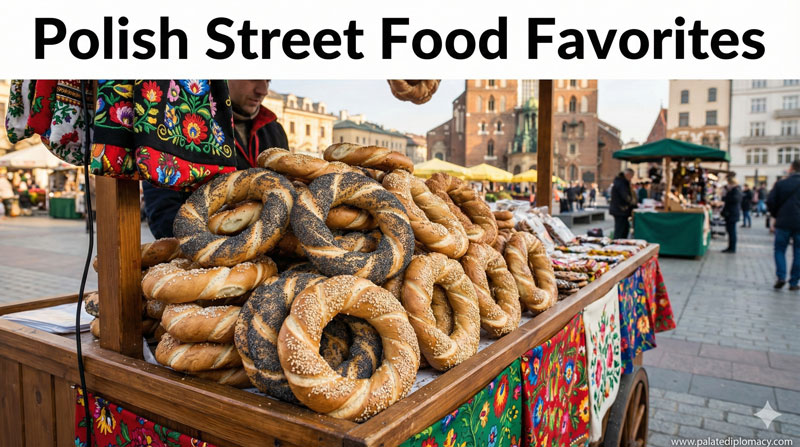
The Story Behind Obwarzanek Krakowski, a Polish Food Favorite
Obwarzanek Krakowski is more than a snack; it is a quiet thread in the fabric of Kraków’s daily life. You can taste a moment that belongs to the city’s streets, cafés, and marketplaces. This post explores its cultural value and culinary significance, inviting you to slow down and notice the care that goes into this beloved bread.
A Prized Kraków Tradition
In Kraków, the obwarzanek sits at the heart of neighborhood life. Bakers shape the dough by hand, forming a ring that holds a delicate center. The aroma rises in the morning air as ovens glow and carts roll into market squares. People greet the bakers, exchange a quick smile, and share a small ritual: the first bite often accompanies a cup of coffee or tea. This simple bread weaves together craftspeople, shoppers, and families in a daily moment of connection.
The Making: Craft and Technique
The craft is steady and attentive. Bakers mix flour, water, yeast, and a pinch of salt to create a supple dough. The dough is rolled into a ring and given time to settle its structure. Then the dough is briefly boiled, which gives the crust its characteristic bite and a soft, chewy inside. After boiling, the obwarzanek lands in the oven and emerges golden and fragrant. The final touch is the topping—poppy seeds, sesame seeds, or a dusting of salt—each option adding a distinct texture and aroma.
A Taste and Texture Story
The first bite delivers contrast: a lightly crisp crust that gives way to a tender center. The seeds add a gentle crunch and a nutty aroma, while the dough itself carries a mild, comforting flavor. The variety of toppings invites small choices, yet the essence remains the same: a balanced, comforting bite that pairs beautifully with a warm drink. The sensory experience is simple, inviting, and entirely approachable, making it a staple for both busy mornings and relaxed afternoons.
Cultural Value in Daily Life
Obwarzanek Krakowski anchors moments across the day. It appears in cafés as a companion to conversation, in markets as a quick refreshment, and in home kitchens as a reassuring ingredient for a cozy snack. Because it is easy to share, it naturally becomes a bread passed from person to person, from neighbor to guest, from morning to afternoon. In this way, the bread teaches a quiet lesson about everyday hospitality and the pleasure of good food prepared with care.
From Market to Home: Sharing and Adaptations
The obwarzanek travels well, yet its heart remains local. In many households, family members pick up their favorite topping on the go and savor it at Home with warmth in the kitchen. Cafés often feature seasonal versions or small twists that honor the original while inviting new tastes. This openness sustains the bread’s relevance, letting it evolve with the rhythms of modern life while keeping the familiar charm that so many people love.
Embracing the Obwarzanek in Modern Times
Today, the obwarzanek continues to shine in both traditional settings and contemporary food scenes. Bakeries emphasize the craft with hands-on demonstrations, inviting guests to observe and taste the process. The bread appears in recipe books, at food fairs, and in culinary tours that celebrate Kraków’s edible landscape. Yet even as its surroundings change, the core idea remains: a shared, well-made bread that enhances daily life with a touch of warmth and character.
How to Enjoy This Polish Favorite
To fully enjoy the obwarzanek, pair it with a hot beverage and a moment of pause. Try it fresh from the oven with a pour of tea or coffee for a comforting morning ritual. For a lighter option, share with a friend during a stroll through a park or a busy square. You can also savor it as a simple accompaniment to fruit, cheese, or yogurt for a balanced snack. The bread’s versatility makes it suitable for various occasions, always inviting and easy to love.
In closing, Obwarzanek Krakowski stands as a gentle ambassador of Kraków’s culinary culture. It celebrates craft, invites sharing, and adds a humane sweetness to everyday meals. This bread reminds us that good food often travels best when it remains rooted in careful technique and warm hospitality. If you ever visit Kraków, let the aroma guide you to a corner bakery and a bite that speaks softly of place, craft, and community.