
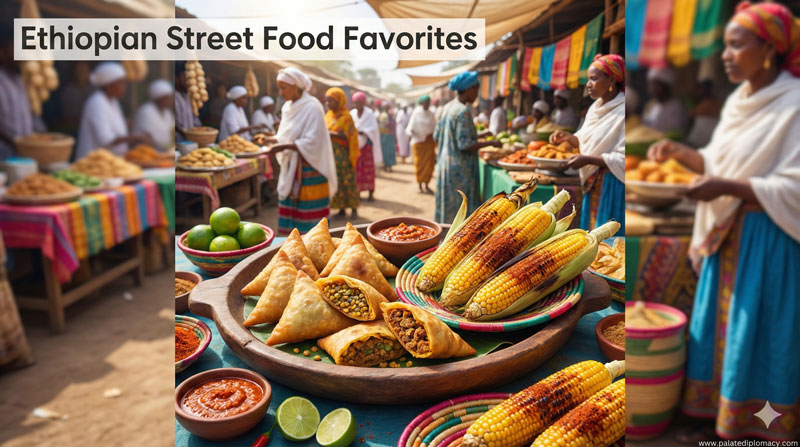
A Quick Welcome to the Dish
Roasted corn is a humble hero in Ethiopian food culture. Its bright kernels offer a sunlit sweetness that pairs with simple salt and, on some stalls, a whisper of spice. The dish invites a shared moment: the heat of the flame, the scent of smoke, and the quick joy of tasting something fresh from the field. In this post, we explore how this straightforward snack grew into a beloved staple. We look at its roots, its craft, and the way it helps connect farmers, cooks, and neighbors in everyday life.
From Field to Flame: The Journey of Roasted Corn in Ethiopia
From the first harvest to the warm glow of market stalls, the journey of roasted corn is a tale of daily life. Maize arrives as golden ears, ready for the grill or open flame. Vendors gather at crossroads, turning husked cobs with practiced hands. The aroma travels through streets, drawing families, friends, and curious passersby. The corn directs a simple ritual: share, savor, and move on. In many neighborhoods, this snack signals the end of a day’s labor and the welcome of a new meal. The path from field to flame is the heart of its charm.
The Craft of Roasting: Techniques and Tools
Roasting transforms the corn. Shelled kernels blister and caramelize, while a touch of smoke adds depth. The cook chooses method: grilled over charcoal or roasted on an open flame. A light brush of butter or oil, a pinch of salt, and sometimes a dusting of chili peppers or berbere heighten the flavor without overpowering the corn’s natural sweetness. The husk may stay for extra protection, or be peeled away to reveal the gleam of each kernel. The skill is quiet and steady: steady heat, patient turning, and timing to keep the kernels plump and tender inside the crisp edges. This craft makes the corn sing.
Flavor and Aroma: The Sensory Window
Each bite offers a bright balance. The initial smoke feels in the nose, followed by a sweet, buttery note. Salt rounds the natural corn flavor, while a whisper of spice lingers on the tongue. The texture plays with contrast: a crisp edge and a soft interior. When lime juice or a tangy chutney is added, the flavors pop and refresh, inviting another bite. The experience is simple, yet layered. It highlights how local ingredients, heat, and care come together to create a dish that feels both everyday and special.
Cultural Value: Sharing, Seasons, and Stories
Roasted corn is more than sustenance. It is a social bridge, a friendly ritual, and a marker of season. In markets, homes, and gatherings, the snack is a signal of hospitality. People gather around a vendor or a family grill, exchanging stories as the kernels crackle. Children learn the rhythm of turning, adults practice restraint with the flame, and everyone shares in the warmth. Because the corn is inexpensive and accessible, it invites participation from many, across ages and backgrounds. This demarcates a culture of welcome, where food becomes a way to notice, celebrate, and care for one another.
Serving Traditions and Modern Variations
Though rooted in tradition, roasted corn has room to grow. Some serve it with a squeeze of lime, a dusting of chili, or a pat of butter. Others pair it with sesame seeds, a drizzle of olive oil, or a small helping of spice mix like berbere. In contemporary Ethiopian Cuisine, vendors adapt the flavor to different meals while preserving the core idea: a warm, bright ear shared among friends. The result is a dish that travels easily from street corners to family tables, always anchored in welcome and the joy of simple, precise technique.