
The Story Behind Obwarzanek Krakowski
The Story Behind Obwarzanek Krakowski, a Polish Food Favorite, invites readers into a warm world of flavor and craft. This ring-shaped bread has long held a special place in Kraków’s daily life. Bakers and shoppers share a simple joy as a warm obwarzanek passes from hand to hand. The dish stands as a testament to patient skill and to the everyday beauty of Polish baking. Its form, its aroma, and its easy availability make it more than a snack. It is a link between generations, a small ceremony of taste that belongs to the city’s heart.
A Ring with Meaning: Shape, Seed, and Skill
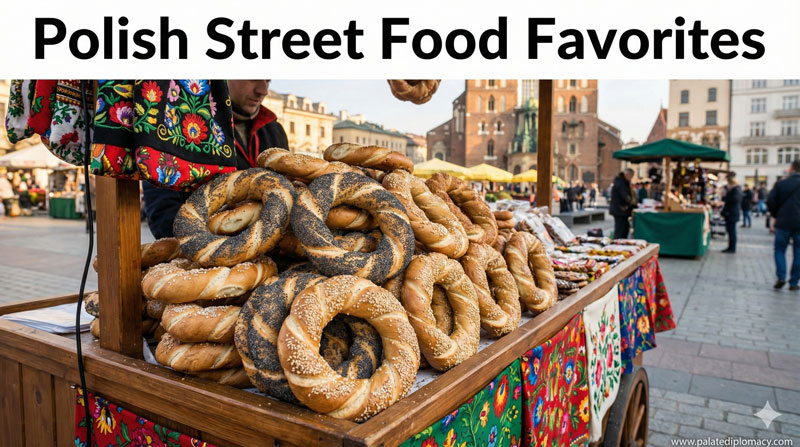
The ring shape is eye-catching and practical. It fits comfortably in one hand and travels well through busy streets. The dough is formed into a circular band, then briefly boiled before it enters the hot oven. This brief boil gives the crust a chewy bite and creates a subtle gloss on the surface. After boiling, bakers top the rings with sesame seeds, poppy seeds, or a sprinkle of coarse salt. Some variants go with simple salt, others with seeds for added texture and aroma. The result is a crust that crackles softly when you bite, giving way to a tender interior. The seeds toast in the heat and release a gentle, nutty scent that signals a fresh bake to passersby. The technique is a visible sign of careful practice passed from dough to dough.
The Craft: From Hands to Heritage
Culinary craft shines in every step. Flour and water become dough, then rest and rise. Bakers shape the dough into rings, guiding the edges with steady hands. The rings travel to the boiling bath, where heat and moisture begin their transformation. After a short sojourn in the boiling water, they land on a hot sheet and slide into the oven. The baking scent fills the street, drawing people toward the bakery window. This sequence—shape, boil, bake—embodies a small artistic routine that has endured through years of routine, market days, and seasonal changes. The craft is accessible yet precise, inviting both new bakers and seasoned artisans to honor a shared method.
Flavor, Texture, and Cultural Allure
Obwarzanek Krakowski delights the senses without overwhelming them. The crust offers a gentle crackle and a soft, almost springy interior. A light saltiness dances with the subtle sweetness of the dough. Sesame or poppy seeds add crunch and a nutty aroma that lingers pleasantly. This balance makes the obwarzanek versatile, suitable for a quiet breakfast, a stroll through the Old Town, or a quick office break. The dish’s appeal lies in its simplicity and in the care shown by the baker. Each bite carries memories of bustling markets, friendly exchanges, and the steady rhythm of city life. The beauty of the dish is in how it meets daily needs with grace and flavor.
Kraków Life: Market Culture and Daily Joy
Kraków’s markets and streets are alive with the sight of warm obwarzanki. The Main Market Square, known locally as Rynek Główny, becomes a stage where bakers share their craft with locals and visitors alike. Vendors offer these rings to passersby with a smile, inviting a moment of pause amid a busy day. Families often purchase obwarzanki as a small treat for school or workday errands. Friends meet for a quick bite, and the aroma travels through narrow streets, weaving a sense of place. In this setting, the obwarzanek is not just food; it is a friendly ritual that punctuates everyday life with warmth and connection. The dish’s cultural value grows from these interactions, turning a simple snack into a shared experience.
A Symbol of Polish Culinary Craft
Obwarzanek Krakowski embodies the skill and care of Polish bakers. It showcases precision in dough handling, timing in boiling and baking, and artistry in seed placement. The recipe preserves a historic method while inviting personal touches from neighborhood bakeries. Through this craft, communities celebrate a common culinary language that is easy to learn and rewarding to taste. The dish also serves as a gentle ambassador for Polish Cuisine, highlighting the elegance of simple ingredients treated with thoughtful technique. In this sense, the obwarzanek becomes a quiet emblem of culinary dedication and regional pride.
How to Enjoy and Respect the Tradition
To savor the obwarzanek is to experience a moment of Kraków’s hospitality. Enjoy it fresh with a cup of coffee or tea, perhaps while strolling through a square or along a street lined with historic buildings. You can taste the contrast between the chewy interior and the crisp surface in every bite. If you plan to store it, keep it in a cool, dry place and toast lightly before eating to refresh the crust. The ritual of sharing, sampling, and gifting obwarzanki keeps tradition vibrant. By embracing the dish in daily life, both locals and visitors participate in a continuous story of flavor and craft.
Preserving a Gentle Craft for Tomorrow
Preserving this beloved bread means continuing to honor the baker’s craft. Families pass techniques down through generations, and local bakeries sustain the practice with care. Festivals, markets, and seasonal stalls keep the ring alive in the city’s rhythm. The obwarzanek’s cultural value grows when communities celebrate it as part of Polish culinary heritage. In this light, the dish becomes more than a snack; it is a small, enduring story about skill, care, and shared delight. By cherishing its method and its presence on Kraków’s streets, we honor a simple yet meaningful food tradition that continues to welcome all with warmth and flavor.