
Introduction
In Ethiopia, injera with wat is more than a meal. It is a living expression of hospitality, craft, and everyday joy. The dish invites conversation, shared nourishment, and a slow appreciation for texture, aroma, and balance. When you hear the crack of injera meeting a steaming pot of wat, you sense a culture that treats food as a warm ceremony of togetherness.
What is Injera and Wat?
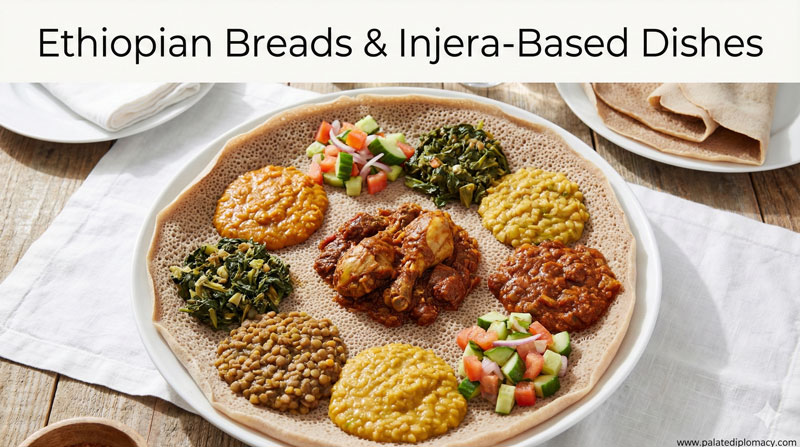
Injera is a large, round flatbread with a soft, spongey feel and a tangy aroma. It is traditionally made from teff flour, though some cooks blend teff with other grains. Wat is a hearty stew, simmered with vegetables, legumes, and meat or lentils. Together, injera and wat create a complete, satisfying plate. The injera serves as both plate and utensil, soaking up the stew’s rich flavors while adding its own gentle sourness.
The Craft: Fermentation and Teff
Teff is tiny but mighty. It yields a delicate, honeyed aroma when milled into flour. The batter rests and ferments, developing a subtle sourness that shoppers often recognize as the hallmark of authentic injera. A traditional griddle, called a mitad, heats to a precise temperature. The batter is poured in a circular motion and cooked until the surface forms tiny holes. The result is a soft, elastic sheet that holds sauces beautifully and tears easily for sharing.
The Wat: A Symphony of Spices
Wat ranges from mildly comforting to boldly aromatic. Common components include onions, garlic, ginger, and a blend of spices such as berbere and paprika. Niter kibbeh, a clarified butter infused with spices, adds depth and a silky finish. The spices are layered slowly, creating warmth without overpowering the main flavors. Whether it is a chicken wat (Doro Wat), lentil wat (misir wat), or chickpea version (shiro), each preparation invites you to savor a balance of heat, sweetness, and savoriness.
The Cultural Rhythm of a Meal
A meal with injera and wat follows a gentle, unfolding rhythm. The bread arrives first, ready to be torn into pieces. People gather around a shared platter, the injera acting as both surface and soft utensil. Conversation flows as the steam rises from the wat. The act of tearing and scooping becomes a small, shared ritual that reinforces care for one another. This rhythm mirrors a broader rhythm of Ethiopian dining, where food signals welcome, respect, and togetherness.
The Social and Shared Experience
From family dinners to festive gatherings, this dish anchors social life. Guests are welcomed with warmth, and the table becomes a space for storytelling and laughter. The communal nature of injera and wat honors generosity and inclusion. The same platter invites everyone to contribute—tearing, dipping, and passing the portions in a courteous, harmonious exchange. In this way, food becomes a thread that weaves relationships and memories.
Pairings, Occasions, and Care for the Dish
Injera with wat fits many moments: everyday meals, family celebrations, and weekend feasts. It pairs well with simple Side Dishes, fresh salads, and a cup of strong Ethiopian coffee after the meal. Cooks take care to keep injera soft and moist, storing it properly to preserve its texture and tang. The dish shines when served warm, allowing the sauces to mingle with the sour sweetness of the bread. This care reflects a mindset that values harmony, balance, and mindful cooking.
Why It Feels Special to the Food Culture
- It connects people through a shared plate and a common pace of eating.
- It honors a traditional grain like teff and a time-tested fermentation method.
- It showcases the skill of cooks who balance heat, aroma, and texture with patience.
- It invites curiosity about regional variations and personal family twists.
Conclusion
Injera with wat stands as a radiant example of Ethiopian culinary culture. It celebrates texture, aroma, and a spirit of hospitality that welcomes all to the table. Each bite invites appreciation for tradition, skill, and the joy of sharing. This dish remains a bright centerpiece in Ethiopian cuisine, beloved for its simplicity, depth, and generous sense of community.