
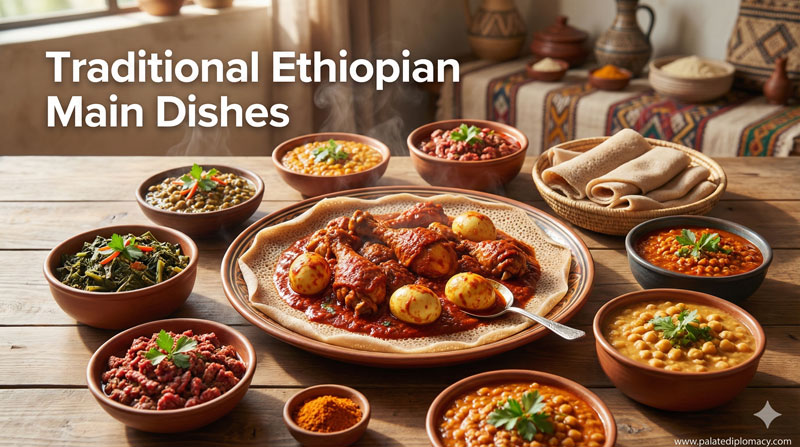
A Warm Welcome to Doro Wat
Doro Wat is more than a dish; it is a cherished thread in the fabric of Ethiopian dining. Families come together, and a pot of Doro Wat invites conversation and connection. The welcoming aroma greets guests and signals a moment of togetherness. This dish holds a place of honor in many homes and on festive tables, celebrated for its comforting presence and generosity.
The Heart of the Dish: How Doro Wat Is Made
The foundation begins with onions that caramelize slowly, building a velvet sweetness. Berbere and niter kibbeh join the mix, releasing a warm, earthy heat. Chicken cooks gently in the sauce, soaking up depth and character. Hard-boiled eggs often share the pot, adding a textural contrast and a touch of elegance to the stew.
A Symphony of Spices: Berbere and Spices
Berbere is the soul of Doro Wat, a vibrant blend that carries heat and aroma. It typically includes chili peppers, garlic, ginger, coriander, fenugreek, cinnamon, and cloves. This spice mix is seasoned with patience, allowing each note to bloom. Home cooks bring a personal touch, tweaking intensity and balance to suit family tastes.
The Texture and Color: Visual and Taste Appeal
The sauce takes on a rich, coppery hue as it cooks, inviting the eyes before the palate. Onion sweetness shines through, creating a balanced backdrop for the bold spices. The chicken remains tender, its flavor soaking into the sauce. Eggs provide a comforting bite, absorbing the spice without losing their gentle texture.
The Social Heart: Shared Meals and Rituals
Doro Wat shines in communal moments, where meals become celebrations of local culture. It is commonly served with injera, a spongy flatbread that soaks up the sauce. Diners tear pieces of injera and use them to scoop, turning eating into a shared ritual. The act of serving and passing dishes strengthens hospitality and creates memorable gatherings.
Serving and Pairing: Injera as a Partner
Injera acts as both plate and utensil, offering a sturdy counterpoint to the richness of the stew. The subtle tang of injera balances the spice, while its airy texture contrasts with the sauce’s depth. The pairing highlights a harmony that is central to Ethiopian dining. Together, Doro Wat and injera showcase how food, texture, and culture intertwine.
A Chronicle of Culture: Why It Endures
Doro Wat endures because it reflects patience, craft, and care. The careful browning of onions, the measured spice blend, and the gentle simmering reveal a respectful approach to cooking. Across generations, families pass down methods and memories, keeping the tradition alive. The dish stands as a warm emblem of hospitality, inviting all to savor a moment of connection and flavor.