
Introduction
Injera, the sour flatbread at the heart of Ethiopian meals, carries a warm presence that goes beyond flavor. In this post, I share the Top Reasons Ethiopians love Injera. Made from teff flour and water, it ferments gently to create a bright, tangy note. It is more than food; it is a ritual of sharing, a daily joy, and a living part of daily life.
A Texture Like No Other
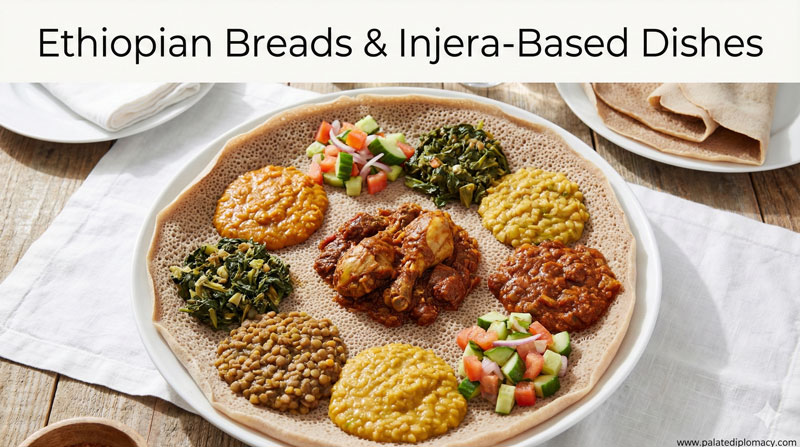
Injera offers a light, springy bite that feels inviting. The surface hosts tiny holes that form as it cooks, giving a soft, spongey character. This texture soaks up sauces and stews beautifully, keeping each bite moist without becoming heavy. Consequently, the bread acts as both driver and companion for every dish on the table.
A Plate and a Table at Once
Injera serves as both plate and eating tool. Diners tear off a corner and use it to scoop bites of vegetables, lentils, or meat. The bread carries sauces with ease, guiding flavors toward the mouth. This practical design invites a relaxed, tactile dining experience that many households treasure.
The Social Thread of Meals
Hospitality shines in every injera-centered meal. A shared loaf at the center of the table signals welcome and togetherness. Conversations flow as neighbors and family gather around it, passing portions and ideas with warmth. Thus, injera becomes a daily bridge that strengthens community bonds.
The Fermentation Craft
The sour note comes from a gentle fermentation of teff flour and water. This patient process enhances flavor depth while supporting a light, airy crumb. The cooking method, often on a large circular pan called a mitad, yields an even, round disk with a delicate edge. In short, fermentation and craft collaborate to create depth without heaviness.
Versatility Across the Table
Injera pairs with a wide range of dishes, from hearty stews to bright lentil dishes and fresh vegetables. It adapts to many seasons and occasions, always ready to embrace new flavors. Because it is a flexible canvas, families create comforting meals that feel balanced and complete.
Regional Flair and Everyday Joy
Across regions, injera brings a familiar presence to breakfast, lunch, and dinner. Its profile remains consistent yet responsive to local ingredients and personal recipes. This everyday adaptability celebrates the beauty of Ethiopian food culture in simple, satisfying ways.
Craft and Care in the Kitchen
The making of injera is a quiet art. Start with teff flour, water, and patience. Allow the batter to rest, then pour and steam on a hot surface. Watch the bubbles emerge, and you will sense the care that goes into a perfect round of injera. This care signals respect for ingredients and for the people who will share the meal.
Conclusion
Top Reasons Ethiopians Love Injera come from its texture, its role at the table, its social warmth, and its gentle craft. Injera is more than a dish; it is a shared experience that invites neighbors and families to slow down and savor together. In every bite, the bread tells a story of hospitality, tradition, and culinary delight.