
Introduction
Injera sits at the heart of Ethiopian meals. Its tangy aroma and spongy, airy texture invite people to sit together and share. This flatbread is more than food; it is a living expression of craft, family routines, and regional pride. In this post, we explore why injera stands as one of Ethiopia’s most loved dishes. We focus on culture, flavor, and the everyday rituals that surround it. The dish welcomes all at the table and blends simplicity with deep, enduring meaning.
The star ingredient: Teff and fermentation
Teff, a tiny grain, gives injera its signature flavor and color. The batter for injera rests and ferments, creating a light tang that balances spicy stews. Fermentation is a quiet, patient art that many families pass down through generations. The result is a bread that is both sturdy and delicate, able to cradle sauces and soak up juices without falling apart. This balance—between strength and softness—helps injera shine as a cultural emblem of daily life.
The making: from batter to mitad magic
The process blends science and tradition. Bakers mix teff flour with water, let it rest, then cook the batter on a circular clay griddle called a mitad. The steam and heat form tiny holes that give injera its characteristic texture. The surface becomes a natural plate, inviting hands to tear and dip. This cooking ritual is often a shared activity, with family members contributing at different stages. The result is a bread that feels Like a community effort, not just a meal item.
Cultural value: meals that glow with belonging
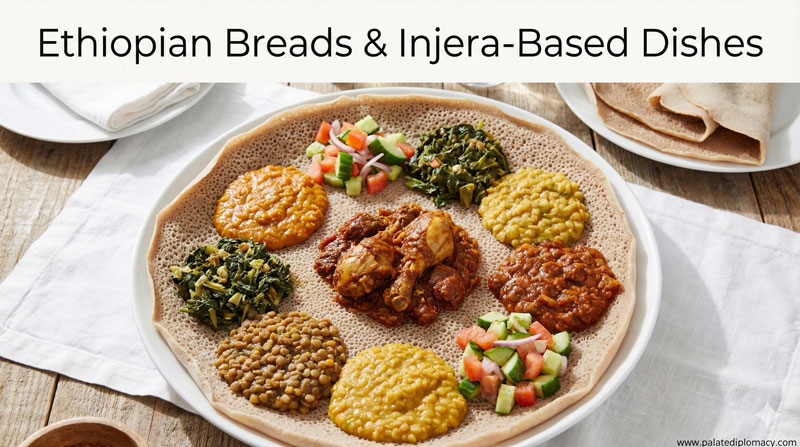
Injera is more than nourishment; it shapes social life. Meals begin with the presentation of the large injera, spread out on the table as a communal “plate.” People tear portions from the loaf and use pieces to scoop up bites. This method fosters conversation, laughter, and a sense of togetherness. The bread’s generous size accommodates all guests, reinforcing hospitality and care. In many households, injera marks the rhythm of the day, offering comfort and familiarity.
Culinary significance: flavor, balance, and versatility
Injera’s tanginess acts as a natural counterpoint to rich stews and spicy sauces. It helps balance bold flavors while adding moisture and texture. The bread’s slightly sour note brightens lentils, vegetables, and meats, making every bite feel complete. Beyond taste, injera showcases culinary balance: soft edges meet crisp moments, and the bread’s porous surface soaks up sauces without losing its structure. This versatility makes injera indispensable across many dishes.
Regional variations: each bite tells a place
Across regions, cooks adapt the Recipe with local grains and traditions. While teff remains central, many kitchens blend teff with barley, millet, or corn to suit taste and availability. The size and thickness of injera can vary, reflecting different climates and cooking styles. Yet the essence stays the same: a round, shared bread that carries local pride and the memory of generations.
Serving etiquette: welcoming with hand and heart
Eating injera is a tactile, welcoming experience. Diners often eat with hands, tearing pieces and using them to scoop food. The act of sharing inspires gentle conversation and careful hospitality. A friendly table welcomes guests with generous portions and a calm, unhurried pace. The etiquette around serving emphasizes respect, gratitude, and the joy of gathering.
Pairings and dishes: harmony on the plate
Injera pairs with a variety of stews, vegetables, and seasonal dishes. Classic companions include lentil or chickpea stews, spiced meats, and fresh vegetable medleys. The bread also serves as a utensil, guiding bites and creating harmony between sauce and texture. This interplay highlights injera’s role as both vessel and flavor across the meal, reinforcing its central place in Ethiopian cuisine.
Conclusion
Injera embodies culture, craft, and community. Its fermentation, preparation, and sharing weave together taste and tradition in a single, inviting loaf. By elevating everyday meals into gatherings of warmth and notice, injera remains one of Ethiopia’s most loved dishes. A table without injera would feel incomplete, while a table with injera feels complete—rich in flavor, tradition, and togetherness.