
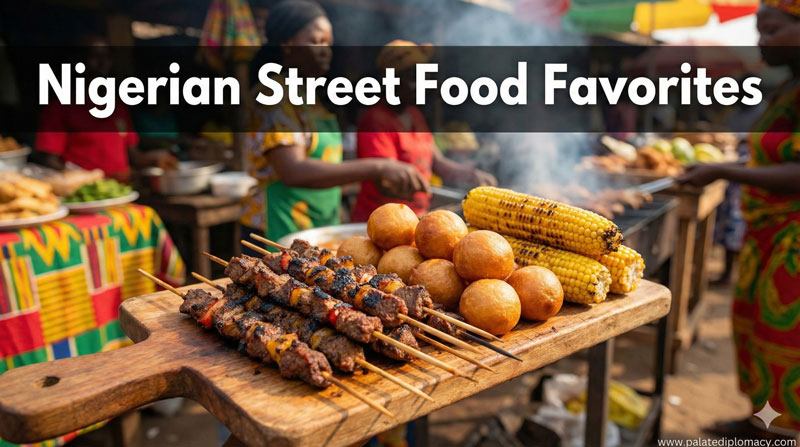
In Nigeria, suya stands as more than a snack. It is a celebration of flavor, craft, and community. This post explores why suya is among the most loved dishes in Nigerian Food Culture, focusing on its cultural value and culinary significance.
The Essence of Suya
Suya is a simple yet vivid dish. Thin cuts of meat are coated with a dry spice mix, then grilled over charcoal. The spice blend, often called yaji or suya spice, blends peanuts, chili, and aromatic seasonings. The result is a crisp exterior and juicy center, with a fragrant, nutty heat. The preparation invites skill and rhythm, turning a routine meal into a moment of delight.
A Cultural Staple on Nigerian Streets
From early evenings to late nights, suya stalls line busy streets. Vendors offer fresh skewers on racks, inviting passersby to pause and share a quick bite. The scene is lively—voices, sizzling coals, and the hum of conversation. People come together for the aroma, the visual appeal, and the simple pleasure of tasting good food. Suya becomes a social staple, a reason to meet, greet, and exchange smiles.
The Spice That Speaks: Yaji and Its Significance
The spice mix is the heart of suya’s character. Ground roasted peanuts contribute a toasty nutty note, while chili and pepper add warmth and brightness. Garlic, ginger, onion powders, and salt round out the profile. Caramelized sugar or other regional tweaks may appear, but balance remains key. This blend speaks to a shared palate: bold, clean, and inviting. Mastery of the rub matters, yet the warmth of friendship and gathering matters just as much.
The Craft of Grilling: Technique and Skill
Grilling suya is a craft passed through hands and kitchens. Meat is seasoned evenly, then threaded onto skewers with care. Vendors control the heat, turning skewers to achieve crisp edges without drying the meat. The charcoal flame adds a gentle smokiness that enhances every bite. The result is a consistent texture and a rich aroma that lingers in the air.
Suya in Everyday Life: From Markets to Family Tables
Suya fits naturally into daily routines. It is a convenient, flavorful option for a quick dinner or a weekend treat. Families often share a platter, turning a simple snack into a small celebration. Children learn the ritual of requesting extra onions or tomatoes on the side. In many homes, suya becomes part of a larger table conversation about food, memory, and joy.
Regional Variations and Shared Language of Flavors
While the core idea stays the same, regional touches abound. In one city, the spice might lean toward a brighter chili kick; in another, a deeper peanut toast influences the aroma. Some cooks add a pinch of local herbs or a citrus note to refresh the palate. Across these variations, the essential language remains clear: grilled meat, a bold spice, and the communal moment around the skewer.
Pairings and Serving Traditions
Traditionally, suya is served with fresh onions, sliced tomatoes, and cucumbers. The crisp vegetables provide a refreshing counterpoint to the rich meat. Some enjoy a cooling side like pepper stew or a light flatbread to accompany portions. The plate often centers on sharing, with everyone taking a turn at the skewers and savoring the communal experience.
Why Suya Feels Timeless
Suya endures because it blends flavor, technique, and togetherness. The dish is a gateway to conversation, a showcase of street-smart cooking, and a celebration of appetite well cared for. It invites guests to slow down, observe the craft, and appreciate a hot, honest bite. In this way, suya remains A Beloved thread in the tapestry of Nigerian food culture.
If you’re seeking a dish that speaks to bold flavor and warm hospitality, look to suya. Its beauty lies not only in taste but in the moment it creates: shared tables, smiling faces, and memories made around a charcoal fire.