
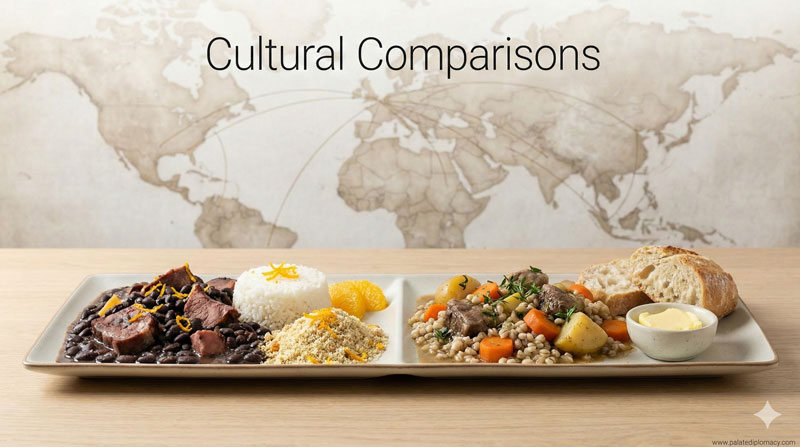
Exploring the Rich Flavors of Brazilian vs. American Soul Food
Soul food is more than just a collection of dishes; it is a vibrant expression of cultural history, tradition, and community. When comparing Brazilian and American soul food, we uncover two unique culinary worlds that celebrate local ingredients, flavors, and stories. Both cuisines offer a deep sense of identity and serve as culinary bridges that connect generations. Let’s explore their cultural significance and the culinary artistry behind these beloved dishes.
The Cultural Roots of Brazilian Soul Food
Brazilian soul food draws from a diverse tapestry of regional ingredients and culinary influences. It emphasizes hearty, flavorful dishes that reflect the country’s rich agricultural landscape. Staples like black beans, rice, and cassava root are central to many traditional recipes. Dishes such as feijoada—a hearty Black Bean stew with smoked meats—are iconic, representing communal gatherings and shared heritage.
Brazilian Cuisine celebrates bold flavors, often incorporating spices, herbs, and citrus to enhance natural ingredients. The preparation of these dishes often signifies family bonds and local traditions, passed down through generations. Regional variations showcase the country’s geographical diversity, from the coastal seafood dishes of Bahia to the hearty stews of the South. This culinary diversity highlights Brazil’s cultural mosaic and the importance of food as a communal experience.
The Essence of American Soul Food
American soul food has a rich history rooted in the southern United States. It embodies comfort, resilience, and community. Classic dishes such as fried chicken, collard greens, cornbread, and biscuits have become symbols of Southern hospitality and tradition. These dishes often feature simple ingredients transformed through time-honored techniques that highlight flavor and nurturing qualities.
American soul food is deeply connected to storytelling and tradition. It reflects the resourcefulness of communities, turning humble ingredients into treasured dishes. The emphasis on slow-cooked, flavorful preparations fosters a sense of togetherness. Variations across regions—like Louisiana’s gumbo or North Carolina’s barbecue—showcase local ingredients and cultural influences.
Culinary Significance and Shared Values
Both Brazilian and American soul foods are more than meals; they are expressions of cultural identity and community. They evoke memories of family gatherings, celebrations, and daily life. These dishes serve as a link between generations, carrying stories and traditions that remain alive through food.
Importantly, both cuisines highlight the importance of flavor and resourcefulness. They celebrate local ingredients, innovative cooking techniques, and the joy of sharing a meal with loved ones. Each offers a unique perspective on how food can foster connection and preserve heritage.
Celebrating Culinary Diversity
While distinct in their ingredients and preparation, Brazilian and American soul foods share a common spirit—honoring tradition, community, and flavor. Exploring these dishes invites us to appreciate the cultural richness and culinary artistry behind each cuisine. It also encourages us to see food as a universal language that unites people across different backgrounds.
In conclusion, whether savoring a hearty feijoada or biting into crispy fried chicken, both Brazilian and American soul food remind us of the power of shared culinary traditions. They are vibrant expressions of culture that nourish not just the body, but also the soul.