
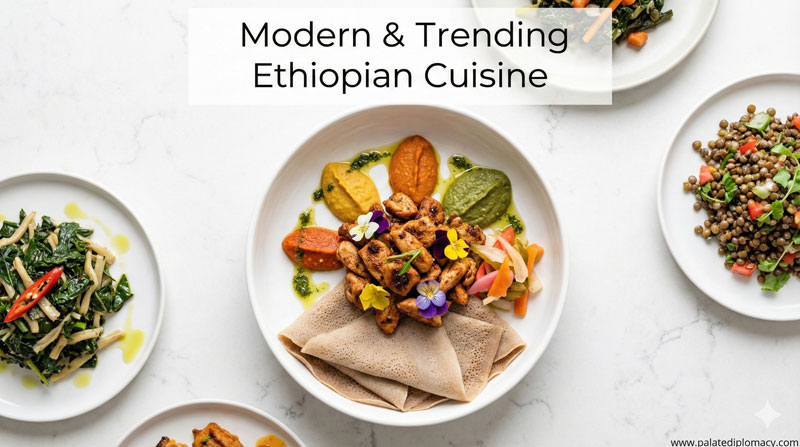
Everything You Need to Know About Contemporary Ethiopian Plates
Contemporary Ethiopian plates offer a vibrant lens on a living food culture. They blend time-honored flavors with thoughtful presentation. This guide invites you to taste, observe, and appreciate the beauty behind each plate.
The plate as a cultural canvas
in Ethiopian dining, injera often serves as both plate and utensil. A large, spongy flatbread forms the stage for a collection of stews and vegetables. Colors rise from bright tomatoes, deep reds from berbere, greens from herbs, and the pale crumb of teff. The arrangement invites sharing, conversation, and a sense of warmth. Each bite carries memory, craft, and care from kitchen to table.
Core components of a modern Ethiopian plate
- Injera: a teff-based pancake that soaks up sauces and unites flavors.
- Wat: a family of hearty stews, simmered with depth and spice.
- Misir wat: lentil stew with red-brown color and gentle heat.
- Shiro: a smooth chickpea flour stew that glides over the bread.
- Tibs: sautéed meat with onions and peppers, bright with herbs.
- Alichа: a mild Potato and cabbage dish for balance.
- Berbere and niter kibbeh: bold spices and clarified butter that perfume the plate.
- Fresh greens and vegetables: add crunch, fragrance, and contrast.
These elements come together in plates that honor both abundance and balance. The goal is a harmonious bite that feels comforting and festive.
Techniques and flavors that shape the modern plate
Chefs slow-simmer stews to deepen flavor, then finish with a touch of spice and fat to kiss the palate. Spices are toasted to awaken their aroma, then blended into Berbere for warmth and complexity. Injera batter ferments, giving a gentle tang that layers with every sauce. Plating emphasizes contrast: soft stews against the firm, airy injera, bright herbs beside rich meats, and a hint of citrus or tomato for brightness. The result is a plate that speaks through texture, aroma, and color.
Regional flavors meet contemporary technique
Urban kitchens and modern cafes reinterpret traditional plates with subtle twists. Chefs experiment with vegetables, legumes, and grains to showcase freshness and seasonality. Some plates feature lighter sauces, while others preserve the bold, peppery profile Ethiopians Love. Presentations may place stews in small bowls atop injera, or fold vegetables into woven piles that invite touching and tearing. Across these variations, the essence remains: inviting, generous, and full of character.
The social and cultural value of sharing plates
Sharing is the heartbeat of Ethiopian plates. A single platter invites everyone to sample, compare, and connect. Hospitality shines through generous portions and a steady rhythm of serving and tasting. The meal unfolds slowly, with conversation guiding the pace as flavors mingle. This practice celebrates togetherness, mindfulness, and gratitude for good food and good company.
How to enjoy Ethiopian plates at home
- Start with injera or a sturdy flatbread as your base.
- Layer misir wat, shiro, and alicha for a balanced tasting.
- Add tibs for a savory centerpiece, if desired.
- Tear pieces of injera to scoop sauces; let texture guide your bites.
- Finish with herbs, lemon, or a light salad to refresh the palate.
- Pair with a simple tea or a traditional coffee moment to honor the culture.
A little planning and a calm pace let you savor each component as a chorus, not a race.
Pairings, occasions, and mindful sourcing
Tej, a honey wine, and Ethiopian coffee are traditional companions to these plates. Tej complements spice with sweetness, while the coffee ceremony offers a fragrant, ceremonial close to the meal. When shopping, seek fresh herbs, good onions, lentils, chickpeas, and high-quality berbere. Fresh ingredients elevate the plate and keep flavors true to their roots.
A welcoming invitation to explore
Contemporary Ethiopian plates honor heritage while inviting new cooks to participate. They reward curiosity with warmth, color, and robust flavor. By embracing shared dining, thoughtful spice, and careful technique, you can experience a dish that feels both timeless and alive. Welcome to a table where culture, craft, and community meet in every bite.