
How Gravlax Became Popular in Nordic Cuisine
Gravlax sits at the crossroads of simplicity and distinction in Nordic kitchens. It uses salmon, salt, sugar, and dill. The dish celebrates seasonal bounty and patient craft. It invites shared meals and quiet reflection. Through centuries, it found a steady home on breakfast boards, lunch spreads, and festive platters. Its rise is a story of flavor, balance, and daily life in the North.
The Simple Craft of Curing Salmon
The core idea is clean and direct. A fillet is dusted with salt and sugar, then seasoned with dill. The fillet is pressed gently and left to rest. Natural moisture draws out through the salt and sugar mix. The result is a tender, silky slice with bright dill notes. The name gravlax hints at its origin in a sand burying method, where natural heat and patience did the work. Modern kitchens keep the method approachable and precise, yet the spirit remains the same.
Dill, Salt, and the Language of Flavor
Dill carries the bright, green voice of the dish. It pairs with the salt and sugar to balance sweetness and brine. The herb brings a fresh lift without overpowering the salmon. The fish provides a clean canvas for herbs, citrus, and subtle spices. This harmony makes gravlax versatile for different meals and moods. The sensory result is calm, clean, and deeply satisfying.
Seasonal Traditions and Festive Plates
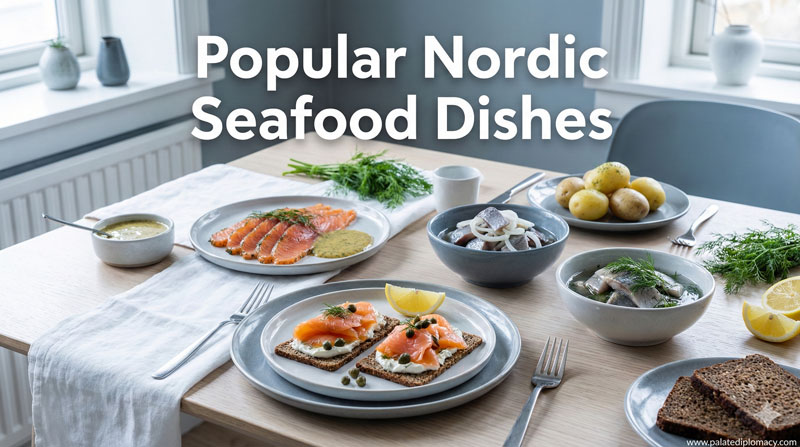
Gravlax is a favorite during bright Nordic celebrations and simple weekend gatherings. It aligns with the seasonal rhythm of salmon runs and markets. On a platter, it becomes a centerpiece that invites conversation. Slices are arranged with care, often beside crisp bread, onions, and lemon. The accompanying sauces add a gentle spice and a creamy counterpoint. In this way, gravlax enriches the mood of a shared table.
Regional Variations Across Nordic Countries
In Sweden, the dish often appears with a classic mustard-dill sauce. In Norway, lighter brines and delicate herb notes can take center stage. Denmark brings a script of fresh greens and mild, tangy accompaniments. Across the region, small tweaks in salt level, dill quantity, and timing shape the final taste. Yet the essence stays the same: a pure salmon flavor enhanced by balance and restraint. This regional variety adds depth without losing the common language of gravlax.
Modern Takes and Everyday Meals
Home cooks embrace gravlax for quick elegance and reliable flavor. Modern methods refine timing and texture while preserving tradition. Chefs experiment with citrus zest, pepper, or a whisper of vodka for depth. Yet the dish remains faithful to its roots: a simple cure, a patient wait, and a slice to savor. Sustainability and local sourcing elevate the practice, guiding choices from fish markets to dinner plates. The result is accessible sophistication for everyday meals and special occasions alike.
Pairings and Culinary Craft
Gravlax shines with light accompaniments. A dollop of hovmästarsås or a mild mustard-dill sauce complements the clean salmon. Rye bread and crispbread offer a sturdy, earthy counterpoint. A glass of cold white wine or a small glass of aquavit completes the tasting. The plating invites a calm, mindful bite. In every bite, you sense care, season, and place.
A Quiet Celebration of Food Culture
Gravlax embodies a philosophy of food that Nordic cuisines value highly. It honors the sea, the season, and skilled hands. It invites generosity and patient preparation. It celebrates simple ingredients elevated by balance and technique. The dish remains inviting, respectful, and deeply rooted in everyday life. For many, gravlax is more than a dish; it is a gentle link between table, memory, and shared appetite.
If you wish, I can tailor the sections to emphasize a particular Nordic country, a preferred herb or sauce, or a specific seasonal festival to heighten the local flavor and make the post even more searchable for that audience.