
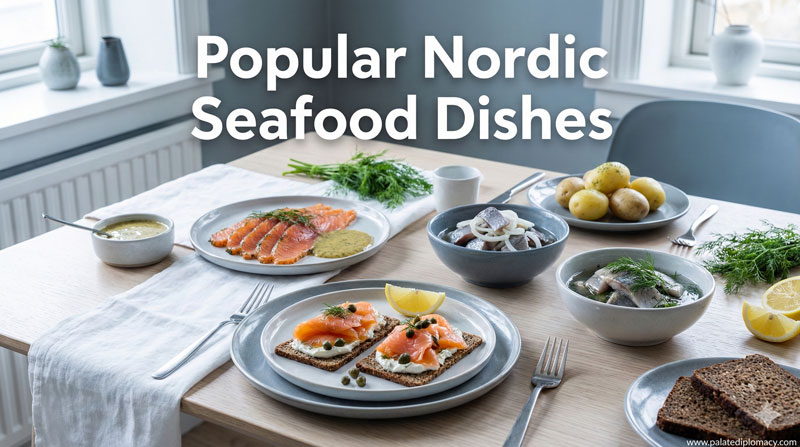
The Quiet Beauty of Gravlax
Gravlax is a dish that speaks softly, yet it resonates deeply in Nordic kitchens. It blends ocean freshness with herb garden brightness. A thin slice reveals a silky texture and a pale pink glow. The dish invites time, care, and shared meals. It stands as a symbol of how simple ingredients can become something memorable when treated with respect and patience.
The Craft Behind the Cure
Gravlax starts with two humble partners: salmon and dill. Cooks mix salt and sugar to form a gentle bed that draws out moisture and blends flavors. Fresh dill is layered generously to perfume the fish. The salmon rests under a weight, allowing a calm cure to unfold over a day or two. After the cure, the skin is removed and the fish is sliced paper-thin. This careful process links home kitchens with professional studios, a lineage of quiet expertise passed through generations.
Flavor, Texture, and Pairings
The taste is clean and bright. The salt and sugar balance each other, creating a delicate saltiness that never overwhelms. Dill provides a fresh herbaceous note that lingers on the palate. The texture is tender and almost buttery, with a melt-in-your-mouth feeling when sliced finely. Gravlax invites careful toppings and modest sauces. Classic pairings include:
- Mustard-dill sauce for a tangy, creamy lift
- Crusty rye bread or crispbread for texture and contrast
- Lemon wedges to add a touch of citrus brightness
- Fresh herbs or a light pickle to brighten the plate
These accompaniments honor the fish and highlight its refined, understated charm.
A Nordic Table and Its Traditions
Gravlax has a special role at Nordic tables. It celebrates the season when fresh salmon becomes available and connect families to the rhythm of the year. The dish often appears at gatherings, cafes, and seasonal menus as a refined starter or a centerpiece for sharing. Its preparation is a shared ritual—family members swap tips, compare slicing thickness, and perfect the balance of salt and dill. In this way, gravlax becomes more than food; it is a story told through texture, aroma, and the quiet joy of good company.
Gravlax in Modern Kitchens
Today, gravlax travels easily from a seaside kitchen to a bustling home. The method remains approachable, inviting even novice cooks to join in the craft. Chefs expand the idea with subtle variations, such as adding citrus zest or experimenting with different herb blends, always staying true to the dish’s clean essence. The dish adapts to menus, brunches, and dinner plates, proving its versatility without losing its core identity. This bridge between tradition and contemporary cooking keeps gravlax vibrant and inviting.
Celebrating with Gravlax: A Simple Guide
To appreciate gravlax, slice it thinly and lay it on good bread or a simple plate. A light drizzle of olive oil and a squeeze of lemon can elevate the flavors. A small mound of dill or microgreens adds color and aroma. Serve with a cool beverage, and let the conversations drift between the sea, the herb garden, and the plate. In this way, gravlax becomes not just a dish, but a meaningful moment of sharing and quiet celebration.
In summary, gravlax stands as a cherished Nordic treasure. It blends skill, seasonality, and simplicity into a dish that feels both timeless and alive. Its cultural value lies in the craft, the thoughtful balance of flavors, and the lasting warmth it brings to the table.