
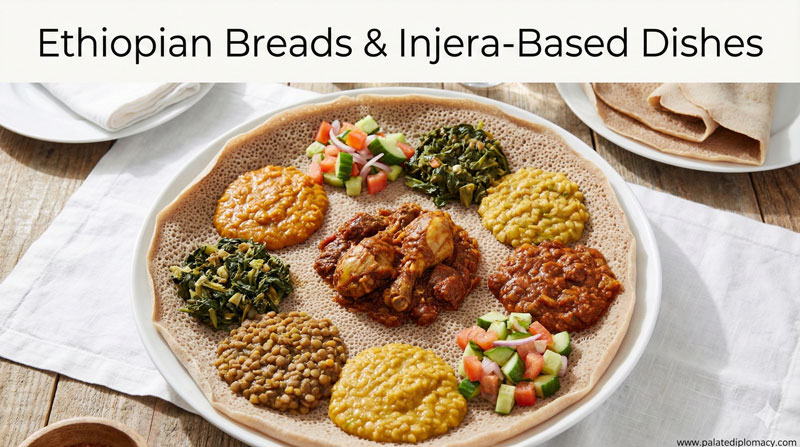
The Heart of a Meal: Injera as Plate and Utensil
Injera sits at the center of Ethiopian dining, not just as bread but as the canvas of a meal. It soaks up sauces, carries bites, and invites everyone to share in a single experience. When a platter of stews and vegetables rests on top of a soft, circle of injera, the table becomes a warm stage for gathering and fellowship. In this way, injera shapes the rhythm of a meal and the mood of a moment.
A Tradition of Sharing and Community
Injera fosters togetherness. Families and friends tear a piece from the edge and pass it around with calm care. Everyone uses the same soft sheet to scoop, wrap, and dip. This act of sharing builds a sense of belonging that goes beyond taste. The platter becomes a simple stage where conversations flow as freely as the spices in the stews. In this culture, the dish is a bridge between generations, a gentle reminder that meals are moments to connect.
Fermentation and Flavor: The Magic of Teff
The batter behind injera begins as teff flour and water, left to rest and bubble. This slow fermentation adds brightness and depth to the flavor. The tangy note is inviting, not sharp, and it marks the bread as unique to the region. Fermentation also contributes to a tender texture that holds up to hearty sauces. In this way, the process itself becomes a source of pride and a sign of careful craftsmanship handed down through families.
Texture That Delights: Light, Spongy, and Able to Hold It All
Injera impresses with its airy bubbles and soft edge. The surface is spongy, yet sturdy enough to hold a generous scoop of stew. Each bite balances chew and cushion, making it easy to enjoy both the bread and the filling. The texture invites dipping, wrapping, and savoring, which enriches every course on the table. This tactile delight is a daily reminder of how food can please both the hands and the palate.
Culinary Versatility: Pairing with Stews, Vegetables, and More
Injera rules alongside a wide array of dishes. It supports lentil stews (misir wot), chickpea sauces (shiro), and vegetable mixes (atkilt). It also lifts delicate greens and spiced mashed roots, letting the spices breathe while giving each bite a gentle balance. Because injera is versatile, cooks can craft meals that feel complete in a single plate. This adaptability makes injera beloved not only for its flavor but for the ease it brings to home cooking.
Nourishment and Local Craft: Teff, Skill, and Sustainability
Teff, the tiny grain behind injera, is prized for its nutritional profile and rich soil roots. In many kitchens, teff farming supports local farmers and small mills. The artistry of batter preparation—mixing, fermenting, and cooking on a hot plate—speaks to patience and skill. Each injera made in the home or bakery carries a sense of place and care, connecting the eater to the land and the maker.
Etiquette at the Table: Respectful Sharing and Care
Respectful meals with injera begin with simple gestures. Tear softly, use clean hands, and pace the circulation of pieces around the table. The ritual of dipping and wrapping invites mindful tasting and gracious listening. In this setting, etiquette becomes another thread in the tapestry of culture, reinforcing kindness and hospitality in daily life.
A Living Culinary Story
Injera is more than food; it is a cultural emblem that enriches every meal. Its presence signals hospitality, memory, and community. The dish invites you to savor the moment, to appreciate craft, and to celebrate shared nourishment. By embracing injera, you enter a living tradition that highlights the beauty of simple, thoughtful cooking and the joy of eating together.