
Introduction
Kiełbasa Krakowska has earned a proud place on Polish plates. This blog explores how the sausage became a must-try dish in Poland, focusing on its cultural value and culinary significance. You will find warmth in its traditions, clarity in its craft, and a sense of continuity that connects markets, kitchens, and tables across the country.
A City’s Signature: The Birth of a Classic
First, Kraków’s markets and kitchens helped shape a product that feels both familiar and special. Local butchers refined a recipe over generations, blending skill with a touch of regional pride. People in Kraków and beyond hear the name and picture a slice that carries the memory of bustling stalls, family recipes, and shared meals. The dish grew not by chance but by consistent care: careful selection of pork, patient curing, and a gentle smoke that whispers of home and heritage. In this sense, Krakowska is more than food; it is a story told in aroma and texture.
The Craft Behind Krakowska: Ingredients and Method
Next, the craft matters as much as the seed of flavor. Cooks begin with quality pork and a precise blend of salt, pepper, garlic, and marjoram. The mixture is pressed into a traditional shape, then cured and lightly smoked to develop a mellow, approachable heat. The result is a semi-dry sausage with a firm bite and a pink, inviting interior. The texture invites careful slicing, letting each thin piece release its gentle aroma. The method honors time-tested technique while staying adaptable for modern kitchens, markets, and family gatherings.
On The Plate: Shape, Flavor, and Everyday Joy
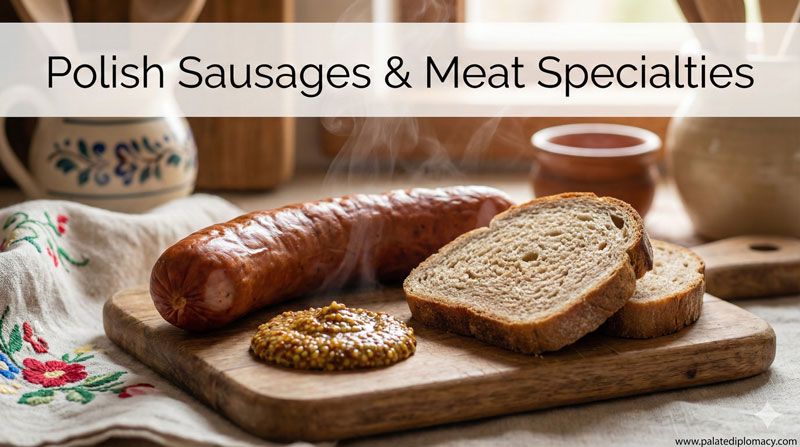
Then comes the plate, where Krakowska reveals its culinary charm. The sausage shines in thin, even slices that pair beautifully with hearty rye bread, grainy mustard, and crisp pickles. It rounds out a simple meal with warmth and depth, yet it also lifts a celebration dish with its clean profile. You may find it enhancing traditional soups, such as a clear broth with a touch of savory depth, or resting beside eggs for a comforting breakfast. Its versatility is part of its appeal: a ready-made savory note that anchors many Polish meals without overpowering them.
Markets, Families, and Shared Craft
Additionally, markets and family-run shops keep the tradition alive. Small producers honor regional methods while welcoming new fans. In these settings, you can observe the care: the careful slicing, the careful smoking, the neat packaging that travels to homes and tables. People often describe Krakowska as a bridge between everyday meals and special occasions. It is the kind of food that invites conversation, invites sharing, and invites a deeper appreciation for the work that goes into each batch. This communal aspect is a quiet, steady thread in Poland’s food culture.
Cultural Moments at the Table
Moreover, Krakowska appears in moments large and small. Families gather for weekend breakfasts, casual brunch spreads, and festive boards that celebrate local flavors. In markets, a vendor’s recommendation can guide a first-timer to a lighter, more aromatic slice. In home kitchens, a quick cut and plate can turn a routine afternoon into a small ceremony of flavor. The sausage thus acts as both a personal favorite and a cultural signal—an everyday luxury that feels accessible, familiar, and warmly Polish.
Pairings, Dishes, and Culinary Significance
Finally, the dish’s culinary significance endures because it harmonizes with a wide range of flavors. Its mild, rounded profile complements richer dishes without stealing the show. It supports rustic soups, strengthens simple sandwiches, and finds balance beside sharp mustards and tangy pickles. This flexibility helps Krakowska travel easily from family meals to public gatherings, reinforcing its role as a dependable and beloved component of Polish hospitality. The sausage also serves as an invitation to explore regional variations, seasonal preparations, and craft traditions that continue to evolve while staying rooted in shared taste.
Why Krakowska Remains a Must-Try
As a closing note, the enduring appeal of Kiełbasa Krakowska lies in its clarity and charm. It embodies careful craftsmanship, regional pride, and a spirit of togetherness that Polish tables celebrate. By its simple yet refined design, it invites people to slow down, savor the moment, and connect with the day’s meals. In every slice, you taste a lineage of cooks, markets, and families who choose quality, celebrate flavor, and welcome others to enjoy a piece of this cultural favorite.
If you’re new to Polish flavors, start with a few slices on rye with a dab of mustard. If you already love Polish Cuisine, let Krakowska guide you through a calm, flavorful moment that feels both familiar and distinctly Polish. Either way, you’ll experience a dish that honors craft, community, and the quiet joy of shared food.