
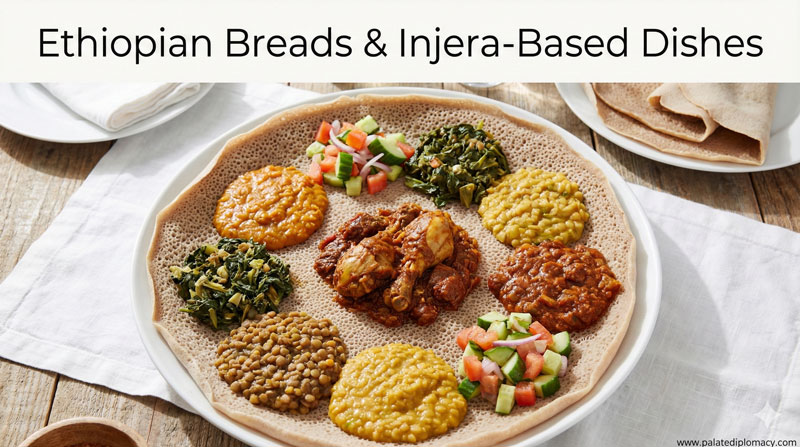
Injera is more than a meal in Ethiopia. It is a humble, resilient canvas that carries flavor, memory, and shared joy. This post explores why injera is one of the country’s most loved dishes, focusing on cultural value and culinary significance.
The Table as a Canvas
At many meals, injera lies at the center of the table. A single round sheet acts as plate, utensil, and conductor of flavor. Diners tear off pieces to scoop up stews, lentils, and vegetables. The process invites everyone to participate, creating a warm rhythm of sharing. This simple act makes the meal feel communal and welcoming.
Fermentation: The Craft Behind the Flavor
The batter begins with teff flour and water. Cooks stir it with care and allow it to rest. A gentle fermentation develops, releasing a bright aroma and a tangy note. The time is practical and patient, often stretching from several hours to a couple of days. Fermentation shapes injera’s characteristic sourness and airy texture, marking it as a living part of the kitchen craft.
Teff: The Grain at the Core
Teff is the heart of injera. This tiny grain offers a delicate, nutty flavor and a light, fine crumb. It suits long rising times and steady cooking on a wide, round griddle. Teff connects the dish to the land, since farmers nurture fields for generations. The grain’s versatility lets cooks balance softness with structure, so injera holds stews without breaking.
Texture and Taste: A Gentle, Soothing Experience
Injera feels soft yet resilient. It forms a spongy layer with small holes that drink up sauces. The surface remains tender while edges remain sturdy enough to pick up bites. The mild sourness from fermentation complements rich stews, highlighting spices and depth. Each bite pairs well with lentils, greens, meat, or vegetable dishes, making the meal feel harmonized.
A Shared Moment: Eating Together
Eating injera is a social act. Family and friends gather around a round table, passing bowls and sharing the same loaf. People tear off parts, roll toppings, and savor combinations together. This shared experience strengthens bonds, invites conversation, and makes the meal feel Like a celebration of daily life.
Serving Traditions: How Injera Shapes a Meal
Injera functions as both plate and utensil. It carries stews called wat, lentil dishes like shiro, and sautéed greens. Diners scoop with pieces torn from the edge, guiding flavors from plate to mouth. The practice creates a gentle unity among guests and cooks, reinforcing hospitality and care in daily dining.
Regional Variations: Styles Across Ethiopia
Across regions, injera can vary in thickness and size. Some cooks make it lighter and larger; others prefer a slightly thicker, sturdier sheet. Some kitchens blend teff with other grains to suit local preferences or textures. Yet the thread that remains is injera’s role as a unifying element on the table, a constant presence in celebrations, feasts, and everyday meals.
Modern Touches: Respectful Innovation
in Modern kitchens, cooks preserve tradition while exploring lighter batters or quicker methods. Some chefs experiment with flavor accents or complementary toppings, always respecting the core idea: injera as a shared, nourishing base. This balance of continuity and curiosity keeps the dish lively while honoring its cultural roots.
Injera shines because it is more than sustenance. It embodies hospitality, patience, and community. Its texture, tang, and versatility invite people to gather, share, and savor. By embracing injera, a table becomes a place where culture is tasted, stories are exchanged, and the everyday becomes something special.