
Why Injera Is One of Ethiopia’s Most Loved Dishes
Injera sits at the heart of Ethiopian dining. It is more than food; it is a shared moment, a warm welcome, and a daily moment of connection. The dish embodies hospitality, family routines, and a long tradition of careful craft. When people gather around a table, injera opens the doorway to conversation, stories, and togetherness.
What Is Injera?
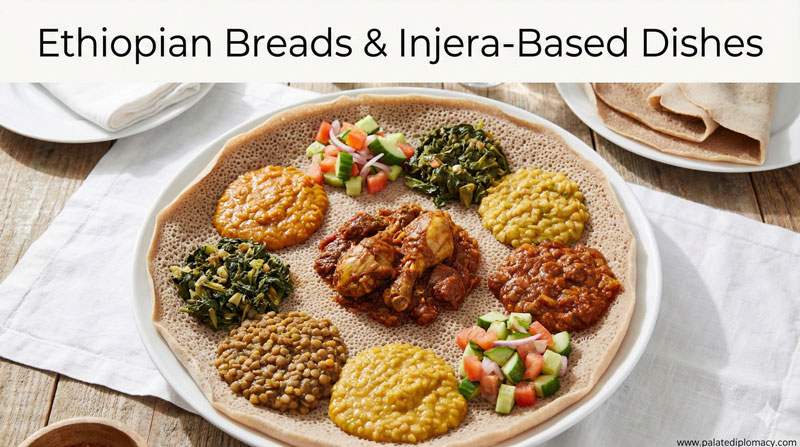
Injera is a large, round bread with a soft, spongy texture and a tangy flavor. It is made from teff flour that is mixed with water to form a batter. The batter ferments, which gives injera its distinctive sour note. After fermentation, cooks pour the batter onto a hot flat pan called a mitad and bake it into a delicate, porous sheet. The result is a bread that acts as both plate and utensil, inviting people to share in a communal meal.
The Art of Making Injera
The craft of injera is patient and precise. First, the batter rests and develops flavors. Then pan heat must be steady, so holes form evenly across the surface. Finally, the top dries into thin, lace-like bubbles. This careful process rewards cooks with a tender, breathable bread that pairs beautifully with hearty stews. The texture is its signature: springy and soft, yet strong enough to scoop up sauces without tearing.
Cultural Significance: Shared Meals and Everyday Rituals
Injera is the centerpiece of everyday life as well as major gatherings. Many families begin a meal by laying out a large sheet of injera. They then add bowls of flavorful stews, vegetables, and protein. Everyone tears a piece, uses it to scoop, and passes dishes around the table. This simple act creates a rhythm of sharing and respect. It is a daily reminder that nourishment is a communal effort and that meals are moments to connect.
Serving Traditions and Etiquette
Serving injera centers on hospitality and consideration. The host arranges the plates with care, and guests respond with gratitude. Diners typically eat with their hands, using injera to scoop up each bite. The central idea is balance: different stews balance each other in flavor and texture, and injera binds the meal into one harmonious whole. This gentle ritual reinforces courtesy, patience, and mutual enjoyment.
Regional Variations and Modern Takes
Across Ethiopia, small differences give injera its regional flavor. Some regions favor deeper tang, while others celebrate a lighter, milder note. The grain used can vary, producing subtle shifts in color and aroma. in Modern kitchens, chefs experiment with blends or incorporate local grains, yet the essence remains: injera as a unifying carrier of every dish’s character.
Pairings, Dishes, and Daily Joy
Injera shines with a wide array of stews and vegetables. Rich, spiced lentil stews, chickpea dishes, and simmered vegetable mixes find balance on its porous surface. The bread’s sourness enhances the warmth of spices, while its soft bite welcomes slow-cooked flavors. Together, they offer a comforting rhythm that many families count on for everyday meals and special occasions alike.
Preserving a Timeless Craft
Care for injera is passed down through generations. Families teach younger cooks How to gauge batter thickness, how to test heat, and how to judge when the surface forms the perfect honeycomb of holes. This knowledge travels quietly from cook to apprentice, keeping the craft alive and resonant with tradition while still allowing delight in new variations.
In Summary: A Dish of Community and Craft
Injera embodies nourishment, hospitality, and belonging. Its cultural value lies not only in taste but in the way it brings people together to share, celebrate, and connect. The bread’s tang, texture, and method invite us to slow down, savor, and honor the people at the table. In this simple flatbread, a rich culture speaks through flavor, technique, and open-hearted gathering.