
Why Injera Is One of Ethiopia’s Most Loved Dishes
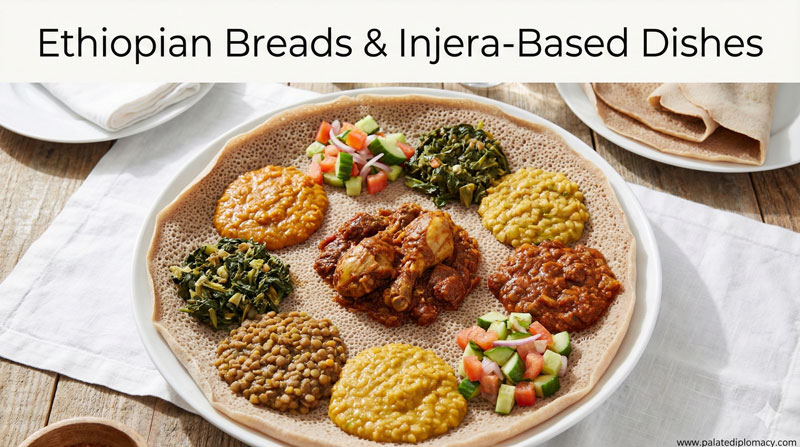
Injera sits at the heart of Ethiopian dining. This large, round flatbread welcomes everyone to the table. It is made from teff flour, water, and patience, then left to ferment. The result is a tangy, soft sheet that brings warmth to every meal. Injera acts as plate, utensil, and accompaniment, shaping the rhythm of shared eating. Its beauty lies in how it blends flavor, texture, and hospitality.
The Fermentation That Holds a Culture
Teff, a tiny ancient grain, provides the foundation. Its nutty aroma fills the kitchen as flour meets water. The batter rests, and natural fermentation creates a lively lift. When cooked, injera forms a sponge-like surface with tiny holes. This light network captures sauces and stews, guiding each bite with ease. The fermentation process is a quiet celebration of time and tradition.
Texture, Flavor, and the Art of Eating
Injera offers a tender bite with a sturdy edge. The sponge inside soaks up rich wots and bright dressings. The tang from fermentation complements spicy or savory flavors, balancing heat and depth. Diners use pieces of injera to scoop, wrap, and dip, creating a seamless eating experience. The texture and flavor invite slow savoring and mindful sharing.
The Social Rhythm of the Meal
Eating injera is a social act. The table becomes a circle of conversation and connection. People pass circular platters, share bites, and offer notes of encouragement. Gursha, a small bite of food offered with a smile, deepens hospitality and warmth. This gentle exchange highlights generosity and belonging in everyday meals and special gatherings alike.
Regional Variations and Serving Traditions
Across regions, injera shows subtle variation. Some kitchens favor larger, thinner rounds; others opt for a heartier, thicker sheet. Plain teff injera is common, while blends with barley or wheat appear in certain recipes. The accompanying stews, known as wot, range from lentil to meat dishes. Yet the spirit stays the same: a communal meal where neighbors and family share the same bread.
Nutritional Beauty and Culinary Sustainability
Teff is celebrated for its nutrition. It offers iron, calcium, fiber, and protein in a balanced profile. Pure teff injera is typically gluten-free, supporting diverse eating needs, though blends may vary. The grain adapts well to local farming, often thriving in resilient, drought-prone areas. This sustainability enhances the dish’s reverence as a staple that nourishes body and culture alike.
Injera in Everyday Life and Celebrations
Injera fits daily routines and festive moments. A simple family dinner can become a warm, welcoming experience when injera is laid out with a colorful array of wots. On holidays and gatherings, the table expands with additional dishes, yet injera remains the central thread. Its presence marks hospitality and careful preparation, turning a meal into a shared memory.
Embracing Injera at Home
If you haven’t explored injera, consider trying it with a few classic wots. A tangy-sour note pairs beautifully with spicy lentil or soft chickpea dishes. Notice how the bread’s surface glistens with the sauces it absorbs. Enjoy the ritual of gathering around a single, round bread that invites conversation and connection.
A Timeless Bridge on the Table
Injera is more than food; it is a living part of Ethiopian dining. It embodies craft, patience, and communal joy. Its humble elegance invites curiosity and respect for flavor, technique, and togetherness. By sharing injera, we celebrate a dish that unites taste with culture, at every meal.