
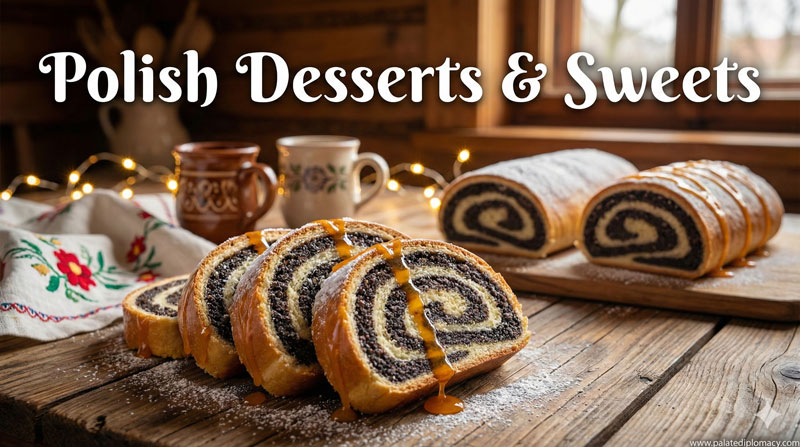
Makowiec is more than a pastry; it is a thread that ties together hands, ovens, and the long winter table of Polish families. The spiral of dough hides a lush poppy seed filling that carries the hush of quiet mornings and the warmth of shared meals. This post invites you into the heart of How Polish households traditionally prepare and enjoy Makowiec, savoring its culinary craft and cultural value.
Makowiec at the Heart of Polish Kitchens
In many Polish homes, Makowiec begins with a gentle, yeasted dough. Bakers mix flour, milk, butter, a touch of sugar, and a quiet patience that signals care. The dough rises to become light and pliable. Then it is rolled into a rectangle, the poppy seed filling spread evenly, and the dough is rolled again into a log. The aroma that fills the kitchen as it bakes invites everyone to the table. The act of making Makowiec becomes a shared ritual, a moment when skill passes from one generation to the next through careful hands and steady effort.
The Filling that Tells a Story
The heart of Makowiec is the poppy seed filling. Poppy seeds are ground to a creamy texture and blended with honey or sugar, a touch of lemon zest, and possibly a hint of vanilla or citrus. Some recipes fold in raisins, chopped nuts such as almonds or walnuts, and dried fruit for color and contrast. This filling is both creamy and slightly granular, with a glossy surface when baked. The seeds offer a gentle bite, balancing the crumb of the dough. In every bite, there is a quiet sweetness that echoes festive gatherings and the care of those who prepared it.
A Symbol of Togetherness
Makowiec shines most brightly when shared. Families bake it during times of celebration and return to the plate as a familiar comfort. Slices are passed around the table, and stories flow as easily as the steam rising from the oven. The shared slice becomes a small moment of connection, a reminder that cooking is a form of hospitality. In this light, Makowiec is less a dessert and more a bridge—between kitchens, between generations, and between friends gathered round a table.
Seasonal Celebrations and Makowiec
Tradition gives Makowiec a place on seasonal tables. It often appears during Christmas Eve preparations as part of a festive, multi-dish spread. It also makes an appearance at Easter and other family milestones. Each season adds its own customs, yet the pastry remains a constant, a sweet thread that ties the year’s celebrations together. The timing makes Makowiec feel intimate and bright at the same time, a reminder that good food can mark the passage of any season with warmth and grace.
Techniques and Craft: From Kitchen to Table
The craft of Makowiec rewards patience and precision. After shaping the dough, bakers let it rest again to relax its gluten. The seam is tucked tightly so the filling stays enclosed during baking. The log is placed on parchment and baked until the crust turns a pale gold. Some homes finish with a light glaze or a dusting of powdered sugar, which adds a gentle sweetness and a polished look. This careful technique preserves the integrity of the filling and the softness of the dough, ensuring each slice holds together for the next shared moment.
Regional Variations and Personal Touch
Around Poland, Makowiec carries local tweaks that reflect home kitchens and pantry choices. Some families favor a richer, darker filling with extra poppy seeds or a touch of ground walnuts. Others fold in additional dried fruits for texture and color. Shapes vary as well: a long spiral log is common, but you may also find Makowiec formed as a wreath, a ring, or a braided roll. The glaze, if used, ranges from a delicate sugar glaze to a simple dusting of powdered sugar. In every version, the heart remains constant: a celebration of patience, flavor, and family craft that makes the dish feel personal and cherished.
Makowiec as a Portal to Taste and Memory
Taste links memory and place. The first bite releases a familiar fragrance—the honey’s warmth, the poppy’s soft crunch, the butter’s tenderness. These flavors travel with the baker’s memories and the family’s stories, making Makowiec a living archive of taste. When shared at the table, it invites conversation about favorite fillings, childhood mornings, and the small rituals that give a kitchen its soul. In this way, Makowiec becomes more than food; it becomes a welcoming gesture, a quiet celebration of home and the craft that keeps it bright.
If you are curious about Polish pastry traditions, Makowiec stands as a compelling example of how flavor, technique, and family value converge. Its appeal rests not only in its delicate sweetness and inviting texture but also in the stories it carries—stories of kitchens, hands, and gatherings where every slice adds a new line to a family’s ongoing culinary narration.