
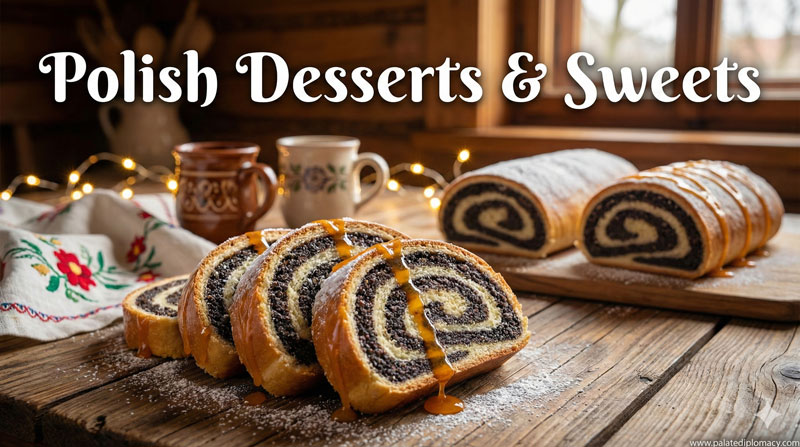
Makowiec: A Polish Pastry in Home Kitchens
Makowiec is a cherished sight in Polish kitchens. The roll carries warmth, care, and a sense of welcome. Families pass the recipe from one generation to the next, book by book and bake by bake. The aroma fills rooms and lingers in memory. This pastry speaks to togetherness, patience, and the simple joy of sharing a sweet moment.
The Ingredients That Tell a Story
The dough to Makowiec is rich and tender. It often blends flour, yeast, milk, eggs, and butter with a touch of sugar. The filling centers on poppy seeds, ground to a silky paste. Honey, chopped nuts, raisins, and citrus zest join the mix for depth. Some kitchens add a whisper of vanilla or a light glaze on top. Each combination reveals a region’s taste and a family’s affection.
The Craft of Making Makowiec
The craft begins with a soft, risen dough. The poppy seed filling is prepared until smooth and fragrant. The dough opens Like a screen, and the filling unfolds inside. The roll is tightly formed to keep the scent close. It bakes until the crust turns a gentle gold. A brief glaze or dusting of sugar finishes the look. The result is a swirled, jewel-like loaf with a velvet interior.
A Moment of Sharing: How Families Enjoy It
Makowiec is most often shared during gatherings and celebrations. It appears at tea time and after meals. A slice is offered with care, a sign of hospitality. The taste pairs well with coffee, black tea, or a warm fruit tea. Texture contrasts—the soft crumb and the slightly crunchy nuts—invite slow savoring. Each bite carries a memory of kinship and gratitude.
Makowiec Across Regions and Seasons
Different Polish Families add personal touches. Some favor extra zest for brightness; others fold in dried fruits for sweetness. In some regions, the roll is shaped in a long braid; in others, a compact log. Seasonal notes show up too: a spicier aroma in autumn or a lighter version for spring. The variations honor local ovens, markets, and the hands that knead.
Makowiec as a Cultural Mirror
This pastry mirrors values of care, craft, and sharing. The process invites concentration and calm. It invites conversation as hands work together. The final slice becomes a small celebration of daily life. Makowiec links kitchens to generations, a tasty thread through ordinary days and special moments alike.
Preserving the Craft Today
Modern bakers keep Makowiec alive by honoring its basics while inviting fresh ideas. Home cooks teach children the rolling and filling techniques. Recipe notes, family photos, and old meals inspire new bakers. Even as tastes evolve, the core idea remains: a humble roll that gathers people.
Conclusion: A Sweet Thread in Polish Food Culture
Makowiec stands as a gentle emblem of Polish food culture. It celebrates family, craft, and shared rituals. Its fragrance and texture invite warmth and conversation. In every bite, there is history, care, and the joy of bringing people together.