
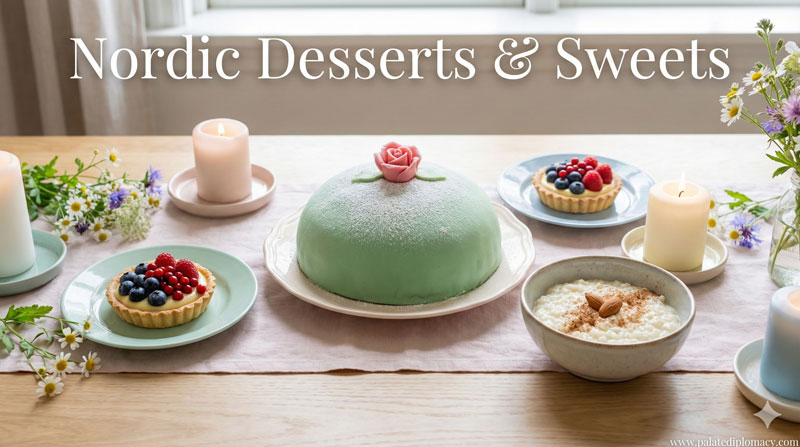
Introduction
Princess Cake, known in Nordic kitchens as Prinsesstårta, has become A Beloved symbol of celebration and craft. This post explores how the cake grew into a cherished part of Nordic Food Culture. We focus on its beauty, balance, and the way it brings people together around a shared dessert ritual. The cake invites calm moments of savoring, quiet joy, and a respect for well-made pastry.
What is Princess Cake?
Princess Cake is a layered treat that marries texture and finesse. It features light sponge cake, a smooth vanilla custard or pastry cream, a layer of tangy raspberry jam, and generous whipped cream. The crown of the dessert is a thin shell of green marzipan, often finished with a delicate dusting or simple decoration. The result is a cake that looks festive yet approachable, with a gentle sweetness and airy composition. The blend of creamy and fruity notes, along with the marzipan’s almond aroma, Makes It instantly recognizable and deeply comforting.
The Birth of a Nordic Favorite
In Nordic bakeries, the cake emerged in the mid-20th century and soon found its place in family gatherings and cafes. The name and image echo royal imagery, which adds a sense of ceremony without ostentation. As coffee culture grew in Nordic homes, Princess Cake offered a refined treat that could be shared with friends and relatives. Its green marzipan exterior and balanced filling reflect a regional taste for elegance that is never overpowering. Over time, bakers across Nordic countries welcomed the cake, adapting its form to local tastes while preserving the delicate harmony at its core.
The Craft and Technique
The beauty of Princess Cake lies in its precise layering and smooth finish. Bakers prepare a light, airy sponge and spread vanilla cream or custard evenly. A layer of raspberry jam provides a contrasting brightness. Whipped cream folds in with a gentle hand, ensuring a soft, cloud-like texture. Finally, the cake is enveloped in a green marzipan layer, shaped to resemble a graceful dress or crown. The process honors technique without haste, inviting bakers to balance structure with elegance. The result is a dessert that looks polished, yet feels inviting when plated with care.
Cultural Value in Nordic Life
This cake stands at the crossroads of celebration and daily ritual. It appears at birthdays, anniversaries, and special coffee moments, signaling care and shared joy. The dessert offers a touch of sophistication while remaining accessible to home bakers. Its aesthetics resonate with Nordic design values: clean lines, gentle color, and a focus on texture. Sharing a slice becomes a quiet ceremony that honors family and friends. In this way, Princess Cake contributes to a sense of continuity, memory, and warmth in everyday life.
Varieties and Modern Interpretations
Modern kitchens bring light variations that keep the cake fresh. Bakers experiment with berry accents, lighter fillings, or dairy-free options, always aiming to preserve the cake’s harmony. Some cooks refine the marzipan finish or add a subtle glaze to highlight the cake’s gentle shine. Across Nordic communities, these small adaptations celebrate local tastes while honoring the cake’s classic spirit. The result is a living tradition that invites both tradition and creativity in equal measure.
Serving Traditions and Pairings
Princess Cake shines when served in cool, neat slices that reveal the layered interior. It pairs beautifully with a good cup of coffee or a pot of tea, enriching the ritual of conversation and pause. Setting the platter in a shared moment, with friends and family nearby, enhances the sense of hospitality at the table. The cake’s lightness makes it a fitting centerpiece for many occasions, from intimate gatherings to larger celebrations.
A Celebration Cake for Generations
Over the years, Princess Cake has earned its place as a timeless dessert in Nordic households. It embodies a spirit of refined simplicity and thoughtful preparation. The cake’s enduring appeal comes from its balance: a tender crumb, creamy filling, fruity brightness, and a marzipan shell that invites gentleness in every bite. In this way, it remains relevant across generations, continually finding new appreciators while honoring its roots.
Conclusion
Princess Cake stands as a refined expression of Nordic culinary culture. It blends technique, flavor, and aesthetics into a dessert that invites celebration and slows the pace for a moment of shared enjoyment. By honoring balance, careful preparation, and the joy of gathering, the cake occupies a cherished place in Nordic cuisine. It is a testament to how dessert can be both elegant and approachable, shaping memorable experiences around the table.