
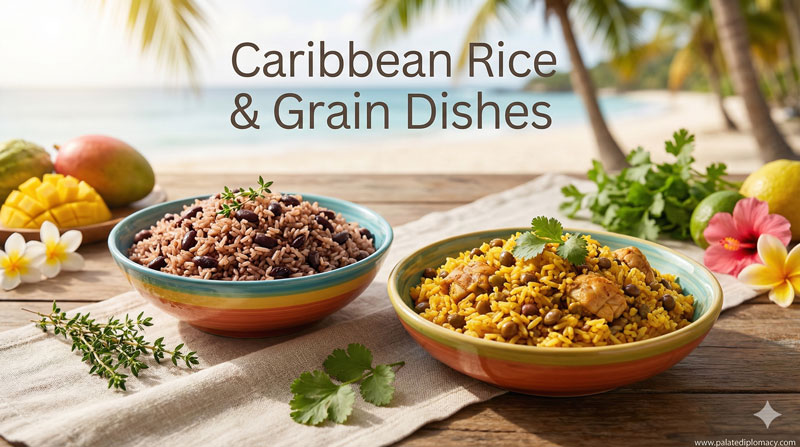
A Beloved Caribbean Staple
Rice and peas stands as one of the Caribbean’s most loved dishes. It greets the eye with a warm, inviting grain and a gentle shimmer of coconut. It greets the nose with fragrant herbs and a comforting aroma. It greets the palate with a balance of creaminess, tenderness, and bright notes of spice. This dish is more than a meal. It is a quiet celebration of home cooking and shared tables. It travels through kitchens and markets, carrying memory and meaning with every simmer.
The Heart of the Dish: Ingredients and Flavor
The core of the dish is simple, though its impact is rich. White rice cooks with cooked peas or beans, most commonly pigeon peas or red kidney beans. Coconut milk becomes the gentle, slightly sweet medium that carries flavor. Water joins the pot, along with aromatics. Thyme, scallions, garlic, and onion lay the foundation, while salt and pepper season with restraint. Allspice, known as pimento, adds a warm, earthy kiss. Optional peppers bring a gentle heat for those who love a brighter kick. Variations exist, but the central idea remains: rice meeting peas in a mellow, fragrant pool of coconut and spice.
This combination yields a layered taste. The rice becomes silky from the coconut milk. The beans contribute a tender bite and a subtle earthiness. Herbs lift the dish with fresh brightness. Each bite carries a sense of place, a whisper of the market, and a nod to family recipes handed down with care.
The Cooking Craft: Techniques and Timing
Cooks approach the technique with patience and rhythm. First, beans are simmered until plump and soft, soaking up the coconut milk and seasonings. Then rice is added, along with a measured amount of liquid. The heat stays steady; the pot remains covered to trap steam. Gentle simmering prevents the rice from becoming mushy and the beans from bursting. Midway through, cooks check texture and adjust salt. A brief rest after cooking lets flavors settle, giving the dish its final harmony.
Attention to timing is key. Too much stirring can break the grains; too little attention can let flavors soften too far. Skilled cooks gauge the moment when the rice is tender and the liquid has absorbed. In those moments, the dish reveals its true balance: creamy, savory rice with tender, flavorful peas, all held together by the perfume of thyme and coconut.
Social Foundations: Meals, Gatherings, and Hospitality
Rice and peas is often a centerpiece for gatherings. It anchors family meals on Sundays and marks everyday meals as occasions for care. The dish invites conversation as pots steam and steam as stories flow. In many kitchens, preparing rice and peas is a shared act. One person handles the simmer; another stirs in the final seasonings; a third tends to the sides. The ritual itself strengthens bonds and creates a sense of welcome.
Markets and stalls echo this warmth. Fresh coconut, herbs, and beans are chosen with attention. The aroma travels down the street, inviting neighbors to pause and enjoy. The dish becomes a bridge between generations, linking the youngest who learn from grandparents and the elders who pass down the precise steps and the secret tweaks that give each family its unique touch.
Regional Evolutions: Jamaica, Barbados, Trinidad, and Beyond
Across the Caribbean, rice and peas takes on regional character. In Jamaica, coconut milk and thyme often lead the flavor, with a gentle touch of allspice and a soft pulse of pepper. In Barbados, cooks may emphasize smooth, creamy peas together with fragrant coconut notes, producing a comforting plate that shines on its own or beside a rich stew. In Trinidad and Tobago, some variations lean toward bolder spice or a hint of smoked meat for depth, while still maintaining the gentle backbone of rice and peas. In other islands, local beans or pigeon peas provide a slightly different texture and sweetness, and herbs such as cilantro or parsley can appear as bright accents. The dish adapts to the pantry of the moment, yet it remains unmistakably the same dish at heart: a soulful pairing of rice and beans that travels well in a pot and on a plate.
These regional threads create a tapestry of taste. They celebrate local harvests, respect seasonal freshness, and honor the quiet craft of cooking. The result is a shared story told through aroma and texture, one that welcomes both everyday meals and festive occasions with equal grace.
The Senses: Aroma, Taste, and Texture
The dish speaks through the senses. The aroma greets you with coconut sweetness and herb brightness. The texture offers a gentle contrast: the rice soft and glossy, the peas or beans tender with a slight bite. The taste centers on a balanced sweetness from coconut, a savory depth from seasonings, and a subtle warmth from allspice and pepper. Each spoonful feels comforting, yet lively enough to invite second helpings. The sensory experience makes rice and peas a favorite for countless households, whether served in a modest pot or plated with care for guests.
Pairings and Presentations: How It Shines on the Table
Rice and peas pairs beautifully with a wide range of dishes. It rises to meet the bold flavors of jerk chicken, grilled fish, and pepper-steeped stews. It also stands on its own as a satisfying main when teamed with a simple vegetable medley or fried plantains. In many homes, the dish is plated alongside a colorful mix of sides, turning a meal into a festive spread. Its neutral, creamy base also soaks up sauces and gravies, letting other components in the meal shine.
Presentation can be tidy and compact, or generous and rustic. Either way, the dish invites guests to scoop, share, and savor together. The plate becomes a stage for conversation, laughter, and the simple joy of good food shared in good company.
A Dish for Every Season: Festivals and Everyday Meals
Rice and peas moves easily between everyday meals and special occasions. It adapts to weekdays filled with activity and to weekends filled with celebration. The dish provides nourishment and comfort, a reliable anchor in a busy schedule. When festivals and family gatherings shape the calendar, rice and peas often plays a starring role, reminding everyone of home, warmth, and hospitality.
The flexibility of the dish supports many hands and kitchens. It travels well in the sense that a large pot can feed a crowd, while a smaller version can be simmered for intimate meals. In either case, the heart remains the same: a dish that invites care, sharing, and a sense of belonging.
Why It Endures: Cultural Value and Culinary Significance
Rice and peas endures because it speaks to community, memory, and daily life in the Caribbean. It is a dish that teaches patience and balance. It rewards cooks who measure ingredients with care and who allow time for flavors to mingle. It rewards families who pass down the method and the small, personal adjustments that make a recipe feel like home.
Culturally, the dish symbolizes hospitality. It signals that a space is welcoming and that people are invited to sit, eat, and talk. The dish also reflects a connection to local ingredients—the coconut, the beans, the herbs—that highlight regional tastes and seasonal bounty. In this way, rice and peas becomes more than food; it becomes a gentle ambassador of Caribbean warmth and culinary artistry.
As you explore this dish, you may notice its quiet power. It is steady, dependable, and deeply flavorful. It invites you to slow down just enough to savor the moment, to appreciate the texture, scent, and composition, and to feel connected to a wide circle of cooks and eaters who treasure its simple elegance. If you try it at Home, you may find that the meal becomes a touchstone for family meals, casual gatherings, and the everyday joy of sharing good food.
If you are new to rice and peas, start with a clear recipe: a measured balance of rice, peas, coconut milk, and herbs. Cook with soft heat, keep the pot covered, and rest the dish briefly after cooking. Then taste, adjust, and savor. You will discover not only a dish, but a way to welcome others to your table and a way to celebrate the beauty of Caribbean cooking.