
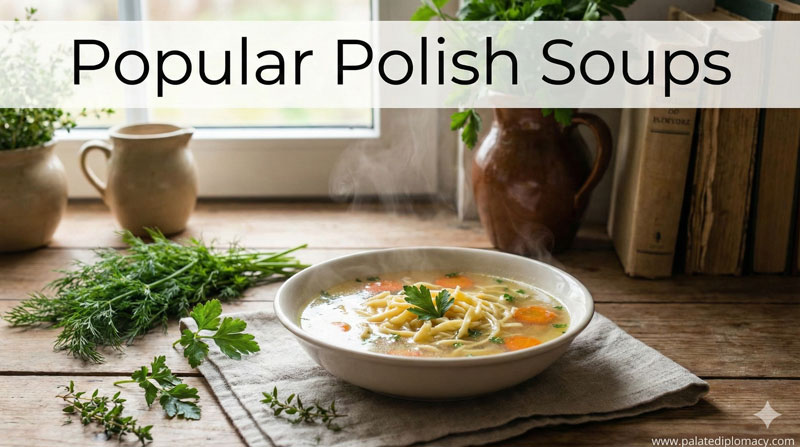
The Heart of Polish Comfort: Rosół
Rosół is more than a soup. It is a gentle chapter in The Story of Polish home cooking. You can feel its warmth in the kitchen as a pot slowly bubbles on the stove. The aroma is light, clear, and inviting. It invites conversation as much as it invites the palate. Over time, Rosół has become a must-try dish in Poland because it speaks of care, craft, and everyday beauty. This dish shows how simple ingredients can create deep comfort and lasting memory.
The Roots and the Craft
Polish kitchens have long prized a clear, comforting broth. Rosół draws on two ideas: a well-made stock and careful balance. The base is chicken, sometimes with a little veal for depth. The bones, meat, and seasonal vegetables mingle with water to release flavor. Aromatics usually include onion, carrot, and parsley root, plus bay leaf and peppercorns. The goal is brightness and harmony, not heaviness. Chefs and home cooks strive for a broth that shines with clarity. They skim softly and simmer slowly to keep the liquid pristine. This focus on purity helps Rosół feel elevated, even in everyday meals.
The Slow Simmer: Key Techniques
The magic of Rosół unfolds in the simmer. First, you start with a calm heat. Then you let time work its gentle magic. The stock should shimmer, never boil vigorously. This keeps the broth clear and light. Skimming the surface removes impurities and foam. As it cooks, meat loosens from the bone in tender shreds. The vegetables add sweetness and depth, but they aren’t meant to dominate. Finally, the broth rests briefly after straining. Resting helps flavors settle and harmonize. The result is a clean, aromatic liquid that carries its own quiet elegance.
A Dish for All Seasons
Rosół travels through the Polish calendar with grace. In winter, it comforts the body with warmth and clarity. In spring and summer, it shines as a light, nourishing starter. It pairs well with simple additions rather than heavy sauces, which keeps the experience refined. Noodles steal the show in many homes. Egg noodles or flat dumplings soak up the broth beautifully. In many families, a slice of tender chicken sits beside the circle of noodles in each bowl. This balance—broth, meat, and noodles—creates a sense of completeness that many see as the essence of a well-made Rosół.
Regional Variations and Personal Touches
Across regions, small differences appear, yet the core idea stays the same. Some cooks adjust the herb profile, using extra parsley or a touch of dill for brightness. Others favor a slightly longer simmer for extra depth, while keeping the broth clear. The choice of noodles or kluski can change the texture, and some kitchens include a pinch of grated horseradish or a squeeze of lemon for a fresh lift. These variations honor local tastes while keeping the dish recognizable. The beauty of Rosół is that it welcomes personal touch while preserving a shared identity.
The Ritual of Serving and Sharing
Rosół is a social dish in many Polish homes. The moment of serving feels ceremonial yet intimate. A hot pot becomes a table-wide invitation to gather. Each person selects noodles or dumplings to their liking and then receives a spoonful of clear, fragrant broth. Fresh parsley or greens add a final touch of color. The act of sharing Rosół reinforces hospitality, a central part of Polish food culture. It is common for guests to be offered the broth first to savor its clarity, aroma, and comforting warmth.
Rosół in Modern Polish Cuisine
Today, Rosół still anchors weekly menus and festive tables alike. In homes, families teach the craft to younger generations, passing down gentle techniques and patient rituals. In restaurants, chefs present Rosół with modern clarity and seasonal twists. Yet the dish remains approachable. Its essence—clean broth, tender meat, comforting noodles—travels willingly from grandmother’s kitchen to contemporary eateries. This continuity makes Rosół a bridge between tradition and present-day appetite. It demonstrates how a simple dish can stay relevant by honoring its core values.
Why Rosół Becomes a Must-Try Dish
First, Rosół communicates hospitality in a single bowl. It welcomes guests with warmth and care. Next, it showcases technique in a friendly form. The attention to clarity and balance tells a story of skilled hands and patient preparation. Then, its versatility shines. You can enjoy it as a starter, a comforting main, or a shared ritual at family gatherings. Finally, Rosół offers a quiet sense of place. It reflects Polish patience, seasonal respect, and the joy of cooking with simple ingredients.
Closing Moment: A Delicious Cultural Gem
Rosół stands as a beautiful example of Polish culinary culture. It celebrates clarity, balance, and generosity. It invites people to slow down, savor the scent, and share a meal with friends and family. In every simmer, in every bowl, Rosół carries a sense of home. For those curious about Polish cooking, it remains a must-try dish—an invitation to taste the care and tradition that define this beloved cuisine.