
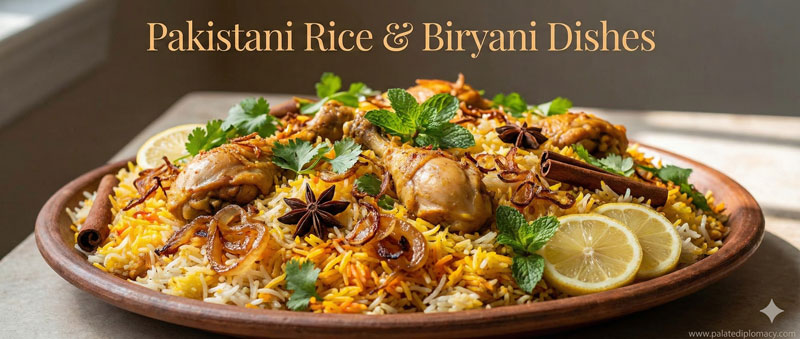
The Velvet of Sindhi Biryani: A Cultural Portrait
This post explores how Sindhi Biryani reflects Pakistani Food Culture. The dish sits at the heart of home kitchens and festive tables alike. It speaks through fragrance, color, and texture about hospitality, trust, and shared labor. First, Sindhi Biryani greets you with warmth. Next, it invites a gradual appreciation of layered flavors. In short, the dish mirrors everyday conversations about care, seasonality, and belonging.
The Layered Craft: Ingredients as Symbols
Sindhi Biryani uses a careful balance of ingredients that carry meaning. Rice stands for lightness, patience, and clarity. Meat provides nourishment and depth, while potatoes add rustic comfort and heartiness. Yogurt lends tang and creaminess, harmonizing the heat of spices like cumin, coriander, and chili. Saffron or turmeric offers a glow of sunshine, and fried onions add sweetness and crunch. Fresh mint and cilantro brighten each bite. Together, these elements symbolize how diverse tastes come together to form a cohesive whole.
Cooking as Conversation: Techniques and Shared Rituals
The dum cooking method seals flavors in a single, fragrant moment. A sealed pot traps steam and cooperates with gentle heat, letting spices mingle with rice. This technique echoes a culture of care: ingredients are layered thoughtfully, then allowed to rest. The process is often a family affair, with each person contributing—whether by grinding spices, arranging layers, or checking the aroma. Clear steps and steady patience create a dish that feels Like a well-told story, carried from kitchen to table.
A Feast for Gatherings: Sindhi Biryani at Home and Community
Sindhi Biryani shines at gatherings, big or small. It signals welcome and generosity. Sharing a pot becomes a ritual of togetherness, where conversations rise with the steam. The dish supports seasonal celebrations, weekday meals, and special occasions alike. By adapting to family tastes—more heat, extra potatoes, fewer spices—it reinforces the idea that food is a living tradition, flexible yet rooted in shared customs. This adaptability mirrors the broader warmth found in Pakistani food culture.
Senses and Stories: The Aromas, Textures, and Flavors
Aroma plays a leading role. The scent of toasted spices and simmering meat signals hospitality before the first bite. Textures contrast beautifully: fluffy, separate grains of rice; tender meat; soft potatoes; crisp fried onions. Colors delight the eye—golden rice, green herbs, and the rich, inviting tones of the dish. Each bite links memory and experience, reinforcing how food acts as a storyteller of regional pride and everyday life. The result is a dish that feels cherished and alive.
Presenting and Pairing: The Cultural Aesthetics
Presentation matters in Sindhi Biryani. A handful of fresh cilantro and mint crowns the pot, with fried onions adding a final sparkle. A wedge of lime or cucumber salad offers refreshing balance. Raita or yogurt-based accompaniments calm the palate, while a simple side of crisp salad completes the plate. Such pairings reflect a culture that values harmony, balance, and beauty in every meal. The overall effect is inviting and respectful, inviting everyone to slow down and savor.
Conclusion: A Dish that Reflects Pakistani Food Culture
In Sindhi Biryani, flavor, technique, and social meaning unite. The dish embodies hospitality, regional identity, and a shared love of aroma and texture. It shows how a single pot can carry stories of family, season, and community. Ultimately, Sindhi Biryani stands as a delicious emblem of Pakistani food culture—rich, welcoming, and deeply connected to everyday life.