
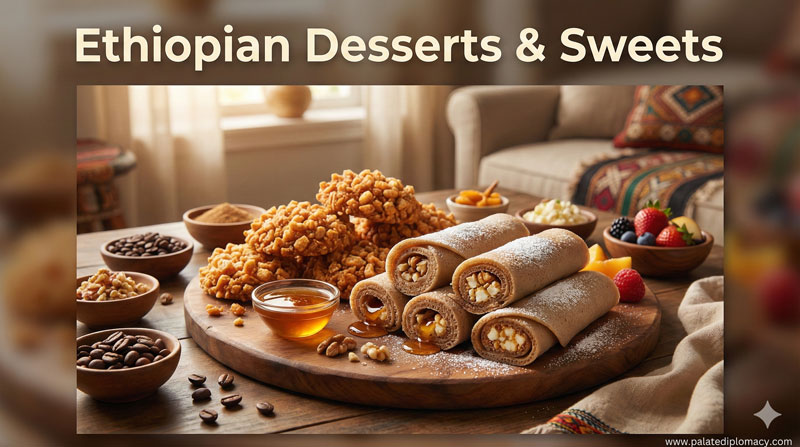
How Sweet Injera Rolls Became Popular in Ethiopian Cuisine
Sweet injera rolls tell a story of curiosity meeting tradition. They grew from the everyday cooking of Ethiopian homes and markets, where cooks explore balance and texture. The rolls honor injera as a shared canvas and celebrate sweetness as a gentle counterpoint to bold flavors. In many households, the roll represents a mindful approach to dining: a small, portable piece that carries warmth from the kitchen to the table. This dish invites a slow appreciation of craft, from the soft tang of the injera to the delicate sweetness inside. It stands as a testament to culinary curiosity, to the care of ingredients, and to the joy of presenting something thoughtful at the family table.
Injera: A Cultural Canvas
Injera appears at almost every meal in Ethiopia, not merely as bread but as a social plate. Its spongy texture soaks up sauces and sauces mingle with its tang. When cooks add a sweet filling and roll the sheet, they create a new way to enjoy the same base. The roll preserves the shared spirit of injera—the idea that eating is communal, playful, and respectful. A bite can blend soft sourness with gentle sweetness, echoing the balance that Ethiopian meals often strive for. The roll becomes portable hospitality, easy to share while still feeling special. It shows how a familiar ingredient can inspire fresh forms without losing its rooted character.
The Sweet Twist: Why Sweetness Matters
Sweetness in Ethiopian cuisine often acts as a soothing counterpoint to spices, herbs, and bold sauces. A sweet filling in injera rolls provides a moment of calm and contrast. It invites the palate to pause and then engage again with the savory course that may follow. This sweetness is not loud; it is a quiet complement. It also broadens the appeal of injera for children and adults alike, offering a familiar note that pairs with nuts, fruits, or spice blends. In this way, the sweet roll becomes a bridge between everyday cooking and a lighter, dessert-like experience within a savory meal.
Crafting the Rolls: Technique and Care
Making sweet injera rolls starts with a pliable, freshly made injera. Warmth helps the surface stay soft enough to roll. A line of filling runs along one edge, usually a balanced blend such as date paste, honey, or fruit pieces with a hint of cinnamon or cardamom. The roll is then tucked and rolled tightly, so the filling is evenly distributed and the edges remain sealed. The result is a neat, bite-sized cylinder that holds together when cut into rounds for sharing. Careful handling preserves the tender bite of the injera and the gentle sweetness inside, creating a harmony that feels both simple and refined.
Social Moments and Hospitality
This dish shines in social settings. Hosts prepare sweet injera rolls to welcome guests after a day’s work, during family gatherings, or at festive events. The rolls invite conversation as plates are passed around the table. Sharing them strengthens bonds and creates a moment of shared pleasure. In markets and small eateries, the roll can be a quick, satisfying treat that still respects the day’s culinary rhythm. The act of presenting the rolls—carefully arranged on a platter—echoes a culture that values generosity, attention to detail, and the joy of good company around food.
Culinary Significance: Texture, Balance, and Versatility
Sweet injera rolls embody the balance Ethiopian Cuisine seeks between light and hearty, soft and resilient. The injera provides a chewy, slightly sour base, while the filling adds a gentle sweetness and a contrasting aroma. This combination makes the roll versatile: it can stand alone as a snack, serve as a nuanced starter, or accompany a larger meal. The dish also showcases how a single ingredient can support multiple flavor profiles by pairing with different fillings. In this way, the sweet injera roll becomes a small but meaningful piece of the broader culinary tapestry, highlighting texture, aroma, and a mindful approach to flavor.
A Place in Modern Ethiopian Kitchens
Today, sweet injera rolls appear in homes across Ethiopia as a reminder of culinary creativity. Chefs in restaurants may present variations that honor tradition while inviting new tastes, using locally grown teff variants and seasonal fruits. The dish also travels softly into everyday life, where families experiment with fillings that reflect regional produce or personal favorites. The shared approach remains constant: a respect for injera as a versatile base and a celebration of sweetness as a delicate complement. This enduring presence speaks to the accessibility and beauty of the dish, inviting everyone to participate in a tradition that feels both intimate and universal.
Closing Thoughts: A Dish That Celebrates Everyday Joy
Sweet injera rolls capture a moment of culinary happiness. They celebrate the skill of the cook, the generosity of sharing, and the beauty found in simple contrasts. By honoring injera as a living canvas and by embracing a gentle sweetness, this dish adds a graceful note to Ethiopian cuisine. It invites us to slow down, savor the textures, and enjoy the quiet elegance of a well-made roll. In every bite, we taste hospitality, craft, and a deep appreciation for food as a communal joy.