
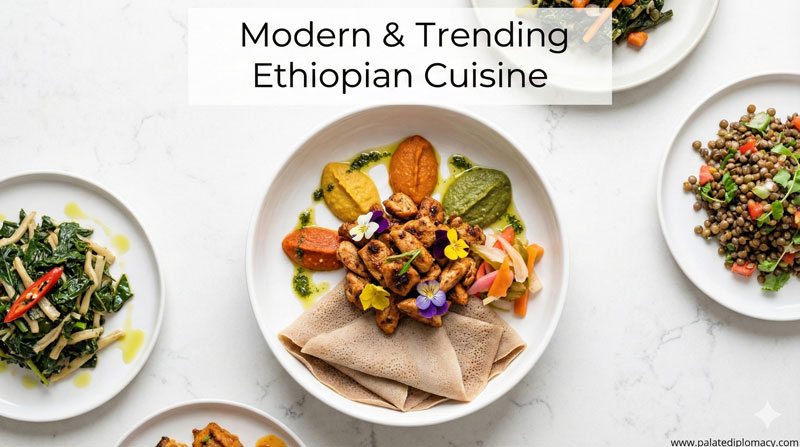
The Story Behind Contemporary Ethiopian Plates, a Favorite Ethiopian Food
This dish invites you into a warm world of color, aroma, and careful craft. The Story Behind Contemporary Ethiopian Plates, a Favorite Ethiopian Food blends classic flavors with modern presentation. It honors tradition while inviting fresh eyes to linger over each plate. The result is approachable, celebratory, and deeply rooted in the way people share meals.
The Heart of the Plate
At the center of this dish is injera, a soft, sour flatbread that acts as both plate and utensil. The texture is airy yet sturdy, with tiny holes that catch sauces. Surrounding injera are small portions of wat, shiro, and other stews. These elements come together in a balance of warmth, tang, and spice. The plate becomes a map of flavor, guiding the diner from bright lentil notes to rich, meaty depths. This structure highlights how Ethiopian Cuisine builds flavor in layers, one bite at a time.
Ingredients and Techniques
Key ingredients include teff flour for authentic injera, berbere spice for warmth, and a trio of stews such as misir wat (red lentil), shiro (chickpea flour with spices), and Doro Wat (spiced chicken). Fresh herbs, onions, garlic, and tomatoes add brightness. The technique blends fermentation, slow simmering, and careful toasting of spices. In modern plating, chefs balance color and height, while keeping each component recognizable. The result is a dish that feels both familiar and newly discovered.
Plating and Presentation
Contemporary plates frame tradition with clean lines and thoughtful arrangement. Injera forms a soft canvas. Small mounds of different stews sit beside it, each with its own texture. A splash of oil, a touch of fresh greens, and a sprinkle of spice dust the plate. The presentation invites curiosity, guiding diners to explore every corner. At its best, the plate speaks through visuals as well as taste.
Flavor, Texture, and Balance
The dish sings with contrast. The tang of injera meets the warmth of berbere and the richness of slow-cooked stews. Soft, melted textures sit beside coarser, heartier bites. Each bite offers a new combination of sour, sweet, and savory notes. This balance makes the plate versatile for a simple lunch or a leisurely dinner, always rewarding attentive tasting.
Cultural Value and Hospitality
Hospitality is woven into every element. The plate is designed for sharing, inviting conversation and connection. People gather around a single spread, using injera as both bread and spoon. The act of passing dishes, approving a bite, and savoring together reinforces community. In this sense, the dish is more than food—it is a ritual of welcome and care.
A Note on Tradition and Innovation
This dish honors traditional Ethiopian flavors while embracing contemporary plating. Innovation appears in the arrangement, portioning, and the choice of stews to showcase seasonal produce. Yet the soul remains consistent: mercy, warmth, and a table that invites all to partake. The fusion is gentle, never forcing.
Pairings and Occasions
While the plate stands on its own, it shines with simple accompaniments. A cup of tea or coffee can echo earthy notes in the spices. A light salad brings brightness between bites. The dish suits family meals, intimate gatherings, and celebrations of everyday life. Its universal appeal lies in its generosity and clarity of flavor.
Craft, Community, and Craftsmanship
Behind every plate is careful work: farmers growing teff and spices, cooks layering sauces, and designers shaping the presentation. This becomes a small ecosystem that celebrates skill and care. The result is a dish that feels rooted in place, yet inviting to everyone who tastes it.
Invitation to Experience
If you seek a dish that pairs cultural depth with culinary clarity, this contemporary take on Ethiopian plates offers a bright doorway. It invites you to notice textures, savor aromas, and share with others. In this, the dish stands as a joyful expression of Ethiopian food culture—tradition made fresh, welcoming, and endlessly inviting.